
The Pennsylvania Department of Conservation and Natural Resources has redefined the role of public infrastructure by proving that state facilities can operate in perfect harmony with the diverse ecosystems they are designed to protect. As climate-related challenges become increasingly central to modern public policy, the agency has moved beyond simple conservation of land to include the sophisticated management of the built environment. This strategic shift represents a holistic approach to stewardship, where visitor centers, administrative offices, and maintenance hubs are engineered to meet the highest standards of energy efficiency and resource management. By treating every building project as an opportunity to reduce the environmental footprint, the organization provides a blueprint for other state agencies to follow. This commitment is not merely about meeting regulatory requirements; it is about establishing a legacy of sustainability that ensures the long-term health of the environment while demonstrating a profound level of fiscal responsibility to the taxpayers of the Commonwealth.
Engineering Excellence in Sustainable Design
High-performance buildings are meticulously designed to optimize every facet of their operational lifecycle, focusing on the aggressive reduction of electricity and water consumption. Through the implementation of advanced HVAC systems, high-efficiency insulation, and smart water-metering technologies, these structures significantly lower their ecological impact compared to traditional construction methods. The architectural philosophy extends to the selection of sustainable materials, emphasizing recycled content that diverts waste from landfills and minimizes the extraction of virgin raw resources. By prioritizing superior indoor air quality and maximizing the penetration of natural light, these buildings create healthier environments for both staff and visitors. This technical precision ensures that the facilities are not only environmentally sound but also economically efficient over their lifespan, as the initial investment in premium systems is recovered through vastly reduced utility and maintenance expenses.
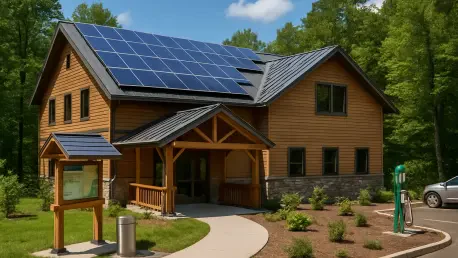
Beyond the technical specifications, the integration of these advanced standards reflects a deep commitment to the core mission of managing Pennsylvania’s natural resources with integrity. It would be fundamentally inconsistent to oversee millions of acres of pristine forest land while operating energy-intensive, inefficient facilities that contribute to environmental degradation. By ensuring that the physical footprint of the agency aligns with its preservation goals, the DCNR reinforces its role as a credible steward of public assets. These high-performance structures also serve as high-profile educational platforms for the millions of people who visit state parks annually. When the public encounters solar arrays and water-saving technologies in a scenic recreational setting, the buildings themselves become interactive tools for conservation education. This exposure encourages visitors to consider similar sustainable practices in their own lives, effectively bridging the gap between public policy and personal action.
Implementing Global Standards Through LEED Verification
To ensure that sustainability claims are backed by rigorous data and objective evaluation, the Leadership in Energy and Environmental Design framework serves as the primary benchmark for all major construction. This globally recognized certification system evaluates projects across several critical categories, including energy performance, water efficiency, and the overall quality of the indoor environment. By adhering to these strict third-party standards, the agency guarantees that its infrastructure projects meet specific benchmarks for carbon reduction and operational cost-efficiency. The certification process provides a transparent and verifiable record of environmental performance, allowing the public to see exactly how their tax dollars are being used to support sustainable development. This data-driven approach moves the conversation away from vague green promises toward measurable results that can be tracked and reported with a high degree of accuracy and accountability across the entire state park system.
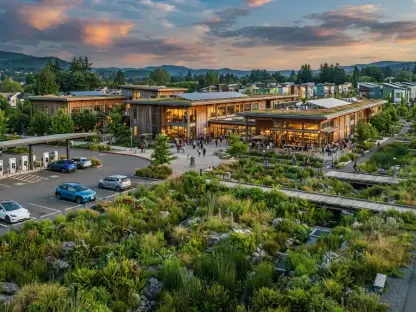
The current inventory of sustainable facilities includes 18 LEED-certified buildings, showcasing a diverse range of functional types from high-traffic visitor centers to specialized administrative offices. Notable achievements include the Elk Country Visitor Center and the Nature Inn at Bald Eagle State Park, both of which have attained the prestigious Gold certification for their exceptional design and efficiency. These sites successfully blend hospitality and utility with strict environmental standards, proving that modern convenience does not have to come at the expense of ecological health. Other vital locations, such as the Tom Ridge Environmental Center at Presque Isle and the Patrick J. Solano Environmental Education Center, hold Silver certifications and act as primary points of contact between the public and the Commonwealth’s natural heritage. These buildings act as functional manifestations of the conservation ethos, demonstrating that high-performance architecture is both a practical and aesthetically pleasing solution for public infrastructure.
Extending Sustainable Practices to Forest Management
Sustainability initiatives are not limited to high-profile visitor areas but extend deep into the state’s forest lands, where Resource Management Centers handle the administrative tasks of timber and wildlife management. Facilities located in the Buchanan, Loyalsock, and Tiadaghton State Forests have earned LEED recognition, highlighting the versatility of green building standards in remote or highly functional settings. The Sproul State Forest facility holds historical significance as the agency’s inaugural LEED-certified project, setting the stage for subsequent developments in the Weiser and Rothrock forests. The Tiadaghton and Weiser centers have reached Gold certification, demonstrating that even utilitarian workspaces can achieve peak environmental performance. These centers are critical for maintaining millions of acres of forest land, and their efficiency ensures that more resources can be directed toward on-the-ground conservation efforts rather than being lost to excessive operational costs in administrative hubs.
Looking at current development trends, the agency is actively expanding its portfolio with new sustainable park offices currently in progress at Hills Creek, Keystone, and Marsh Creek State Parks. These projects represent a continued evolution of building standards that now account for specific ecological threats, such as bird-building collisions caused by artificial lighting and glass reflections. By integrating bird-friendly design strategies, such as specialized glass treatments and lighting schemes that reduce light pollution, the DCNR is ensuring that its physical structures do not interfere with the natural behaviors of migratory species. This proactive approach to architectural design demonstrates an understanding that sustainability must encompass the entire ecosystem, not just energy metrics. These ongoing innovations ensure that Pennsylvania remains at the forefront of sustainable public infrastructure, adapting to new environmental challenges while maintaining a consistent focus on the long-term resilience of the state’s built and natural landscapes.
Strategic Outcomes for Future Public Policy
The successful transition toward a high-performance building portfolio provided a clear roadmap for how other state departments could integrate sustainability into their long-term capital planning. By prioritizing efficiency and resource conservation, the agency managed to reduce its overall greenhouse gas emissions while simultaneously improving the operational reliability of its most critical facilities. This progress was not achieved through isolated projects but through a systemic commitment to rethinking the relationship between human infrastructure and the natural world. The use of LEED benchmarks allowed for a level of transparency that built public trust, showing that environmental stewardship and fiscal responsibility are not mutually exclusive goals. These efforts established a culture of innovation where engineers and conservationists collaborated to solve complex problems, ensuring that the Commonwealth’s public lands remained accessible, protected, and managed with the highest degree of modern technical expertise.
Moving forward, the focus must remain on the continuous monitoring of these facilities to ensure they maintain their peak performance through comprehensive data analytics and maintenance. It is recommended that other agencies adopt similar high-performance frameworks to capitalize on the lower operational costs and enhanced public health benefits associated with green architecture. Expanding the use of on-site renewable energy, such as solar arrays and geothermal systems, will be a critical next step in achieving true carbon neutrality across the state’s infrastructure. Additionally, integrating climate-resilient design features into future projects will protect public assets from the increasing frequency of extreme weather events. By maintaining this trajectory of innovation and rigorous standards, Pennsylvania can continue to serve as a national leader in the development of sustainable public spaces. The progress made in the parks and forests became a standard-bearer for a broader movement toward an environmentally conscious and economically sustainable future for all citizens.