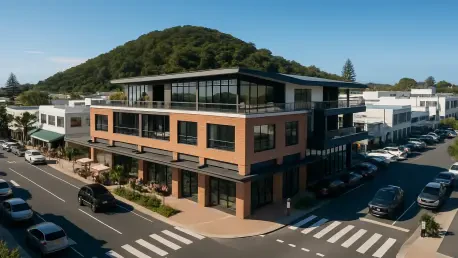

While traditional CBD office markets struggle with vacancy rates, the Burleigh Heads corridor continues to thrive by offering a sophisticated blend of logistical utility and high-end lifestyle appeal. The Gold Coast is currently navigating a profound transformation in its commercial real estate sector, exemplified by the success of the Centro Burleigh Heads development at 3 Fremantle Street. This $15 million-plus project, spearheaded by WhiteCorp, features 14 architecturally designed commercial units that set a new benchmark for industrial excellence. Despite broader economic pressures, the development has achieved nearly complete pre-sale absorption as it approaches its scheduled completion in December 2026. This rapid market take-up highlights a robust demand for premium professional spaces within Queensland’s southern industrial corridor, proving that strategic location remains the primary driver of commercial success.
Shifting Paradigms: The Flight toward Decentralized Lifestyle Precincts
A fundamental structural shift is taking hold as businesses increasingly turn their backs on legacy central business districts such as Southport and Surfers Paradise. Investors and business owners are favoring decentralized hubs that bridge the gap between rigorous professional requirements and modern lifestyle preferences. This migration is largely fueled by a collective desire to eliminate the friction of long daily commutes, allowing professionals to base their operations within minutes of major transport corridors and desirable coastal residential enclaves. The southern Gold Coast, specifically within the 4220 postcode, offers a specialized “work-live-play” environment that traditional office towers simply cannot replicate in a post-pandemic economy. By integrating high-spec workspaces into areas with significant lifestyle utility, the region attracts a demographic that values a seamless transition between their corporate responsibilities and personal well-being.
This transition represents a permanent recalibration of how commercial real estate functions on the Gold Coast. The move toward lifestyle-integrated hubs like Burleigh Heads reflects a deeper cultural change where the workplace is viewed as an extension of one’s community rather than an isolated destination. Companies are finding that physical proximity to the coast and high-end amenities provides a competitive advantage that outweighs the perceived prestige of a traditional CBD address. As urban congestion continues to grow, the appeal of a workspace that allows for a morning surf or a lunch break at a local café becomes a powerful incentive for both business owners and their clients. Consequently, the commercial landscape is being redrawn, with the economic center of gravity moving steadily toward the southern suburbs where the quality of life is as high as professional standards, creating a resilient micro-market that thrives on its own terms.
Geographic Constraints: Navigating the Supply Ceiling East of Bermuda Street
The success of the current development is intrinsically linked to its strategic position east of Bermuda Street, an area defined by a “supply ceiling” due to extreme geographic and zoning constraints. This strip of land suffers from a severe lack of available parcels for new development, creating a bottleneck that restricts the entry of high-quality commercial assets. This geographic reality ensures that when a high-caliber project like the one at Fremantle Street enters the market, it is met with a wave of pent-up demand that far exceeds the available inventory. According to industry experts, this supply-demand imbalance provides a level of capital stability that remains remarkably resilient, even during periods of aggressive monetary tightening by central banks. Investors are increasingly prioritizing long-term security and asset scarcity over simple square footage, recognizing the inherent value in such a finite market where expansion is no longer possible.
Owning a commercial asset in the heart of Burleigh Heads is viewed by many as securing a rare foothold in a region where further geographic expansion is virtually impossible. This scarcity ensures that property values remain insulated against broader market fluctuations and economic volatility seen in more saturated urban centers. For private investors and owner-occupiers alike, these commercial units serve as a preferred hedge against inflation, offering a tangible asset in a high-demand coastal location. The limited window for new construction means that once these projects are completed, the secondary market often sees significant appreciation due to the lack of competing new supply. This dynamic creates a “lock-and-key” investment profile where the rarity of the land itself becomes the primary guarantor of value. As the southern Gold Coast matures, the premium placed on these well-located spaces is expected to grow, cementing the area’s reputation as a sanctuary for capital.
Architectural Innovation: Redefining the High-Spec Commercial Asset
The design philosophy governing the modern commercial units in Burleigh Heads represents a departure from the traditional industrial warehouse model. Developers are focusing on high-spec flexibility and premium aesthetics to cater to a sophisticated class of tenants and owners. Each unit within the project is equipped with motorized high-clearance roller doors and dual-crossover vehicle access, specifically designed to streamline complex logistics for high-growth trade and e-commerce sectors. Furthermore, the inclusion of natural light glazing and integrated mezzanine office spaces creates a professional atmosphere that is equally suitable for administrative tasks, client meetings, and creative production. These units are built to be multi-functional, allowing a business to house its entire operation—from warehouse storage to executive offices—under a single roof. This architectural shift recognizes that modern businesses require spaces as dynamic and versatile as the industries they serve today.
Beyond the basic functional requirements of logistics and storage, the development incorporates premium amenities designed to support the well-being of the modern worker. Each unit features private kitchen facilities and high-end finishes, moving away from the utilitarian austerity of past industrial developments. Security is also a top priority, with the entire complex protected by gated entrances and comprehensive CCTV surveillance systems to ensure peace of mind for business owners. With ample on-site parking and prominent street frontage providing essential visibility for brand signage, the project effectively bridges the gap between rugged industrial utility and high-level corporate professionalism. This hybrid approach sets a new benchmark for the region’s commercial infrastructure, proving that industrial spaces can be both beautiful and highly functional. By focusing on high-spec details, the development attracts a higher tier of tenant, ensuring long-term occupancy.
Strategic Advantages: The Rise of Micro-Business Hubs and Talent Retention
A network of “micro-business hubs” is rapidly emerging across the southern Gold Coast, stretching from Miami and Burleigh Heads down to the scenic corridors of Currumbin. This decentralized network is fundamentally redefining how modern companies approach the recruitment and retention of top-tier talent in a competitive labor market. In the current economic landscape, providing a high-quality workspace near where employees live is no longer considered a luxury; it has become a strategic necessity for businesses looking to maintain a competitive edge. By positioning their operations in lifestyle-centric hubs like Burleigh, companies can offer their staff a significantly higher quality of life characterized by shorter travel times and easier access to local amenities. This human-centric approach to real estate marks a departure from traditional corporate models where employees were expected to revolve around a central business location, regardless of the personal cost.
The business community is observing a trend where companies effectively follow the talent, ensuring that the physical working environment contributes positively to employee satisfaction and long-term organizational loyalty. This localized approach to commercial development fosters a sense of community among business owners, as these micro-hubs often become self-sustaining ecosystems where local trades, creative agencies, and e-commerce brands collaborate. The southern corridor has become a magnet for entrepreneurs who prioritize a work-life balance that does not sacrifice professional growth. As these clusters continue to expand, they create a ripple effect that stimulates local retail and service industries, further enhancing the desirability of the 4220 postcode. This evolution highlights the fact that the most successful commercial developments are those that understand the social fabric of the area and cater to the needs of the modern workforce effectively.
Future Directions: Capitalizing on the Southern Corridor’s Evolution
The trajectory of the Gold Coast commercial market suggested that the traditional reliance on a single central business district was rapidly fading in favor of a more diversified urban structure. Stakeholders who identified this trend early successfully positioned themselves to benefit from the geographic scarcity and lifestyle appeal of the southern suburbs. Moving forward, the focus for developers must remain on maintaining high architectural standards and integrating flexible spaces that can adapt to the changing needs of the e-commerce and creative sectors. It was observed that projects which neglected these premium features struggled to achieve the same pre-sale velocity as those that prioritized design and amenity. The market demonstrated a clear preference for assets that offered a mix of professional utility and personal convenience, suggesting that future developments should prioritize logistical capabilities alongside employee-centric features.
To navigate the next phase of growth, investors and business owners were encouraged to look toward areas where infrastructure projects and residential development coincided with commercial zones. The integration of light rail extensions and improved transport corridors continued to enhance the accessibility of Burleigh Heads, making it an even more attractive prospect for long-term hold strategies. The findings indicated that the “supply ceiling” east of Bermuda Street would remain the most significant driver of capital appreciation, urging market participants to secure assets while development opportunities still existed. Ultimately, the shift toward decentralized micro-hubs proved to be a robust solution to the challenges of urban congestion and changing workforce expectations. By embracing a model that valued the human experience, the southern Gold Coast established a blueprint for resilient growth that set a high standard for other coastal regions to follow.