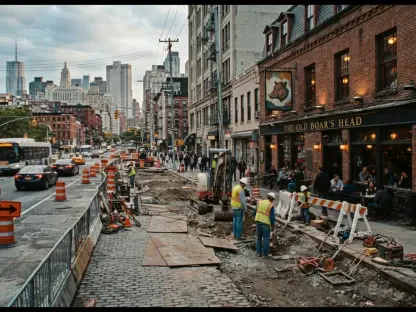

A significant disconnect between the marketing of Measure O and the actual allocation of funds has left many residents questioning the district’s long-term financial planning. As the Riverside Unified School District prepares for the Trustee Area 1 election, the local community is facing a defining moment regarding how its educational institutions are managed, monitored, and funded. The race has primarily centered on the core issues of transparency, fiscal oversight, and the physical state of local schools, which many community members believe have been neglected in favor of high-profile construction projects. Challengers Jinane Annous and Duffy Atkinson have actively engaged in this discourse, presenting detailed platforms to address what they perceive as a widening gap between the current board’s actions and the public’s expectations for honest communication. Meanwhile, the absence of the incumbent, Noemi Hernandez Alexander, from recent public inquiries has only intensified the ongoing debate over accountability and the willingness of leadership to face direct questioning. This election is not merely a choice between individual candidates but a broader referendum on the governance culture within the district, as voters demand a clearer understanding of how their tax dollars are utilized to benefit every student across the entire region.
Fiscal Accountability: The Legacy of Measure O
The controversy surrounding Measure O remains a central theme in the Trustee Area 1 race, serving as a case study for the district’s perceived lack of transparency. While a state audit confirmed that the funds were technically expended within the letter of the law, it also underscored a profound failure in how the district communicated those expenditures to the taxpayers who provided the funding. Jinane Annous argues that the core issue was a breakdown in the relationship between the board and the public, rather than a matter of illegal activity. In her view, the board failed in its primary duty to keep the community adequately informed about the shifting priorities of the bond projects. She suggests that true accountability requires a constant, proactive flow of information that allows parents and residents to track every dollar. Her proposed governance model would require the board to provide regular, granular updates on project costs and timelines, ensuring that the public is never caught off guard by a redirection of resources. By asking more rigorous questions before approving major expenditures, Annous believes the board can move beyond mere legal compliance and act as a genuine steward of public trust.
Duffy Atkinson offers a more systemic and critical analysis of the Measure O process, arguing that simply meeting the legal minimum is an unacceptably low bar for public officials. He points to a significant disparity between the promises made during the bond’s marketing phase—which suggested improvements for all schools—and the reality of the spending, which saw approximately $210 million concentrated on just two specific school sites. Atkinson notes that these major projects were prioritized without a robust public discussion prior to the bond’s passage, creating a sense of betrayal among residents whose local campuses were left waiting for repairs. To prevent a repeat of this situation, he proposes a fundamental restructuring of the Citizens’ Bond Oversight Committee to ensure its total independence from district influence. He contends that for oversight to be meaningful, the committee must be free from the control of district staff and attorneys who might seek to limit the scope of public inquiries. Only by creating an autonomous body can the district hope to restore the credibility lost during the execution of previous financial measures.
Future Funding: Rebuilding Public Trust
The prospect of pursuing another facilities bond remains a highly sensitive topic for the district, with both candidates expressing a significant degree of caution that reflects the current skeptical mood of the electorate. Jinane Annous adopts a pragmatic but firmly skeptical stance, stating that the district has not yet earned the right to ask for additional taxpayer money. Her support for any future funding would be entirely contingent on the district demonstrating that it has fully internalized the lessons learned from the shortcomings of the Measure O audit. For Annous, a prerequisite for any new financial request would be the presentation of a comprehensive, honest spending plan that includes a specific, unalterable list of projects. She asserts that families must be able to evaluate these projects individually before they are asked to cast a vote, ensuring that the community is a partner in the planning process rather than just a source of revenue. This approach is rooted in the belief that financial commitment from the public can only follow a demonstrated commitment to transparency and meticulous planning from the board.
Duffy Atkinson is even more definitive in his opposition to a new bond at this time, citing the low public appetite for further debt following years of transparency failures. He argues that the district must first fulfill its existing commitments to every campus before it considers expanding its financial footprint. Atkinson’s requirements for any future bond are highly specific and intended to prevent the “bait and switch” tactics he believes characterized past measures. He insists that ballot language must include ironclad project estimates and that funds should be strictly restricted to those projects, with any reallocation requiring the express approval of an independent oversight committee. Furthermore, Atkinson takes a firm stance against Project Workforce Agreements, which he argues have historically inflated construction costs without providing a clear, commensurate value to the district’s students or facilities. For Atkinson, the priority must be on maximizing the impact of every existing dollar through competitive bidding and rigorous project management, rather than simply asking for more money to cover up past inefficiencies.
Infrastructure Priorities: Maintenance Versus Expansion
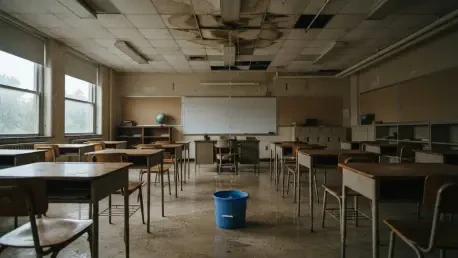
With the recent decision to shelve major expansion projects, the debate over the district’s physical assets has shifted toward the urgent need to maintain existing, aging school buildings. Jinane Annous prioritizes the fundamental learning environment of the classroom over the allure of high-tech new construction. She argues that students and teachers cannot be expected to succeed if they are forced to work in buildings with failing air conditioning, outdated plumbing, or general maintenance issues that have been deferred for too long. Her strategy involves a comprehensive, district-wide assessment to identify the most critical infrastructure needs, prioritizing safety and the number of students impacted by each deficiency. While she supports the long-term goals of specialized programs, she warns that the district cannot afford to chase “exciting” new facilities if it means neglecting the everyday environments where the majority of the student population spends their time. For Annous, a school district’s first responsibility is to ensure that every campus is safe, clean, and functional, providing a stable foundation for the academic work taking place within its walls.
Duffy Atkinson echoes this sentiment but frames the facilities challenge through a lens of demographic shifts and declining enrollment. He calls for a rigorous, data-driven review of the Long-Range Facilities Plan to ensure that the district is not over-investing in areas where the student population is shrinking. Atkinson predicts that the district will likely face the difficult reality of school consolidations in the near future, particularly at the elementary level, which makes efficient facility management more important than ever. He advocates for an objective approach to project evaluation that focuses on campus deficiencies and the replacement of aging portable classrooms with permanent, sustainable structures. By addressing these practical needs first, Atkinson believes the district can create a more equitable environment for all students while remaining fiscally responsible in the face of changing enrollment patterns. His focus remains on optimizing the current facilities footprint and ensuring that maintenance budgets are used strategically to extend the life of existing buildings, rather than expanding the district’s responsibilities at a time when resources are increasingly constrained.
Governance Reform: Enhancing Public Participation
The procedural mechanics of board meetings have recently become a flashpoint for concerns regarding transparency and the accessibility of the democratic process. The current practice of holding public comments before staff presentations has been widely criticized for effectively preventing residents from responding to the specific information the board is considering for a vote. Jinane Annous argues that this structure undermines the value of public feedback, as it is impossible for community members to provide meaningful input without first hearing the facts and figures presented by district staff. She advocates for a more deliberative and inclusive process, particularly when it comes to major financial or policy decisions that will have long-term impacts on the community. Annous believes that by allowing the public to speak after they have seen the relevant data, the board can benefit from more informed and constructive criticism. Her goal is to move away from a model of rushed votes and toward a culture of transparency where the community feels their voice is a legitimate part of the decision-making process.
Duffy Atkinson’s critique of the current meeting structure is even more pointed, characterizing the order of proceedings as a deliberate political tactic used by the board to “avoid criticism” and control the narrative. He notes that recent efforts by some board members to restore the traditional order of meetings, which allowed for public comment after presentations, were blocked by a narrow majority. Atkinson pledges to work toward restoring this original order, ensuring that residents have the full context of a proposal before they are asked to address the board. He believes that the current system treats public participation as a mere formality to be checked off rather than a substantive component of good governance. To Atkinson, a transparent board should welcome scrutiny and provide every possible opportunity for residents to engage with the details of district business. By reforming the meeting structure, he hopes to break down the barriers that have historically separated the district administration from the families it serves, fostering a more collaborative and open environment for addressing the many challenges facing the local schools.
Instructional Support: The Future of Professional Coaching
The final major area of inquiry for the candidates concerns the district’s instructional coaching program, which currently utilizes a specialized grant that is set to expire in 2028. This program is designed to improve classroom outcomes by providing teachers with direct support and collaborative opportunities to refine their instructional techniques. Jinane Annous expresses support for the underlying concept of coaching but remains wary of making such programs a mandatory requirement without significant input from the educators themselves. She views teachers as the primary experts in their classrooms and believes that any coaching initiative must be a supportive resource rather than an added source of administrative stress or a simple “check-the-box” compliance measure. Regarding the continuation of the program once the grant funds are exhausted, Annous remains non-committal, asserting that any decision must be based on empirical results. She believes the district must be able to prove that the program is actually improving student achievement and that the cost is sustainable within the general fund before making a long-term commitment.
Duffy Atkinson views professional coaching as an essential element of a modern work culture, particularly for teachers who are working with high-needs student populations, such as English learners and those with disabilities. However, he also emphasizes that the program’s long-term viability must be rooted in its demonstrated impact on student learning. Atkinson warns that the district must be prepared to make difficult choices once the grant expires in 2028, and that instructional coaching should not displace other higher-priority needs if the funding environment becomes more restrictive. He advocates for a results-oriented approach where programs are regularly evaluated for their effectiveness and adjusted based on the actual needs of the teaching staff. For Atkinson, the key to successful professional development is ensuring that it is targeted, efficient, and directly linked to measurable improvements in the classroom. Both candidates agree that while support for teachers is vital, the district must remain fiscally disciplined and ensure that every program, including instructional coaching, provides a clear and justifiable return on the community’s investment in its schools.
Strategic Reform: The Path Toward Restored Confidence
The comprehensive responses from the candidates illustrated a shared conviction that the Riverside Unified School District reached a critical juncture in its relationship with the local community. Both Jinane Annous and Duffy Atkinson identified a systematic lack of transparency as the primary deficiency of the current board and proposed various structural reforms to restore public trust. While the candidates differed in their specific policy prescriptions—with Atkinson offering more procedural and labor-related critiques and Annous focusing on enhanced communication and pragmatic oversight—their overarching objectives were remarkably consistent. They both advocated for a “maintenance first” approach to facility management, a more logical and inclusive structure for public board meetings, and a results-oriented strategy for teacher support programs.
The absence of the incumbent’s perspective in this inquiry allowed these calls for reform to define the narrative of the Trustee Area 1 race, placing the focus squarely on the demand for greater accountability. Moving forward, the district should prioritize the implementation of an independent bond oversight committee that operates without administrative interference to ensure future projects align with public promises. Additionally, the board must reconsider its meeting procedures to allow for more substantive public engagement following staff presentations, rather than before them. These actions, combined with a commitment to addressing deferred maintenance on aging campuses, provided a clear roadmap for any leader seeking to bridge the gap between the district administration and the taxpayers. Ultimately, the success of the district will depend on its ability to transform these proposals into concrete policies that put student needs and fiscal honesty at the forefront of every decision.