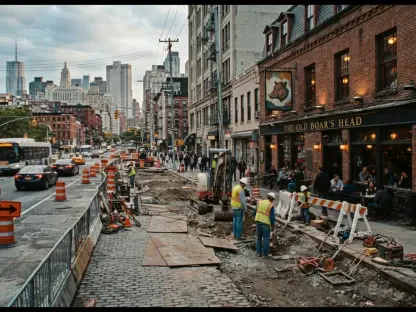

National statistics show that single-family home starts dropped 4.6 percent in September, suggesting that the industry’s recovery remains a distant prospect for 2026. This downward trend is not merely a statistical anomaly but a reflection of a deeply rooted structural deadlock that continues to haunt the American dream of homeownership. For over a decade, the United States has struggled with a chronic underproduction of residential units, leading to a massive deficit that currently exceeds four million homes. This shortage has created a market where demand consistently outstrips supply, keeping prices high even as borrowing costs fluctuate. The complexity of this crisis is amplified by a volatile economic landscape where high interest rates and inflated material costs create a tightening squeeze on the supply side. As developers face dwindling margins and buyers encounter restricted purchasing power, the industry must navigate a landscape defined by historic lows in builder confidence and persistent labor shortages that delay completion.
Economic Hurdles and Developer Adaptations
Market Stagnation: Navigating High Interest Rates
The financial pressure on both developers and prospective buyers has reached a critical breaking point, largely driven by the current average for a 30-year fixed mortgage hovering around 7.4 percent. These levels, which have not been seen in decades, have fundamentally altered the math of homeownership for the average American family. A higher interest rate environment translates into hundreds of additional dollars in monthly payments, effectively freezing many potential buyers out of the market entirely. This contraction in the pool of eligible buyers has led to a noticeable stagnation in sales activity, as households wait for a reprieve that has yet to arrive. For those who do manage to qualify, the increased cost of financing often necessitates compromising on the size or location of the property. This dynamic has created a ripple effect throughout the broader economy, as reduced mobility in the housing market limits labor flexibility and dampens consumer spending in related sectors across the nation.
Resource Scarcity: Overcoming Labor and Material Costs
The physical act of residential construction has become significantly more expensive and logistically challenging due to a chronic shortage of skilled tradespeople. For years, the industry has struggled to attract a new generation of plumbers, electricians, and carpenters, leading to a graying workforce that cannot keep up with the scale of production required to close the housing gap. Simultaneously, the price of essential raw materials like lumber, concrete, and steel remains elevated due to a combination of persistent inflation and restrictive trade policies. These logistical hurdles create a situation where builders are often unable to pivot quickly enough to respond to local market needs. The resulting increase in the per-unit cost of construction is inevitably passed on to the consumer, further eroding affordability. Faced with these mounting pressures, the homebuilding sector has largely adopted a defensive posture that prioritizes the movement of existing inventory over ambitious new expansion projects.
Policy Shifts and the Path to Stabilization
Legislative Reform: The 21st Century Road to Housing Act
In a rare moment of bipartisan cooperation, federal lawmakers have passed the 21st Century Road to Housing Act to dismantle the regulatory barriers that have long slowed down construction. This legislation represents a significant shift in federal policy by targeting the restrictive local zoning laws that often prevent the development of dense or affordable housing units. By providing financial incentives to municipalities that relax these rules, the act aims to create a more permissive environment for builders to operate. Furthermore, the bill streamlines the federal grant and environmental review processes, which have been criticized for being redundant and excessively time-consuming. Builders have long argued that these bureaucratic hurdles can add years to a project’s timeline and significant costs to the final price tag. By reducing the administrative burden, the government hopes to accelerate the delivery of new units, though the industry expects that the results of these reforms will be gradual.
Strategic Evolution: Achieving Long-Term Market Balance
The U.S. housing market demonstrated a period of intense transition that highlighted the limitations of short-term fiscal patches in the face of deep structural deficits. While the passage of new legislative frameworks offered a potential roadmap for recovery, the immediate reality remained defined by high costs and cautious construction activity. The industry successfully avoided a total collapse through the use of innovative buyer incentives and price adjustments, but these measures were insufficient to bridge the inventory gap. Looking ahead, the focus shifted toward the rapid implementation of modular housing standards and the continued reduction of local zoning barriers to ensure that supply could finally keep pace with demand. Addressing the labor shortage through robust vocational training programs also appeared as a non-negotiable requirement for any sustained increase in building starts. Only through a multi-year commitment to regulatory reform and financial accessibility could the ideal of affordable homeownership finally be restored.