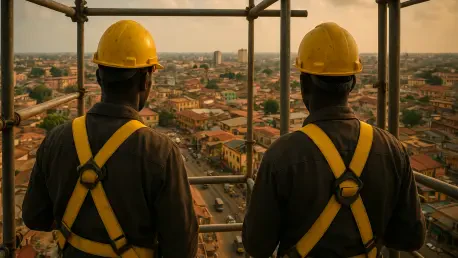

Preliminary findings from the Pikine tragedy indicate a total absence of guardrails and safety nets, which are essential for preventing fatal outcomes during equipment malfunctions. The death of A. Diallo, a 22-year-old mason who fell three stories after a hoisting rope snapped, has forced a nationwide conversation regarding the hazardous conditions within the West African construction sector. This incident, occurring on a busy site at Rue 10, serves as a grim case study of how easily a routine masonry task can turn fatal when fundamental precautions are ignored. The tragedy was not merely an unfortunate accident but a clear indicator of systemic failures that prioritize speed and cost over human lives. As Pikine and other urban centers expand rapidly to meet the demands of a growing population, the construction industry faces a critical juncture. The shockwaves from this specific loss have ignited calls for a complete overhaul of how site safety is monitored, ensuring that the infrastructure of the future is not built upon the preventable deaths of its young workforce.
The High Price of Mechanical and Systematic Negligence
The primary catalyst for the tragedy was the failure of a rope used for lifting heavy mortar, a failure that points directly to a lack of rigorous equipment maintenance. In the high-risk environment of multi-story construction, lifting gear is subjected to constant tension and abrasive wear, necessitating frequent inspections and timely replacements. However, the investigation into the Rue 10 site suggested that these protocols were largely absent, creating a “safety vacuum” where workers were exposed to avoidable mechanical risks. When entrepreneurs bypass the costs associated with high-quality, certified lifting materials, they effectively gamble with the lives of their employees. This mechanical oversight is symptomatic of a broader culture in which equipment integrity is viewed as a secondary concern compared to the pressure of completing projects ahead of schedule. Such negligence demonstrates that without a commitment to technical standards, even the most basic tasks can become lethal for those on the ground.
Beyond the failure of the hoisting equipment, the incident underscores a dangerous lack of redundancy that defines many small-to-medium construction projects in 2026. A standard, compliant site should feature multiple layers of protection, such as lifelines or safety harnesses, which serve as a final defense when primary systems fail. In the case of A. Diallo, he was operating at a height of three stories without any fall-arrest gear, meaning that once the rope snapped and he lost his balance, there was nothing to stop his descent. This disregard for safety nets and guardrails is a common trend in regions experiencing rapid urban development, where regulatory oversight is often stretched thin. The normalization of these risks creates an environment where preventable accidents are viewed as inevitable consequences of the trade. To break this cycle, the industry must transition from a reactive posture to a proactive one, where the presence of redundant safety measures is treated as a non-negotiable requirement for every project phase.
Legal Accountability and the Path Toward Reform
The ongoing judicial inquiry into the Pikine tragedy has brought the concept of responsabilité employeur into sharp focus, testing the strength of Senegalese labor laws. Authorities have summoned the construction entrepreneur for questioning, with potential charges of involuntary manslaughter and gross negligence currently under consideration. This legal pursuit is essential for establishing a precedent that makes safety violations economically and legally prohibitive for contractors. By focusing on the principle that the employer is legally bound to provide a secure environment, the judiciary aims to close the gap between written regulations and site-level application. Testimony from colleagues and the results of the forensic autopsy are being used to build a comprehensive case that highlights the direct link between the lack of personal protective equipment and the fatal outcome. If the legal system imposes strict penalties, it will send a powerful message across the sector that the cost of negligence will always exceed the cost of investment in worker safety.
Fostering a genuine “zero-harm” environment requires a shift toward a more proactive regulatory model that emphasizes both education and enforcement. From 2026 to 2028, the introduction of mandatory hazard recognition training for all entry-level laborers could significantly reduce the rate of onsite fatalities. Many young workers enter the sector without a clear understanding of the risks associated with working at height or the proper use of protective gear. Coupled with this educational push, the labor authorities must increase the frequency of unannounced, high-stakes inspections to ensure that safety policies are being followed in real-time. This dual approach ensures that even as the construction industry continues to drive economic growth, the physical welfare of the workforce remains the top priority. The goal is to move beyond a culture of non-compliance and toward one where safety is an integrated component of technical proficiency, ensuring that every worker who arrives at a construction site in the morning is guaranteed a safe return home in the evening.
In the aftermath of the Pikine tragedy, the immediate focus shifted toward actionable reforms that addressed the root causes of the incident. It became evident that improving safety required more than just updated manuals; it demanded the consistent application of forensic oversight and the deployment of modernized safety technologies across all active sites. Authorities recognized that the path forward involved a collaborative effort between the government, labor unions, and private contractors to standardize the use of certified protective equipment. By integrating stricter penalties for non-compliance and expanding the reach of regional safety inspectors, the sector moved to eliminate the structural weaknesses that led to the loss of A. Diallo. These steps finalized the transition toward a more resilient construction industry that prioritized the dignity and safety of its workers above all else. Ultimately, the lessons learned from the 2026 inquiry provided a framework for a safer national infrastructure, ensuring that accountability remained the cornerstone of all future urban expansion.