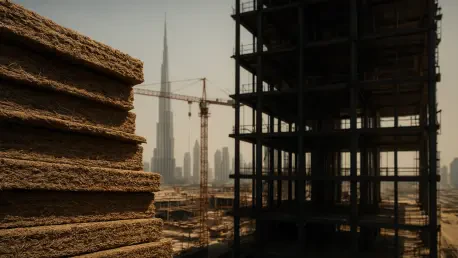

Major real estate developments in Dubai are now integrating palm-based structural boards to achieve fire resistance ratings of up to 120 minutes without sacrificing architectural durability. This structural material, known as Palm Strand Board (PSB), represents a transformative breakthrough in material science and the principles of the circular economy within the built environment. Historically, the maintenance of the region’s 40 million palm trees resulted in millions of tons of agricultural waste that were typically burned or buried in landfills. These disposal methods carried heavy environmental costs, releasing vast amounts of carbon dioxide or generating methane during decomposition. Today, DesertBoard has redirected this waste stream into a sophisticated manufacturing process, creating a tree-free structural board that meets rigorous international performance standards. As the global community intensifies its efforts to combat deforestation, this innovation offers a high-performance alternative that redefines the relationship between infrastructure and natural resources.
Innovations in Safety and Strength
Chemical Safety: Formaldehyde-Free Engineering
The manufacturing of Palm Strand Board involves a meticulous industrial process where reclaimed palm fibers are chipped, shredded, and blended with a specialized adhesive. A critical differentiator for this material is that the adhesive used is 100% formaldehyde-free, achieving an E0 or Super E0 rating for indoor air quality. In 2026, air quality has become a primary focus for urban planners and health organizations alike. Conventional wood-based panels often rely on adhesives that emit volatile organic compounds, which are linked to various respiratory issues and long-term health risks. By eliminating these harmful chemicals, PSB significantly improves the internal environment of residential and commercial buildings. This commitment to non-toxic manufacturing ensures that the material is as safe for the inhabitants as it is for the planet. Such advancements in chemical engineering allow for the creation of sustainable structures that do not compromise the well-being of the people who occupy them daily.
Engineering Resilience: Fire and Durability
Beyond its chemical composition, the palm-based board offers superior physical protection compared to many traditional timber products currently available on the market. The boards are engineered to be naturally resistant to termites and wood-boring insects, which is a vital requirement for construction in the arid and tropical climates where palm trees thrive. Furthermore, the material can withstand fire for up to 120 minutes, addressing one of the most common vulnerabilities in wood-based architecture. This level of fire resistance is achieved through high-pressure compression and the inherent properties of the processed palm fibers, providing developers with a durable and high-performance material. These technical specifications allow the boards to compete directly with, and eventually replace, traditional plywood and oriented strand boards. By providing a product that is both stronger and safer, the industry is moving toward a future where bio-based materials are the default standard for resilient construction.
Environmental and Economic Impact
Carbon Performance: Building Carbon Sinks
The environmental benefits of this palm-waste innovation are measurable and significant, particularly regarding carbon sequestration. Every cubic meter of the board effectively stores approximately 401 kilograms of carbon, acting as a functional carbon sink throughout its lifecycle in a building. This process is essential for meeting the ambitious goals of the UAE Net Zero 2050 strategy and the 2030 Green Diversification Programme. By locking carbon into the structural fabric of modern cities, the construction industry can offset a significant portion of its carbon footprint. Redirecting agricultural waste from landfills also prevents the release of methane, a greenhouse gas far more potent than carbon dioxide. The use of this material in major projects has already demonstrated the potential for large-scale decarbonization. As global carbon markets evolve, the ability to quantify and store carbon within building materials will become an increasingly valuable asset for the global real estate sector.
Supply Chain Security: Localizing Production
Localization of the supply chain provides significant economic advantages by reducing the regional reliance on imported timber. Historically, approximately 85% of wood-based materials in the Middle East were sourced from international markets, leaving the industry vulnerable to global supply chain disruptions and fluctuating shipping costs. By utilizing the domestic abundance of palm trees, manufacturers have secured a stable and sustainable source of raw materials that are available year-round. This approach significantly lowers the carbon footprint associated with international logistics and long-distance transportation. The shift toward locally produced bio-materials also supports the regional economy by creating specialized manufacturing jobs and fostering industrial innovation. As the world moves toward more protectionist trade environments and higher transport costs, securing a domestic supply of structural materials is a strategic priority. This model of utilizing local agricultural byproducts serves as a blueprint for other nations.
Strategic Evolution of the Global Building Landscape
The implementation of palm-based structural boards successfully demonstrated that industrial growth could be reconciled with environmental preservation. Architects and developers who prioritized these bio-based materials achieved significant reductions in their project carbon footprints while maintaining high safety standards. This shift proved that agricultural byproducts, once considered a waste burden, were actually a valuable resource for the next generation of infrastructure. To ensure the continued success of this transition, it was vital that regulatory frameworks evolved to make green building standards mandatory across all sectors. The focus remained on developing engineered systems that combined carbon performance with structural efficiency, moving bio-materials from a niche alternative to the industry default. Future builders looked to these early successes as evidence that sustainable innovation was both economically viable and technically superior. The move toward a circular economy in construction effectively secured a more resilient and eco-friendly future for the global built environment.