
New South Wales is currently facing a pivotal moment where the gap between housing demand and availability has reached a critical threshold, necessitating a radical departure from traditional construction methods toward an industrialized model. The persistent reliance on manual, on-site labor has often resulted in significant delays and fluctuating costs, leaving the state’s urban infrastructure struggling to keep pace with rapid population growth. By embracing Modern Methods of Construction (MMC), the region is attempting to treat residential development more like an advanced manufacturing process than a series of isolated building projects. This shift involves the precision assembly of components in controlled factory environments, which aims to drastically reduce the timeframe for home delivery while ensuring a consistent standard of quality. As the state moves toward this high-tech approach, the focus is on redefining the construction industry to meet modern demands.
Scaling Up Through Industrial Innovation
Establishing a World-Class Manufacturing Facility
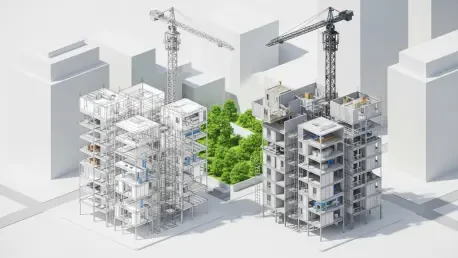
The central pillar of this new strategy involves the development of a world-class MMC Innovation Facility designed to catalyze the transition from craftsmanship to industrial-scale production. By partnering with sophisticated private operators, the government is facilitating a manufacturing hub where homes are constructed in segments before being transported for final assembly. This controlled environment eliminates the weather-related delays and logistical inefficiencies that typically plague traditional construction sites. It allows for the simultaneous preparation of foundations and the fabrication of structural modules, effectively cutting the total project timeline in half. Furthermore, the facility serves as a testing ground for new materials and robotic automation, ensuring that the next generation of housing is not only faster to build but also more energy-efficient. This industrialization represents a significant departure from fragmented conventional building practices in the region.
To ensure that these factory-built units fit seamlessly into existing urban landscapes, the government has introduced a standardized “Pattern Book” of pre-approved designs. These blueprints serve as a bridge between high-volume manufacturing and aesthetic diversity, allowing developers to choose from a range of high-quality architectural styles that have already met regulatory requirements. This standardization simplifies the transition from the factory floor to the final site, reducing the need for costly bespoke engineering for every individual project. Beyond residential use, the versatility of these modular designs extends to critical social infrastructure, such as schools and healthcare clinics, which can be deployed rapidly to growing communities. By utilizing a common design language and modular components, the state can address urgent shortages across multiple sectors. This approach ensures that the rapid pace of production does not come at the expense of structural integrity or the local community character.
Pattern Book Designs: Standardizing Architectural Quality
Creating a viable environment for modular construction requires more than just new technology; it demands a comprehensive update to the legal landscape governing the building industry. The introduction of the Building Bill 2026 marks a transformative milestone, as it represents the first time that prefabricated and off-site manufactured homes are formally recognized within New South Wales legislation. Prior to this, modular projects often operated in a gray area, facing administrative hurdles because traditional building codes were not designed for factory-built components. This new legal framework provides the necessary clarity for developers, insurers, and financial institutions to support large-scale MMC projects with confidence. By legitimizing these methods, the state is effectively removing the primary regulatory barriers that have historically stifled innovation. This legislative reform is paired with a clear roadmap for quality assurance, ensuring that every home meets the safety standards expected of traditional builds.
To complement these legislative changes, the state has committed $32.3 million to modernize the digital planning portal, integrating artificial intelligence to streamline the approval process. This technological investment aims to automate routine administrative tasks and accelerate the processing of license applications, which has traditionally been a major bottleneck for developers. By utilizing AI to screen designs against the Pattern Book standards, the planning system can provide near-instant feedback, allowing projects to move from the drawing board to the factory floor in record time. This digital transformation reduces the overhead costs associated with lengthy waiting periods and administrative uncertainty, making the state a more attractive destination for global construction technology firms. The goal is to create a frictionless pathway for modular housing, where data-driven insights help planners resolve issues before a single module is even built. This modernization ensures that the pace of regulation matches manufacturing speed.
Driving Economic Growth and Market Performance
Modernizing the Legislative and Funding Framework
Financial support plays a crucial role in de-risking the transition for existing construction companies that are looking to adopt more advanced manufacturing techniques. The government has introduced a $4 million grant program specifically designed to help both large manufacturers and small-to-medium enterprises upgrade their facilities and train their workforces. For larger firms, these incentives are often used to pivot toward complex mid-rise and high-rise residential projects, which offer the greatest potential for increasing housing density in urban centers. These grants provide the capital necessary to invest in specialized machinery, such as CNC routers and automated assembly lines, which are essential for high-precision modular construction. By lowering the initial barrier to entry, the state is encouraging a broader range of companies to move away from legacy methods and embrace more efficient technologies. This targeted funding ensures that the local industry remains competitive as the market evolves toward factory production.
Recent data suggests that the integration of planning reforms and advanced construction techniques is already beginning to yield tangible results across the residential market. Housing approvals have seen a notable increase of 13.5% over the past year, indicating that the move toward a more streamlined and technology-driven system is effectively clearing the backlog of delayed projects. With record levels of investment currently directed toward social housing and nearly 80,000 homes in various stages of construction, the state is making a concerted effort to reverse the trend of residents migrating to other regions for more affordable living. These metrics are a clear indication that the combination of legislative clarity and industrial innovation is working to expand the housing supply at a pace that was previously impossible. However, the focus remains on maintaining this momentum and ensuring that the quality of these new builds remains high to avoid the long-term costs associated with building defects.
Advancing Strategic Development: A Sustainable Blueprint
One of the most effective ways to stabilize this burgeoning industry is through consistent and predictable demand, which the state is providing by leveraging its own massive purchasing power. By prioritizing Modern Methods of Construction for public housing, education facilities, and health clinics, the government is acting as a primary customer for modular manufacturers. This commitment provides the financial certainty that companies need to invest in long-term infrastructure and reach the economies of scale required to lower unit costs. When manufacturers know that a steady stream of orders is guaranteed by state-led projects, they can optimize their production lines and reduce waste, making factory-built homes even more affordable for the private sector. This procurement strategy is not just about building houses; it is about establishing a permanent foundation for a high-tech industry. By creating a reliable market, the state ensures that the transition to MMC is sustainable and that the initial momentum is not lost.
New South Wales took decisive action to integrate industrial precision with traditional residential needs, effectively setting a new standard for urban resilience. By shifting the majority of building activities into controlled factory settings, the state significantly reduced the prevalence of structural defects while accelerating the overall delivery of essential housing units. This transition required a coordinated effort across legislative, financial, and technological sectors, ensuring that the necessary infrastructure was in place to support a high-volume manufacturing model. Policymakers and industry leaders recognized that long-term stability depended on creating a predictable market through government procurement and digital transparency. Future considerations should prioritize scaling these technologies to include more sustainable materials and complex high-rise structures. This effort demonstrated that a modernized approach to construction could fundamentally transform a state’s landscape.