
The persistent hollow echoes of shuttered department stores and the faded signage of once-vibrant retail chains have forced a radical reimagining of the urban landscape as communities search for a more sustainable heart. As local economies struggle to adapt to digital shifts, a provocative question emerges: could your next doctor’s appointment be the key to saving the local economy? The transition from consumerism to community well-being represents more than just a change in tenancy; it is a fundamental shift in how urban spaces justify their existence in the modern age.
Beyond Retail: The Urgent Search for a New Town Center Anchor
By moving away from a retail-centric model, town planners can focus on services that resist the volatility of e-commerce. A healthcare anchor provides a steady stream of visitors who require physical presence, something that digital markets cannot replace. This evolution ensures that the high street remains a relevant destination for all demographics, bridging the gap between social utility and economic survival.
Rather than relying on seasonal shopping trends, towns are looking toward essential services that remain relevant regardless of economic cycles. Integrating medicine into the commercial core creates a destination driven by necessity rather than impulse. This shift transforms the town center from a place of transaction into a place of interaction, where the health of the citizen directly correlates with the health of the city.
From Empty Units to Vital Signs: The Context of High Street Decline
The decline of the traditional high street is not a new phenomenon, but the search for a sustainable replacement has reached a critical tipping point. While there is broad political consensus that bringing health services into the heart of communities is beneficial, the movement faces what experts call a wall of institutional and systemic inertia. This gap between the ambition to revitalize urban cores and the actual execution of projects has left many towns in a state of paralysis, highlighting the need for a strategic bridge between healthcare policy and urban planning.
Furthermore, the fragmentation of property ownership complicates the repurposing of large commercial units. Landlords often prioritize short-term rental yields over long-term social value, creating a mismatch in goals. Overcoming this stagnation requires a unified approach that treats healthcare as an essential component of urban infrastructure rather than a secondary tenant.
The Anatomy of a Neighborhood Health Hub
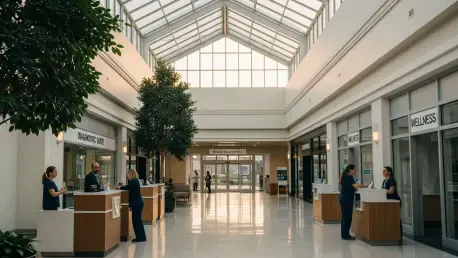
A Neighborhood Health Hub functions as a multi-functional anchor, moving beyond the sterile environment of traditional hospitals to become a vibrant part of the urban fabric. These centers integrate public and private healthcare services—ranging from diagnostic imaging to mental health support—within repurposed retail spaces. This layout encourages a more holistic approach to wellness, where medical care is accessible and visible in daily life.
The primary driver of this model is the halo effect, where the consistent flow of staff and patients generates reliable foot traffic that sustains surrounding businesses. Small enterprises, such as organic cafes, pharmacies, and specialized boutiques, thrive on the predictable volume of visitors. This synergy creates a resilient ecosystem that retail alone can no longer provide, turning a medical visit into a multi-stop community experience.
Expert Perspectives and the Blueprint of Success
To move beyond theoretical glossy visions, the Health on the High Street Commission, led by Professor Ibrahim Ibrahim, is identifying the specific financial and planning obstacles that stall redevelopment. By bringing together cross-sector experts, the commission seeks to address the complex layers of bureaucracy that often prevent medical facilities from occupying commercial zones. Their focus remains on finding practical solutions that make the integration of health and retail financially viable for all parties.
Real-world success stories, such as the Barnsley Health Hub, serve as essential blueprints for this transformation. By relocating outpatient services into a bustling shopping center, the project proved that medical facilities could successfully inhabit vacant retail footprints while improving patient access. These examples demonstrate that when clinical requirements align with private investment and local government planning, healthcare becomes a permanent asset that diversifies the local economy.
Navigating the Roadmap: Turning Visionary Policy into Urban Reality
Transforming a dying high street requires a structured transition away from a retail-only model toward a diversified community hub. The path forward involves a twelve-month policy roadmap designed to dismantle the cultural and financial barriers that currently hinder progress. Key strategies include streamlining the planning process for medical usage in commercial zones and establishing frameworks for public-private partnerships.
The transition successfully identified that long-term social value must be prioritized over immediate financial gain to ensure urban longevity. Stakeholders focused on the intersection of real estate and public health, allowing town centers to evolve into essential destinations that treated community wellness as a primary commodity. These efforts provided a clear framework for future urban development that ensured the high street remained a vital, multi-functional heartbeat for every neighborhood.