
The transformation of the sleepy White Pine Commerce Park into a sprawling $100 billion industrial giant represents the most significant shift in American domestic manufacturing within the last fifty years. Micron’s massive investment in Clay, New York, has reached a critical juncture now that Bechtel has assumed the lead role for engineering, procurement, and construction. This shift from early site preparation to heavy mobilization signals that the project has moved beyond conceptual planning into a high-stakes reality.
While initial groundwork led by Gilbane established the primary footprint, the arrival of Bechtel brings a level of industrial expertise necessary for a project of this magnitude. The mobilization effort aims to turn hundreds of acres into the most advanced memory manufacturing center on the planet. This transition marks the beginning of a construction marathon that will redefine the economic trajectory of the region.
A $100 Billion Construction Gambit: Upstate New York
The sheer scale of this endeavor is resetting the industrial compass of the United States. Following the formal groundbreaking, the project has transitioned into a massive mobilization effort to transform the site into a world-class manufacturing hub. Bechtel’s appointment as the lead partner ensures that the project moves from basic infrastructure to the assembly of complex technological environments.
This phase marks the end of preliminary groundwork and the start of physical assembly. By centralizing procurement and engineering under a single lead partner, Micron aims to mitigate the risks associated with such a colossal investment. The focus remains on preparing the site for the specialized structural requirements of semiconductor production.
Securing the future of American AI: Advanced Memory Manufacturing
Building a domestic semiconductor powerhouse is a vital step toward technological sovereignty. As artificial intelligence reshapes global industries, the demand for advanced memory chips has become a matter of national security. By establishing this footprint in Onondaga County, Micron aims to insulate the American supply chain from global volatility while fostering a new industrial heartland.
This regional transformation provides a stable foundation for the next generation of American labor. The facility will not only produce chips but will also serve as a hub for innovation, ensuring that the hardware powering the AI revolution remains domestic. This effort reflects a broader commitment to reclaiming leadership in high-tech manufacturing.
Mapping the Long-Term Evolution: The Clay Megafab Campus
The lifecycle of this facility involves milestones stretching to 2041, reflecting the immense complexity of semiconductor environments. While construction is currently intensifying, the first facility is slated to begin operations in 2030. This timeline allows for the precise installation of the sophisticated equipment required for modern chip production.
Managing this evolution requires a masterclass in long-term industrial planning. As the campus grows, it will transform from a construction site into a cornerstone of the global chip industry. This gradual expansion ensures that the infrastructure can adapt to future technological shifts while maintaining a steady production output.
The Science of Scale: Modular Innovation and Digital Workflows
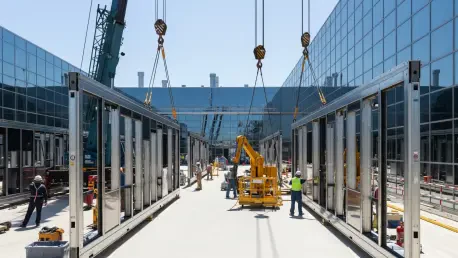
Bechtel is deploying an integrated delivery model that prioritizes efficiency through modular construction. By building components off-site and assembling them with surgical accuracy, the team reduces the risk of delays in a high-pressure environment. Digital-enabled technologies allow for real-time coordination, ensuring that every phase remains aligned with operational goals.
Furthermore, the use of data-driven workflows helps synchronize a massive workforce across various specialized tasks. This approach minimizes waste and maximizes precision, which is critical in an environment where even a minor error can derail a project. These innovations represent the future of large-scale industrial construction.
Tactical Execution: Large-Scale Modular Infrastructure Projects
Success required a departure from traditional building methods in favor of specialized frameworks. Effective execution involved rigorous schedule management and the implementation of world-class cleanroom standards. The synchronization of a massive labor force was essential to maintaining the project’s momentum during the most technical phases of development.
The partnership served as a blueprint for repatriating industrial capabilities. By focusing on disciplined project oversight and modular integration, the leadership team ensured the project reached its milestones. The final construction phases provided a resilient foundation for future technological growth, securing a competitive edge for the American semiconductor industry. Stakeholders looked toward secondary infrastructure to support the massive influx of specialized talent required for long-term operations.