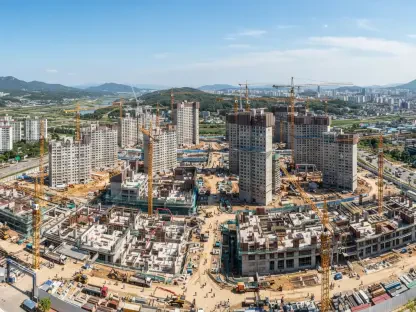

The stagnation of multi-residential projects like apartments and townhouses remains a critical bottleneck for the Australian construction industry’s recovery. While total home commencements climbed by a respectable 7% during the June quarter, this headline figure masked a deeper imbalance within the residential sector. The growth was primarily driven by an 11.6% surge in detached house construction, whereas the multi-residential segment—essential for achieving high-density urban goals—actually witnessed a slight contraction in new project starts. This lopsided recovery left the nation approximately 95,000 dwellings behind the schedule required to hit the National Housing Accord target of 1.2 million new homes by mid-2029. Such a significant deficit translated into a staggering $45 billion loss in potential economic activity for the country. Industry experts from the Housing Industry Association noted that while the quarterly uptick provided temporary optimism, it failed to address the systemic supply issues that continued to plague the broader market.
Divergent Trends: Detached Housing Versus High-Density Stagnation
The preference for detached housing remained a prominent feature of the construction landscape throughout the first half of 2026, though it offered a misleading sense of security regarding the total housing supply. While suburban developments continued to expand, the lack of progress in the high-density sector threatened to derail long-term affordability initiatives. Developers frequently cited the high cost of capital and persistent labor shortages as primary reasons for the reluctance to break ground on large-scale apartment complexes. Without a significant shift in the appetite for multi-residential projects, urban centers risked seeing even tighter rental markets and escalating property values. The Australian Bureau of Statistics indicated that total completions saw a modest rise of 5.8%, but this was largely attributed to clearing existing backlogs rather than a surge in new intent. Consequently, the industry found itself in a precarious position where the current output simply could not match the anticipated demand from a growing population.
Looking closer at the timing of these developments, analysts discovered a significant lag between policy implementation and physical construction activity. The positive figures reported in June were largely the result of sales and approvals that occurred throughout 2025, rather than a reflection of current economic conditions. As the year 2026 progressed, more recent data from August suggested a worrying downturn, with building approvals dropping by 6.1% in a single month. This decline signaled that the momentum seen earlier in the year was rapidly evaporating under the pressure of interest rate adjustments and shifting housing taxation policies. The downward trend in approvals served as a leading indicator for a potential slump in commencements late in 2026 and early 2027. Experts warned that unless approvals stabilized, the path toward the 1.2 million home target would become increasingly narrow. The gap between government ambition and market reality became more pronounced as economic headwinds intensified.
Regional Disparities: A Divided National Landscape
The geographical distribution of housing growth in 2026 revealed a starkly divided national landscape, with some states outperforming others by a wide margin. South Australia and Victoria managed to maintain a level of resilience, posting modest gains in building approvals that suggested a degree of stability in their local markets. In contrast, major economic hubs like New South Wales and Queensland faced sharp declines in construction activity, a trend that threatened to pull down the national average. These regional differences highlighted the limitations of a one-size-fits-all national housing strategy when local regulatory environments and land release policies varied so significantly. For instance, high developer levies and complex zoning laws in certain metropolitan areas continued to act as deterrents for new residential investments. As the 2029 deadline approached, the uneven performance across state lines made it increasingly difficult for federal authorities to coordinate a cohesive response to the housing shortage.
Addressing the housing crisis necessitated a move beyond volatile quarterly fluctuations toward a framework of sustained and predictable growth. Stakeholders recognized that streamlining the approvals process and reducing the tax burden on new developments were essential steps to stimulate the multi-residential sector. The analysis suggested that if Australia was to meet its 1.2 million home goal, the industry required targeted incentives to offset rising material costs and a more robust workforce strategy to address the skills gap. Policymakers were encouraged to prioritize infrastructure-led development that could unlock land in underutilized areas, thereby diversifying the housing stock. It was concluded that without immediate intervention to lower regulatory hurdles, the nation would likely fall short of its mid-2029 objectives. The historical data demonstrated that relying on detached housing alone was an insufficient strategy for a modern urban economy. Moving forward, the focus shifted to ensuring that the next wave of approvals translated into finished homes.