
Timing infrastructure upgrades to coincide with existing asset life cycles prevents the financial strain often associated with rapid fossil fuel divestment. Modern higher education institutions find themselves at a difficult crossroads, facing the triple threat of ambitious decarbonization goals, aging physical plants, and an increase in extreme weather events. While high-profile projects like rooftop solar panels capture public attention, the real work of institutional sustainability happens within the invisible foundation of the campus. To ensure long-term viability, universities must pivot from a reactive mindset to a strategic approach that prioritizes the complex, interconnected utility networks—such as steam, water, and electricity—that sustain academic life and critical research. This transition requires a fundamental reevaluation of physical assets, moving from a view of infrastructure as a mounting liability to seeing it as a dynamic engine for campus stability and a safeguard for the institutional mission.
Shifting Toward Performance Intelligence
The traditional approach to campus maintenance often relies on a “wholesale replacement” strategy, where systems are overhauled simply because they have reached a certain age. However, a more effective modern strategy involves the use of performance intelligence, which evaluates assets based on their current reliability and alignment with carbon-reduction targets rather than just their date of installation. This shift allows facilities teams to distinguish between total equipment failure and smaller, fixable issues caused by decades of deferred maintenance or the layering of incompatible technologies. By analyzing real-time output and efficiency metrics, administrators can extend the life of robust legacy systems while identifying specific components that are truly dragging down overall performance. This nuanced understanding prevents the wasteful disposal of functional machinery and allows for surgical interventions that provide immediate and measurable operational improvements.
By focusing on performance rather than age, institutions can optimize their existing assets and identify untapped potential before committing massive amounts of capital to full-scale replacements. This intelligence-driven methodology minimizes the disruption caused by major construction while maximizing the return on previous investments. It ensures that every dollar spent is targeted at the root cause of inefficiency, moving the campus toward a more stable and high-performing utility environment without unnecessary waste. Furthermore, this approach allows for the incremental integration of smart sensors and IoT devices that provide a continuous stream of diagnostic data. Instead of waiting for a catastrophic leak or power surge, facilities managers can predict failure points and address them during scheduled downtime. This transition from reactive repairs to predictive maintenance transforms the operational culture from constant crisis management into strategic institutional stewardship.
Harnessing Data for Systemic Clarity
One of the greatest obstacles to effective infrastructure planning is the existence of blind spots within complex utility networks. Without granular data, administrators often struggle to tell the difference between an isolated mechanical glitch and a broader systemic failure. Advanced analysis tools and predictive modeling solve this problem by mapping utility flows and simulating how the campus reacts to stress, such as extreme temperature spikes or rapid changes in student population. These digital twins of campus systems allow planners to test “what-if” scenarios without risking actual service interruptions. For instance, modeling the impact of a sustained heatwave on the central chilled water plant can reveal which buildings are most vulnerable to cooling loss. This level of foresight enables universities to fortify specific sections of the grid, ensuring that research laboratories and medical facilities remain operational even when the broader municipal grid is struggling.
This data-driven approach creates a common language for stakeholders across the university, from facilities managers to finance officers. It moves high-stakes investment conversations away from anecdotal assumptions and toward empirical evidence, allowing leaders to visualize the interdependencies of their systems. When the relationships between water, heat, and power are fully understood, the institution can prioritize interventions that offer the greatest protection against operational disruptions. Moreover, clear data visualizations help demystify the complexities of underground utilities for board members and donors who may be more inclined to fund visible surface projects. By demonstrating how a high-efficiency boiler directly supports the academic mission and reduces long-term operating costs, facilities teams can build a compelling narrative for investment. This transparency fosters institutional trust and ensures that capital is allocated based on objective risk assessment.
Strengthening Resilience Through Diversification
True resilience requires moving away from the single, centralized utility pathways that many campuses have relied on for decades. Dependency on a single municipal water source or a centralized natural gas plant creates a significant vulnerability; a single point of failure can jeopardize years of research and compromise student safety. Modernizing for resilience means adopting a mindset of diversification, where hybrid energy systems and distributed thermal solutions provide a safety net if the primary source fails. In 2026, many leading institutions are integrating microgrids that combine solar power, battery storage, and traditional backup generators to create islandable energy zones. This decentralized architecture ensures that even if the regional transmission network goes offline, the campus can maintain lighting, security, and climate control in critical areas. This move toward self-sufficiency not only mitigates risk but also provides a hedge against volatile energy prices.
A forward-thinking component of this diversification is the implementation of closed-loop systems, such as wastewater reuse. By reclaiming water for industrial applications like cooling towers or irrigation, campuses reduce their reliance on municipal grids and embed an extra layer of operational continuity into their infrastructure. These localized solutions ensure that the campus can maintain its core functions even during external municipal failures or severe climate-driven events. Beyond water, the concept of energy recovery—capturing waste heat from data centers to provide space heating—further illustrates the shift toward a circular campus economy. These integrated systems reduce the overall demand on the grid while lowering carbon footprints in a way that remains invisible to the daily campus user. By treating every waste stream as a potential resource, universities are creating a ruggedized infrastructure capable of withstanding the environmental challenges of the current era.
Executing a Strategic Transition to Electrification
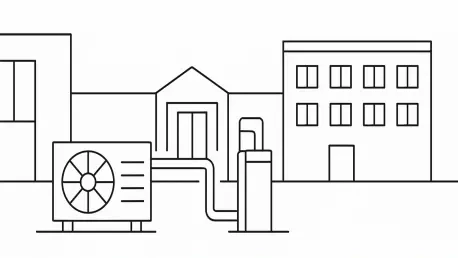
While electrification is the clear pathway to a low-carbon future, the financial and technical challenges of moving away from fossil fuels can be overwhelming. The most successful institutions avoid the pitfalls of a rushed transition by focusing on strategic sequencing. This involves timing major upgrades to coincide with the natural end of an asset’s lifecycle, ensuring that the transition to green technology happens in manageable, cost-effective phases. Modern innovations, such as high-temperature heat pumps, have made the jump to electric heating more feasible, even for campuses in colder climates. These systems can often utilize existing steam pipe corridors or water loops, reducing the need for disruptive trenching across the campus. By carefully mapping out which boilers are due for replacement from 2026 to 2030, administrators can create a predictable capital plan that steadily replaces natural gas consumption with electric solutions powered by green sources.
By integrating these upgrades into a long-range infrastructure roadmap, universities can preserve the value of their current systems while steadily progressing toward net-zero goals. This disciplined approach prevents the financial strain of premature replacements while ensuring the campus stays on track to meet environmental mandates. Furthermore, the transition to electric infrastructure often opens new opportunities for energy efficiency that were not possible with combustion-based systems. Electric chillers and heat pumps can be tuned with high precision using smart building controls, allowing for demand-response strategies that lower costs during peak hours. This synergy between electrification and digital control systems creates a more agile physical plant that can respond to the dynamic needs of modern research and residential life. The result is a campus that is not only cleaner but also significantly more responsive to the fluctuations of the energy market.
Prioritizing Lifecycle Value and Risk Management
In an era of rising construction costs and limited capital, the focus of infrastructure spending must shift from first cost to enterprise value. This means prioritizing durability, maintainability, and the long-term stewardship of assets over the cheapest initial price tag. Infrastructure decisions are no longer just technical tasks; they are strategic choices that determine the university’s financial health and operational risk profile for the next several decades. When evaluating new materials or technologies, planners must consider the total cost of ownership, including energy consumption, routine maintenance, and eventual decommissioning. A higher initial investment in corrosion-resistant piping or modular switchgear often pays for itself through reduced emergency repair costs and extended service life. This holistic perspective ensures that the campus infrastructure remains a robust foundation for academic excellence rather than becoming a drain on the institution’s funds.
Securing funding for these largely invisible projects required building a business case that translated technical needs into institutional risks. By presenting leadership with data-driven scenarios regarding the cost of inaction—such as the financial loss of a research lab losing power—facilities teams moved projects from the wish list to the execution phase. This approach established a framework where resilience was measured by the continuity of the academic mission and the protection of long-term investments. Universities that adopted these methods successfully integrated water reclamation, thermal energy storage, and predictive modeling into their master plans. These efforts proved that infrastructure stewardship was not merely a maintenance obligation but a strategic imperative. Moving forward, campuses prioritized modularity and adaptability, ensuring that every new utility line or power substation could accommodate future technological shifts without requiring a total overhaul.