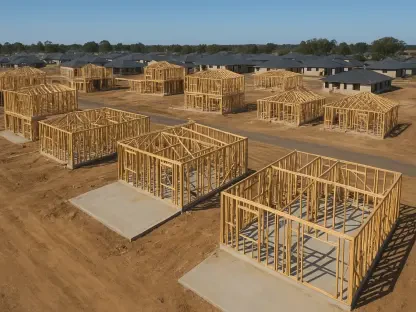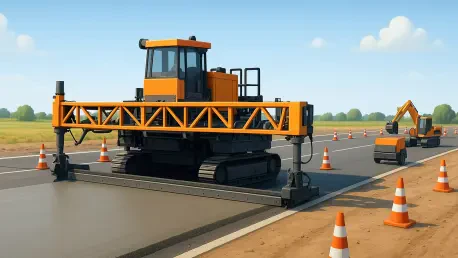

Infrastructure growth and the rapid expansion of data centers are placing extreme pressure on an already depleted and aging labor pool. This unprecedented surge in demand has collided with a demographic cliff that threatens to stall the momentum of the entire two-trillion-dollar construction industry. As veteran tradespeople depart the workforce at an accelerating rate, the gap between project requirements and available human skill sets continues to widen. Current estimates suggest that the sector requires nearly half a million new workers every year simply to maintain current operations. However, with approximately forty-one percent of the active labor force approaching retirement within the next decade, the math no longer supports traditional recruitment strategies. This creates a volatile environment where firms are increasingly forced to decline lucrative contracts because they lack the bodies to execute the work safely and efficiently. The situation represents a systemic vulnerability for the national infrastructure.
The Disconnect: Executive Vision and Jobsite Reality
Addressing the labor vacuum requires a fundamental shift in how the industry perceives technological integration, particularly regarding artificial intelligence and robotics. On the ground, a significant disconnect persists between corporate innovation goals and the daily reality of site management. Project managers are historically risk-averse, prioritizing reliability and what they call recoverability over theoretical productivity gains. They need to know exactly how a project recovers if a robotic system fails or if an autonomous excavator loses connectivity. This skepticism is not born of a hatred for technology but from the high-stakes nature of modern builds where a single day of downtime results in massive financial penalties. Consequently, for any robotic solution to gain widespread acceptance, it must prove that it is as dependable as the manual labor it seeks to augment. The focus remains on the immediate feasibility of these tools under harsh and unpredictable site conditions.
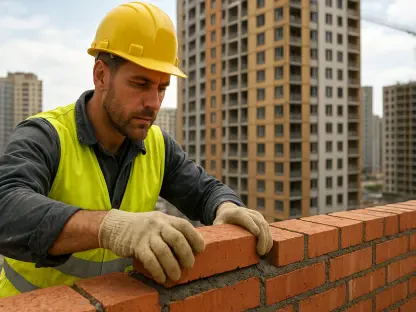
At the executive level, the hesitation often stems from a limited framework for evaluating the return on investment for high-cost automation. Most leadership teams continue to measure the success of AI and robotics against short-term quarterly productivity benchmarks rather than viewing these tools as a critical hedge against long-term labor scarcity. While a concrete-finishing robot or an automated bricklayer might seem like a substantial upfront capital expenditure, its value should be calculated by the cost of the work that would otherwise go uncompleted. In the current economic climate, the true risk is not the failure of the technology but the total absence of workers. Leaders are beginning to realize that the traditional metrics of efficiency are insufficient when the labor pool itself is shrinking. Reframing automation as an insurance policy against project paralysis is becoming the new standard for forward-thinking organizations that plan to remain solvent in a tightening market.
De-Risking the Workforce: A New Operational Model
The industry has reached an inflection point where the competition for a finite and less experienced labor pool is making traditional, manual-heavy processes untenable. Implementing artificial intelligence for site monitoring and predictive analytics provides a layer of oversight that a depleted workforce simply cannot provide manually. For instance, computer vision systems now track progress and safety compliance in real-time, allowing a smaller number of supervisors to manage larger and more complex sites effectively. These technologies do not just replace human hands; they augment human capabilities by filtering massive amounts of data into actionable insights. By automating routine documentation and safety checks, firms can refocus their limited human talent on tasks that require expert judgment and craftsmanship. This evolution is already visible in large-scale infrastructure projects where autonomous drones conduct surveying and site inspections with a speed and accuracy that far exceeds manual methods.
The successful integration of these advanced systems required a departure from the conservative mindset that once defined the construction landscape. Organizations that prioritized the implementation of AI and autonomous machinery found themselves better positioned to navigate the complexities of a volatile market. They moved beyond simple cost-benefit analyses and began pricing in the long-term risk of the widening workforce gap, which allowed them to secure projects that their competitors could no longer staff. By viewing technology as a vital safeguard for the physical infrastructure, industry leaders ensured the continuity of essential building projects. The focus shifted toward a collaborative future where human expertise was enhanced by digital consistency, ultimately stabilizing the sector against demographic decline. Future success depended on the courage to adopt these tools early, turning a labor crisis into an opportunity for systemic modernization and improved operational safety across the board.