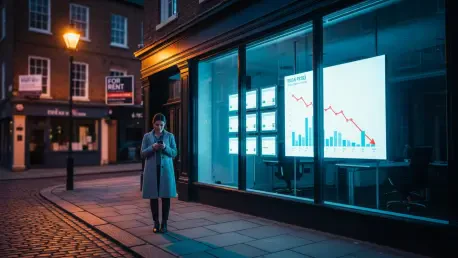

The historic cobblestone streets of Bristol are witnessing a phenomenon that few residents expected to see in this decade: the first measurable decline in monthly rental costs. Average rents have settled at $1,868, marking a 3.8% decrease that has fundamentally disrupted the long-standing narrative of an ever-tightening market. While this shift offers a reprieve for those struggling with the cost of living, the underlying data points toward a cooling period that is as much about uncertainty as it is about affordability. Properties that once vanished within days are now lingering on listing sites for an average of 31 days, up from the previous 25-day benchmark.
This adjustment in market velocity suggests that the city is currently in a state of suspended animation. Tenants find themselves with slightly more leverage, yet the broader economic signals indicate that this rare window might be the precursor to a significant contraction. Many housing analysts suggest that the current price dip is not the result of a sudden abundance of homes, but rather a cautious pause as both owners and renters recalibrate their expectations in the wake of sweeping regulatory changes.
A Rare Window of Affordability or the Calm Before a Housing Storm?
The current figures provide a fascinating snapshot of a city at a crossroads, where the average cost of living has finally hit a psychological and economic ceiling. This 3.8% reduction in rent represents the first time in recent memory that the upward trajectory of the housing market has stalled. For many, the six-day increase in the time a property remains vacant is the most telling metric. It signals a shift from a frantic landlord’s market to one where potential tenants are taking more time to evaluate their options, refusing to jump at the first available listing regardless of the price.
However, this cooling phase is being met with skepticism by those who track long-term supply trends. The fear remains that the price drop is an artificial byproduct of a market bracing for impact. If investors perceive that the risks of owning rental property are beginning to outweigh the rewards, they may choose to divest, leading to a much tighter market in the near future. Consequently, the current period of affordability could be a fleeting moment before a supply crisis drives prices back toward record highs.
The Legislative Catalyst: Understanding the Renters’ Rights Act
The primary driver behind this sudden market shift is the implementation of the Renters’ Rights Act, a transformative piece of legislation that has fundamentally rewritten the rules of engagement for the private rental sector. By outlawing the practice of bidding wars, where desperate applicants would offer hundreds of dollars over the asking price, the law has effectively capped the runaway inflation that characterized the Bristol market for years. This shift in the power dynamic toward tenants was intended to provide security and transparency, but it has also introduced a high degree of volatility into landlord strategies.
With the ability to solicit higher bids now removed, property owners are facing a new reality that requires more conservative and long-term financial planning. This push for tenant security has triggered a crisis of confidence among traditional property owners, many of whom feel that the legal landscape has become overly hostile to their business model. Bristol has become a primary testing ground for whether aggressive regulation can truly protect tenants without inadvertently destroying the incentive for landlords to maintain and provide housing.
Geographic and Sector Divergence: Where the Market is Cooling Fastest
While the citywide average suggests a general decline, a closer look at individual neighborhoods reveals a starkly different story depending on the postcode and property type. The most dramatic price correction occurred in Bristol City Center, where rents plummeted by 10.9%. This area is saturated with modern apartment complexes that are more sensitive to legislative changes and shifting demand. In contrast, the market for single-family homes and individual rooms has remained remarkably stubborn, even showing a marginal growth of 0.6%, proving that space and privacy still command a premium.
Sector-specific data highlights that neighborhoods like Redcliffe and Montpelier continue to operate at a different speed than the rest of the city. In these high-velocity districts, available units are often claimed in as little as 18 days, suggesting that demand for certain lifestyles remains insulated from broader market trends. Additionally, the massive student population in Bristol acts as a unique anchor; because student-friendly listings make up more than 36% of the local supply, their lower price points and high turnover rates continue to exert downward pressure on the city’s overall rental average compared to other major metropolitan areas.
Industry Warnings and the “Netherlands Precedent”
Experts are increasingly pointing to international examples to predict the next phase of Bristol’s housing evolution. Jasper de Groot, a leading voice in the rental industry, noted that the current rent drops might be a defensive maneuver by landlords. He suggested that many owners are now front-loading their asking prices to compensate for the loss of bidding opportunities, which creates a perception of falling prices that may not last. This tactical shift is happening alongside a troubling trend identified in the English Private Landlord Survey, which found that 31% of landlords are considering selling their properties.
The Netherlands Precedent serves as a grim cautionary tale for those watching the Bristol market. In the Dutch housing sector, similar pro-tenant reforms led to the disappearance of 80,000 rental homes as landlords sold their units to owner-occupiers. This massive reduction in the rental pool eventually caused prices to skyrocket because the remaining supply could not meet the persistent demand. Industry leaders fear that Bristol is on a similar trajectory, where the short-term benefit of lower rents will be erased by a catastrophic shortage of available homes as the private sector retreats.
Navigating the New Landscape: Strategies for Renters and Investors
Prospective tenants looking to make the most of the current climate should focus their efforts on high-density areas like the City Center and Bedminster. The increased time-to-let in these districts provides a unique opportunity for renters to negotiate lease terms or move-in dates that would have been impossible a year ago. By utilizing the 31-day market average as a benchmark, savvy shoppers can identify properties that have been sitting on the market too long and use that status as leverage for a more favorable deal.
For those prioritizing stability over price, monitoring the volume of new listings will be more critical than tracking monthly price tags. A sudden decline in the number of available units would serve as the first concrete sign that the predicted supply crisis has arrived. Investors and long-term renters alike should keep a close eye on neighborhoods like Horfield, which have remained resilient in the face of volatility. Ultimately, adapting to this new landscape required a shift in mindset; with bidding wars gone, the initial sticker price became the primary battleground for affordability in a rapidly changing city.
The resolution of the supply tension depended on a balanced approach to legislative reform. Stakeholders recognized the need for tax incentives that targeted small-scale housing providers to keep them in the market. Consequently, the next phase of urban development focused on increasing density through mixed-use projects that integrated affordable housing with commercial spaces. These actions helped stabilize the market and prevented a total exodus of private capital from the city’s residential sector. Authorities also shifted their attention toward streamlining the conversion of vacant office buildings into residential units to bolster the available stock.