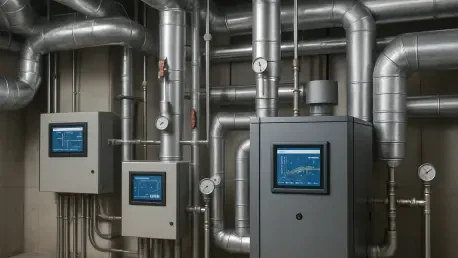

The traditionally invisible infrastructure of commercial climate control has finally emerged from the shadows of mechanical utility rooms to become the primary driver of financial resilience in modern building management. This evolution represents a fundamental shift in how organizations perceive their environmental footprint and operational overhead. Historically, heating and cooling were treated as “set-and-forget” functions, but the modern economic landscape demands a more surgical approach. By integrating real-time data with mechanical systems, smart optimization has transformed HVAC from a passive expense into a dynamic asset that responds to the complexities of current infrastructure needs.
This review examines the shift from reactive hardware maintenance to software-led intelligence. Unlike traditional systems that operate on rigid schedules, modern optimization platforms utilize a layered digital architecture to ensure efficiency. This technology does not merely serve as a thermostat; it acts as an analytical engine that reconciles tenant comfort with the economic reality of rising utility rates. By moving the focus from the basement to the cloud, the industry has unlocked a level of transparency that was previously impossible in large-scale facility management.
The Evolution: From Reactive to Proactive Climate Control
The emergence of intelligent climate control served as a direct response to the inefficiencies of legacy hardware that operated on rigid, manual schedules. In the past, facility managers were forced to choose between tenant comfort and energy savings, often failing to achieve either during peak demand periods. Smart optimization broke this binary choice by introducing software-led intelligence that prioritizes performance over sheer mechanical force. Unlike traditional competitors that rely on selling more expensive compressors or boilers, this technological layer focuses on extracting maximum value from the machinery already in place.
Historically, the HVAC sector functioned as a “hidden utility,” where performance was only questioned when the system failed entirely. This lack of oversight led to massive energy waste, with significant portions of building budgets literally disappearing into thin air through inefficient cycling. The transition to smart systems has redefined the role of the facility manager from a repair person to a data analyst. This shift is not merely a convenience; it is a strategic necessity driven by the need for greater operational visibility in an increasingly competitive real estate market.
Key Features: The Core Technological Architecture
Continuous Fault Detection: Identifying Performance Drift
Continuous fault detection and diagnostics act as the nervous system of this technology, identifying subtle anomalies that human inspectors would likely miss. This process involves sophisticated algorithms that monitor “performance drift,” which is the gradual decline in efficiency caused by minor mechanical wear or sensor misalignment. Rather than waiting for a total system failure that triggers a building-wide emergency, the platform pinpoints issues like leaking valves or restricted airflow in their infancy. This capability effectively turned maintenance into a predictable, data-driven task rather than a series of costly, reactive crises.
Predictive Data Analytics: Anticipating Thermal Demand
Integration with existing Building Management Systems allows for the aggregation of diverse environmental datasets that influence thermal loads. These platforms do not merely react to a thermostat reading; they anticipate shifts by analyzing localized weather forecasts and real-time occupancy levels. By adjusting the cooling or heating intensity before a heatwave hits or a boardroom fills up, the system avoids the destructive “short-cycling” that typically plagues large-scale units. This foresight not only ensures a more stable internal climate but also significantly extends the operational lifespan of the mechanical hardware itself.
Emerging Trends: The Software-First Philosophy
The shift toward a “software-first” philosophy has redefined how facility managers allocate their budgets, moving away from premature capital replacements. As the electrification of heating systems increases the overall electrical load on buildings, sophisticated management tools have become essential for avoiding expensive peak-demand surcharges. Furthermore, the industry has begun to address the psychological toll of “alarm fatigue” by using artificial intelligence to filter noise. This ensures that facility teams only receive notifications that require immediate action, replacing a flood of data with a stream of actionable intelligence.
Moreover, the decentralization of building control is allowing for more granular management of individual zones. This trend is particularly relevant in the post-pandemic landscape, where office occupancy is often fragmented and unpredictable. Software that can automatically decommission airflow to empty wings of a building while maintaining perfect conditions in active zones represents the pinnacle of modern efficiency. This granular control is what differentiates modern optimization from the blanket cooling strategies of the previous decade.
Real-World Applications: Sector Impact and Asset Valuation
Commercial real estate and hospitality sectors have seen the most immediate benefits from deploying these intelligent frameworks. In high-rise office environments, where cooling costs often fluctuate wildly based on tenant density, optimization has provided a way to maintain strict energy-reduction mandates. Hotels have utilized occupancy-linked conditioning to ensure that guest rooms are only serviced when occupied, which drastically lowers the operational floor for overhead costs. Such implementations have demonstrated that a property can reduce its total energy footprint by nearly one-third, which immediately reflects in a higher asset valuation.
In the healthcare sector, the stakes are even higher, as precise climate control is linked to patient outcomes and regulatory compliance. Smart HVAC systems in hospitals ensure that operating rooms and pharmacies maintain exact pressure and temperature differentials regardless of external conditions. This level of reliability reduces the risk of equipment failure during critical procedures and automates the documentation required for health safety audits. Across all sectors, the ability to prove energy savings through hard data has become a key driver for attracting institutional investors who prioritize sustainable operations.
Technical Challenges: Bridging the Digital Divide
Integrating modern software with legacy hardware remains a significant hurdle, as many older buildings operate on proprietary systems that lack open communication protocols. This digital divide often requires specialized middleware to bridge the gap between older chillers and cloud-based analytics platforms. Additionally, the facility management workforce has had to undergo a cultural transition from manual, wrench-in-hand inspections to digital dashboard oversight. Developing “plug-and-play” interfaces has become a priority to lower the entry barrier for smaller facilities that lack extensive technical resources.
Beyond the hardware issues, data security has emerged as a primary concern for building owners connecting their HVAC systems to the internet. Safeguarding against unauthorized access while maintaining a constant stream of telemetry data requires robust encryption and frequent security patches. While these challenges are significant, they are not insurmountable. The industry is moving toward standardized communication protocols that will eventually make software integration as simple as updating a mobile application, regardless of the age of the underlying mechanical equipment.
Future Outlook: The Path Toward Autonomous Operations
Looking ahead, the focus of HVAC optimization has moved toward autonomous building operations where systems function as self-healing entities. These frameworks are being designed to automatically adjust parameters to meet stringent carbon neutrality goals without requiring human intervention. Regulatory frameworks have transitioned from being optional guidelines to becoming mandatory operational hurdles, making smart optimization a baseline requirement for compliance. Breakthroughs in machine learning are now enabling buildings to participate in grid-interactive programs, allowing them to shed loads dynamically to support local power stability.
The convergence of thermal management and renewable energy storage is another frontier that will redefine the sector. Buildings are beginning to act as “thermal batteries,” pre-cooling or pre-heating their mass during times of low energy cost to reduce consumption during expensive peak hours. As this technology matures, the distinction between a building and a power plant will continue to blur. The goal is no longer just to keep people comfortable, but to integrate the built environment into a more responsive and resilient energy ecosystem.
Final Assessment: A Verdict on Intelligence over Hardware
The transition to smart HVAC optimization established a new standard for operational excellence that moved beyond simple energy savings. Decision-makers realized that the high cost of reactive maintenance and energy waste was no longer a sustainable business model in an era of strict environmental oversight. Organizations that adopted these proactive systems early gained a significant competitive edge by protecting their bottom line and enhancing tenant satisfaction. This technological shift proved that intelligent software, rather than just heavier hardware, was the key to building a resilient and sustainable future for global infrastructure.
Moving forward, the primary focus for stakeholders should be the aggressive retrofitting of existing assets to close the performance gap. The industry recognized that the most sustainable building is the one that already exists, provided it is equipped with the digital tools to operate at peak efficiency. Actionable steps for the immediate future involved the standardization of data formats to ensure that optimization could be scaled across entire real estate portfolios. Ultimately, the verdict was clear: the era of “dumb” mechanical systems ended because the financial and environmental risks of maintaining them became too great to ignore.