
The seven LG-branded IoT products are scheduled for a December launch across the United States, Canada, and the United Kingdom to capture the holiday market. This collaboration represents a monumental shift in the home automation landscape, as it bridges the gap between high-end industrial design and a globally dominant software ecosystem. By aligning LG’s engineering prowess with Apple’s sprawling user base of 2.5 billion active devices, the two giants aim to redefine how consumers interact with their living spaces through a more intuitive, hardware-centric approach. Historically, Apple has focused on software control via third-party accessories, but this new venture signifies a deeper commitment to curated, tightly integrated hardware experiences. For LG, the alliance provides a direct channel to affluent tech enthusiasts who prioritize the Apple ecosystem above all else. This strategic union is not merely a product launch but a calculated attempt to challenge the existing market leaders by offering a level of cross-device fluidity that has previously remained elusive to most homeowners in the current technological era.
Advanced Integration: Transforming Daily Life Through Vision AI
At the core of this new product lineup is a sophisticated implementation of vision AI technology designed to drastically reduce notification fatigue. The indoor and outdoor security cameras, alongside the high-definition video doorbell, do not simply record movement; they possess the cognitive ability to distinguish between family members, pets, delivery vehicles, and even specific package types. This level of granularity ensures that users receive alerts only when something truly significant occurs, such as a package being dropped off or an unknown individual lingering near the entrance. To address growing concerns regarding digital privacy, these devices are programmed with a localized processing architecture that minimizes data transmission to the cloud. For instance, the system can be configured to automatically trigger a physical privacy shutter or enter a dormant mode the moment it detects a resident has returned home using geofencing. Such features demonstrate a nuanced understanding of the modern user’s need for both safety and personal space in an increasingly connected world.
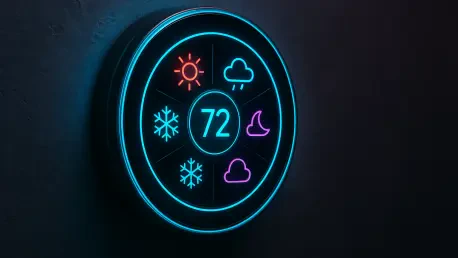
Beyond visual surveillance, the partnership introduces a smart thermostat and a touchless door lock that utilize biometrics and behavioral data to enhance domestic convenience. The thermostat functions by aggregating real-time data from a user’s Apple Watch and iPhone, allowing it to adjust heating and cooling zones based on actual movement patterns and current local weather fluctuations rather than static schedules. This proactive approach ensures optimal comfort while significantly lowering energy consumption by reducing output in unoccupied rooms. Simultaneously, the smart door lock leverages ultra-wideband technology to detect a user’s approach, facilitating a hands-free entry experience that is particularly useful for those carrying groceries or luggage. This lock also incorporates advanced sensors to monitor for forced entry or physical tampering, sending immediate high-priority alerts to the HomeView hub. By integrating these disparate elements into a singular, responsive network, LG and Apple are moving away from reactive gadgets toward a holistic, predictive living environment.
Strategic Synergy: Redefining the Smart Home Ecosystem
The central nervous system of this collaboration is the Apple HomeView hub, a sleek 7-inch display designed to serve as the command center for the entire household. Priced at $299 and scheduled for a mid-November release, this device features facial recognition capabilities that can identify up to six different family members to provide personalized dashboards. Users can access custom schedules, climate controls, and security feeds through a significantly enhanced version of Siri that handles complex, multi-step requests with greater accuracy. This move is a direct response to the established dominance of Amazon and Google, who have long utilized screen-based hubs to anchor their respective smart home ecosystems. By providing a dedicated hardware interface, Apple is effectively closing the loop on its home strategy, ensuring that users have a centralized touchpoint that does not rely solely on their smartphones. This physical presence in the home is vital for maintaining long-term user engagement and fostering a sense of reliability within the smart home framework for years to come.
The emergence of this alliance signaled a new era where hardware manufacturers and software developers prioritized deep integration over superficial compatibility. Stakeholders who examined this rollout recognized that the success of the smart home depended on creating an ecosystem that felt invisible yet indispensable to the daily routine. Industry experts suggested that future developments would likely focus on expanding these AI capabilities into larger household appliances, such as refrigerators and washing machines, to create a truly unified energy management system. To capitalize on this shift, consumers were encouraged to evaluate their existing home network stability and consider the long-term benefits of a closed but highly optimized ecosystem. Manufacturers who observed this launch were advised to focus on similar cross-industry partnerships to remain competitive in a landscape increasingly defined by artificial intelligence. Ultimately, the collaboration established a blueprint for how technical complexity could be packaged into a user-friendly format, paving the way for more sophisticated home automation solutions.