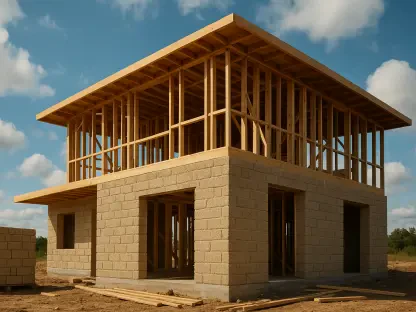

Breaking ground on a $280 million, six-story, 257,000-square-foot Health Sciences Building at the University of Louisville, Kentucky sent a clear message that health workforce capacity and research integration still commanded capital even as other institutional projects slowed. The move put public dollars behind an interdisciplinary model that favored simulation-rich training, shared labs, and flexible classrooms designed to evolve with pedagogy and technology.
This analysis examined why the project mattered for the regional pipeline of clinicians and researchers, how state-backed capital changed delivery risk, and where demand was likely to surface next. It set expectations around utilization economics, procurement dynamics, and competitive positioning, translating a single groundbreaking into a forward view of a durable market niche.
Market Backdrop and Signals
The broader construction market softened, but healthcare—especially university-affiliated—held its footing. Trackers reported weaker education work overall while large academic medical facilities advanced, reinforcing the idea that mission-critical health investments transcend cyclical headwinds. Louisville’s hub aligned with this pattern by anchoring talent development, translational research, and clinical readiness.
Comparable projects fortified the trend line. A major hospital in Lexington and a recently delivered flagship in Columbus demonstrated that long-horizon health assets moved ahead when tied to workforce and population health outcomes. These builds supported a thesis: capital followed measurable utility—licensure, placements, research throughput—rather than discretionary growth.
Financing and Delivery Outlook
Kentucky’s $260 million commitment, paired with $20 million from the university, reshaped risk by minimizing exposure to rate volatility and donor timing. Strong appropriations typically compress preconstruction timelines, unlock bulk procurement, and attract experienced contractors, evidenced by Messer Construction’s selection. Public backing also steadied stakeholder expectations from sitework to handover.
However, public capital brought elevated scrutiny. Governance, scope control, and transparent community impacts became non-negotiable. To stay on track to 2029, the project’s sponsors needed contingency buffers for MEP and AV long-leads, escalation guardrails, and milestone discipline that balanced accountability with the flexibility to adjust spaces as curricula shifted.
Programmatic Design and Utilization Economics
The building’s pedagogical engine rested on interoperability: shared simulation suites, modular classrooms, and co-located research zones serving dentistry, medicine, nursing, and public health. This design increased utilization by reducing idle time and enabled rapid reconfiguration, which in turn improved cost per student credit hour and accelerated time-to-competency.
Future-proofing required standards-based infrastructure—interoperable AV/IT, generous power and data, acoustic control, and shell space for phased growth. Without clear shared-use policies and data-driven timetabling, though, modularity could turn into friction. The winners would pair space governance with analytics on usage, learning outcomes, and simulation throughput to keep the model efficient.
Regional Benchmarks and Competitive Positioning
Demographic pressures across Kentucky and neighboring states—aging populations, rural provider gaps, and chronic disease—raised the premium on integrated training. Fully housing the School of Public Health and Information Sciences alongside clinical programs strengthened care pathways that connected prevention, analytics, and bedside execution.
Innovation vectors heightened the stakes. AI-enabled simulation, VR/AR procedures, and competency-based assessment demanded Wi‑Fi 6/7 readiness, edge compute capacity, and hardened cybersecurity. Far from a niche, simulation increasingly shortened onboarding, standardized skills, and reduced clinical variation—benefits that attracted health system partnerships and reinforced the project’s moat.
Projections and Scenarios
Base case: stable appropriations and disciplined procurement supported on-time delivery to 2029, with phased activation that ramped simulation and interprofessional modules within the first academic year. This scenario projected improved licensure pass rates, stronger rural placements, and measurable research collaboration growth within two cycles post-occupancy.
Upside case: expanded performance-based funding tied to workforce outputs unlocked additional capital for digital twins and advanced analytics, widening the building’s lead as a regional training hub. Downside case: supply-chain slippage in MEP/AV or labor tightness pushed selective scope deferrals; mitigations included early buyout of long-leads and flexible sequencing that protected critical-path interior systems.
Conclusion
The Louisville hub had reframed the regional outlook by proving that state-backed, interdisciplinary health infrastructure could advance amid a softer market, tighten risk, and convert flexibility into measurable educational and clinical value. Near-term priorities were clear: harden procurement for long-lead systems, codify shared-use governance, invest in IT/OT convergence, and align metrics with licensure, placements, and research outputs. Taken together, those moves positioned stakeholders to capture durable returns from a building designed not just to open by 2029, but to compound workforce and innovation gains in the years that followed.