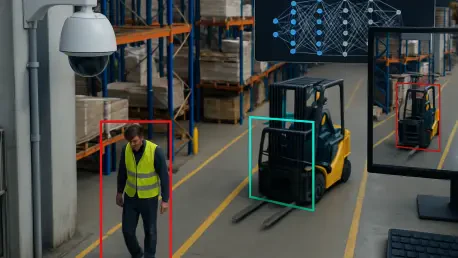

The transition to AI-driven safety management is driven by the need for structured data processing in environments where manual oversight is prone to error. Industrial sites currently face an unprecedented volume of operational data, making it nearly impossible for human safety officers to monitor every square foot of a facility simultaneously. Traditional methods rely on periodic walkthroughs and retrospective incident reports, which often identify hazards only after a near-miss or injury has occurred. This inherent lag in communication creates significant vulnerability in sectors like chemical manufacturing or heavy construction, where conditions change rapidly. By integrating high-speed neural networks with existing camera infrastructure, facilities can now identify non-compliance in real-time, such as workers neglecting to wear helmets or forklifts entering pedestrian zones. The sheer scale of modern logistics hubs demands a level of vigilance that exceeds human biological capacity, necessitating a shift toward digital oversight systems that provide constant, objective monitoring of high-risk activities.
Operational Intelligence: Integration of Computer Vision and Sensor Fusion
Modern computer vision algorithms have matured into reliable tools that process live video feeds to detect anomalies with remarkable precision. Instead of general movement detection, these systems use deep learning models trained on thousands of safety scenarios to distinguish between safe behaviors and potential risks. For instance, in a large-scale steel mill, AI software can distinguish between the expected thermal signature of molten metal and an unauthorized person standing too close to the casting line. This level of granularity allows for immediate automated intervention, such as shutting down machinery or triggering localized alarms before a human supervisor even notices the breach. Moreover, these systems eliminate the subjectivity that often plagues manual safety inspections, providing objective evidence for compliance audits. The continuous stream of metadata generated by these observations serves as a foundation for more sophisticated risk modeling, allowing managers to see heat maps of safety violations across different shifts.
Beyond visual data, the fusion of Internet of Things sensors with centralized safety platforms provides a holistic view of the industrial environment. Wearable devices now track worker fatigue levels, environmental exposure to toxic gases, and ergonomic strain in real-time, feeding this information into an AI engine that assesses overall site risk. When hazardous gas levels rise incrementally, the system does not merely wait for a threshold to be crossed; it analyzes the rate of change and environmental factors to predict a leak before it becomes critical. This proactive stance transforms safety from a checklist of rules into a dynamic, living ecosystem that responds to actual conditions on the ground. The ability to correlate biometric data with environmental sensors ensures that personnel are not only wearing the right gear but are also physically fit for the tasks assigned to them. Such integration reduces the administrative burden on safety professionals, who previously spent hours manually logging sensor data that was often outdated by the time it was reviewed.
The widespread adoption of AI safety systems necessitated a comprehensive reevaluation of worker privacy and data governance protocols across the industry. Organizations discovered that transparency was the most effective way to gain workforce trust, ensuring that safety monitoring was perceived as a protective measure rather than a surveillance tool. Leadership teams successfully prioritized the upskilling of safety officers, who transitioned from manual inspectors to data analysts capable of interpreting complex AI-generated insights. It became clear that the most resilient companies were those that treated safety data as a strategic asset, using it to refine operational workflows and reduce downtime. Implementation of these technologies proved that a zero-incident workplace was more than just a goal; it was an achievable standard maintained by consistent technological vigilance. Industrial leaders focused on harmonizing AI protocols to ensure universal safety across diverse global supply chains and manufacturing plants.