
A residential neighborhood where a front porch light flickers not because of a basic timer, but because it recognizes the specific gait of a resident, represents the modern shift toward proactive home defense. Traditional security frameworks are increasingly viewed as relics because their binary sensors often fail to distinguish between a harmless delivery driver and a suspicious intruder. The integration of Artificial Intelligence within the Internet of Things ecosystem has fundamentally transformed these systems from reactive sirens into context-aware guardians capable of interpreting complex human behavior in real time. Recent industry data highlights that AI-driven surveillance achieves an impressive 94% accuracy rate in residential settings, a significant leap from the 77% seen in legacy systems only a few years ago. Homeowners in the current market are no longer satisfied with simple video feeds; they demand sophisticated facial recognition and package detection as standard features. Consequently, selecting a platform now requires looking beyond the camera lens and into the underlying data processing capabilities that define reliability.
Essential Technical Criteria for Platform Evaluation
Architectural Synergy: Evaluating Data Processing Logic
The primary factor in evaluating any modern security platform resides in its internal hardware architecture, specifically the sophistication of the System-on-a-Chip design. In the high-demand environment of 2026, the most effective platforms employ a heterogeneous design that seamlessly combines the Central Processing Unit and Graphics Processing Unit with a dedicated Neural Processing Unit. This specialized NPU is designed to handle the heavy lifting of machine learning tasks without burdening the general processors, which allows for complex threat detection without causing system lag or excessive heat. By delegating specific tasks to the NPU, the security system can maintain a constant state of alertness, identifying potential risks such as an unrecognized face or an unusual object left on the driveway. This architectural synergy ensures that the device remains responsive even when managing multiple tasks, providing a level of fluidity that older, CPU-dependent systems simply cannot match in a residential context.
Equally important is the strategic shift toward edge processing, which moves data analysis away from remote cloud servers and directly onto the local device. Processing data at the edge ensures that sensitive video and audio recordings never leave the home network, significantly enhancing privacy and reducing the risk of data breaches during transmission. Beyond security, edge computing virtually eliminates the latency issues associated with cloud-based systems, allowing the AI to make decisions in mere milliseconds. In a critical security situation, such as a forced entry, these saved milliseconds can be the difference between an immediate automated intervention and a delayed notification that arrives after the event has occurred. Furthermore, edge-capable platforms remain fully functional even during internet outages, providing a layer of resilience that is essential for a truly reliable safety ecosystem. By prioritizing edge-based logic, homeowners can maintain a faster and more private environment that operates independently of external server uptime.
Operational Longevity: Maximizing Environmental Scalability
Power efficiency is a non-negotiable metric for modern security platforms, especially given the prevalence of battery-operated devices like outdoor cameras and smart locks. A high-quality AI platform must maintain an “always-on” detection state while consuming minimal energy to prevent the recurring burden of frequent battery replacements or recharges. Advanced power management techniques allow these systems to remain in a low-power sleep mode, only activating the high-performance AI cores when specific triggers, such as motion or sound, are detected. This balance between constant vigilance and energy conservation ensures that the system stays operational during critical periods and reduces the total cost of ownership over time. Efficient energy use also minimizes the heat generated by the hardware, which can extend the lifespan of electronic components exposed to fluctuating outdoor temperatures. Selecting a platform that emphasizes power optimization is therefore vital for maintaining a consistent and low-maintenance security posture.
The physical layout and architectural footprint of a property must also dictate the technological requirements of the chosen security platform. A home with multiple entry points, large glass surfaces, or extensive perimeter grounds requires a system that can manage several high-definition streams and various sensor inputs simultaneously without a loss in performance. Scalability is essential here; the platform should be robust enough to handle the increased processing load as more devices are added to the network. Whether it is integrating specialized sensors for garage doors or high-resolution cameras for the backyard, the underlying technology must support seamless expansion. Furthermore, the ability of the platform to synchronize data across different types of sensors—such as combining visual motion with acoustic signatures—creates a more comprehensive safety net. Evaluating a platform based on its ability to scale across diverse environments ensures that the security solution can adapt to the unique vulnerabilities of any specific residential property.
Leading Technological Platforms and Architectures
Specialized Innovations: The Rise of Audio Sensing
In the current technological landscape, companies like Synaptics and AONDevices are pioneering the field of edge-based perception by focusing on audio and sensory intelligence. Synaptics has developed specialized audio Systems-on-a-Chip that enable home security systems to recognize and process voice commands even in environments with high background noise. This level of acoustic clarity allows for more natural interaction with the security system, enabling homeowners to control locks or alarms with simple vocal prompts from across a room. Moreover, these chips are designed with a focus on human-interface AI, ensuring that the system can distinguish between the voice of a resident and external noise sources. This precision prevents false activations and ensures that the system remains attentive to the authorized users of the home. The integration of high-fidelity audio processing adds a critical layer of interactive security that complements traditional visual monitoring solutions.
While visual surveillance is often the focus, AONDevices specializes in ultra-low-power acoustic detection that provides an invisible layer of protection throughout the home. Their technology is capable of identifying specific sound signatures, such as the unique frequency of glass breaking or the sound of wood splintering during a forced entry. This detection happens locally on the device, requiring almost no battery power, which makes it ideal for continuous monitoring in remote corners of a property. By focusing on these specific acoustic events, the platform can trigger alarms or notify authorities the instant a physical breach occurs, even if the intruder manages to avoid the line of sight of the cameras. This sensory specialization allows for a more holistic approach to security, where the system “hears” potential threats as effectively as it “sees” them. This combination of low power and high sensitivity represents a significant advancement in making residential security systems more autonomous and harder to bypass.
Hardware Integrity: Secure Identity and High-Definition Vision
For homeowners who prioritize digital privacy and physical security, SEALSQ provides hardware-level protection through tamper-resistant microcontrollers. Their technology is specifically engineered for keyless entry systems and smart locks, offering autonomous authentication that eliminates the need for a constant cloud connection. By securing the identity of the device at the hardware level, SEALSQ ensures that access points are protected against sophisticated digital interference or hacking attempts. This localized security model means that even if the broader home network is compromised, the individual locks and entry points remain secure because their cryptographic keys are stored in a dedicated, isolated environment. This level of hardware-rooted trust is essential in an era where digital and physical threats are increasingly intertwined. Implementing such specialized hardware ensures that the most critical points of a home remain under the absolute control of the resident, regardless of external network vulnerabilities.
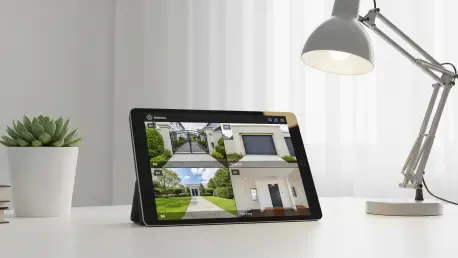
Advancements in visual clarity have reached a pinnacle with Ambarella’s vision processors, which now support 8K resolution and multi-sensor perception within residential systems. These processors utilize deep learning accelerators to perform complex on-device analysis of video streams, allowing for high-resolution surveillance that identifies minute details such as license plate numbers or clothing textures. Despite the high processing requirements of 8K video, these chips are designed to be remarkably power-efficient, making them suitable for modern, sleek camera designs. This capability is particularly useful for homeowners who need to monitor large areas with a single camera without sacrificing the ability to zoom in on specific incidents. The ability to analyze multiple high-definition feeds in real time creates a context-aware shield around the property, providing a level of visual intelligence that was previously reserved for industrial applications. By adopting these high-definition vision platforms, residents gained a much clearer understanding of their surroundings and improved the overall responsiveness of their home defense.
Strategic decisions made by early adopters of these AI platforms resulted in a more resilient and private living environment that functioned autonomously from the cloud. Homeowners who moved toward edge-based processing discovered that the reduced latency and increased data security provided a sense of control that traditional systems lacked. Those who invested in hardware-level security found that their entry points remained impenetrable to digital threats, while high-definition vision processors turned standard surveillance into a source of actionable intelligence. This transition toward specialized, NPU-driven architectures allowed for the creation of a safety ecosystem that was not only more accurate but also significantly easier to maintain over several years. Future considerations for those entering the market should focus on ensuring cross-compatibility between these specialized sensing and vision platforms to create a truly unified and intelligent home defense network. Realizing the full potential of these technologies required a shift in perspective, moving from seeing security as a collection of devices to seeing it as a singular, integrated intelligence.