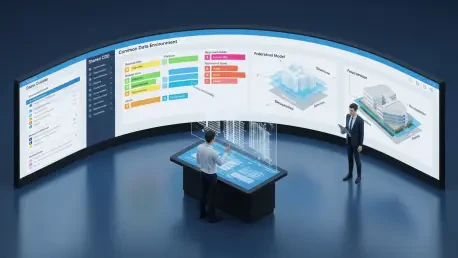

Design ambition has too often dissolved between the romance of the sketch and the rigor of the site, but a governed, shared BIM environment now let teams carry concept, performance, and constructability in lockstep from the very first line to the last bolt tightened. Rather than serve as a passive ledger, the model can host the project’s narrative, parameters, and trade-offs in one accountable space, where decisions are made with context and verified against stated principles. When architects steward that space—defining rules, curating inputs, and insisting on evidence—coordination shifts from catching errors late to shaping intent early. The result is more than fewer clashes or cleaner sheets; it is a practice that treats constraints as design fuel, translates complexity into clarity, and preserves the qualities users actually experience: light, proportion, flow, and comfort.
From Documentation to Design Leadership
Preserving Intent Through Digital Precision
Used as an intelligent record rather than a static file, BIM becomes the backbone of design logic, performance targets, and the rationale behind choices that would otherwise be lost in email threads. ISO 19650-aligned naming, versioning, and approval states preserve who decided what and why, while parameterized families embed intent into geometry. A façade panel, for example, can carry desired visible light transmittance, target U-value, and mullion spacing rules, so later tuning respects the composition that framed the initial sketch. In this mode, value engineering becomes value alignment: Dynamo scripts test cost deltas against daylight autonomy, and the model mediates trade-offs by surfacing metrics alongside visuals. When teams publish via a common data environment such as Autodesk Construction Cloud, the “single source of truth” is not a slogan; it is a living protocol.
Treating technical requirements as enrichments rather than add-ons, teams integrate structure, MEP, and environmental physics into the architectural language before details harden. Geometry structured with IFC classes and COBie fields links design elements to procurement and maintenance, tying form to lifecycle consequences. For performance, EnergyPlus or Insight runs are launched from the model, with results feeding back to massing and envelope rulesets. Designers can tune overhangs to hit peak cooling targets without flattening the façade’s cadence, because key proportions are locked as constraints while performance sliders operate within guardrails. Solibri rulesets become design guard dogs, not police, flagging deviations that threaten intent. By codifying principles and tolerances, the model prevents the slow erosion that comes from piecemeal edits and undocumented exceptions.
Collaborative Governance and a Shared 3D Reality
A federated 3D environment reframes coordination from overlay to immersion: structural, MEP, façade, and interiors publish to a shared container on set cadences, with scopes and levels of development clearly defined. This reduces the risk of parallel truths that collide late. Governance matters as much as geometry. Clear model exchange information requirements, approval workflows, and issue tagging in platforms like BIM 360 or Speckle ensure that changes are seen, discussed, and closed with traceability. The architect leads by translating legacy records into usable references, writing view templates for each discipline, and defining shared coordinates to eliminate origin drift. Weekly syncs become decision sessions, not slide shows, because everyone looks at the same live dataset, not exports that expired yesterday.
Trust is earned through transparency. Publishing schedules, clash thresholds, and naming conventions are documented in a BIM Execution Plan that actually gets used. Incoming RFIs link to exact model objects via BCF, and decisions leave a breadcrumb trail that survives staff turnover. When every stakeholder knows where truth lives—and has permissioned access—misalignments shrink. That governance also compresses the distance from idea to field. Detailers can raise constructability flags early, fabricators can push submittal geometry that snaps into the federated model, and facility planners can preview operations flows before walls pour. Instead of a cascade of late corrections, the project becomes a shared 3D reality where expertise lands early, and the architect functions as curator of coherence rather than keeper of secrets.
Integration that Elevates Performance and Aesthetics
Synergy Between Aesthetics and Performance
Client decisions accelerate when BIM exposes ripple effects in one frame: adjust vision glass from 60% to 55% and instantly see shifts in daylight, thermal loads, structural drift, and unitized panel counts. This is not a parlor trick; it is disciplined linking of analysis to design. Revit families carry metadata; Grasshopper or Dynamo bridges parametrics; Insight and Ladybug interrogate energy and sun; Navisworks aggregates timelines via 4D. In review sessions, teams compare options with performance overlays—sDA, ASE, embodied carbon per square foot—beside renderings. The conversation changes: instead of “can this be built,” the room asks “which version best expresses the concept while meeting targets.” Assumptions are challenged in real time, so compromises become informed refinements, not last-minute concessions that flatten character.
Because trade-offs are explicit, proportion, transparency, and structure can cohere without sacrificing comfort. Consider a lobby canopy whose rhythm defines arrival. By constraining bay spacing and soffit depth as non-negotiables, while allowing secondary members to vary within set limits, engineers adjust section sizes to meet drift and vibration without distorting the cadence. Thermal breaks and drainage paths are designed into the parametric assembly, protecting the visual thinness that the concept requires. Procurement data rides along: lead times, supplier standards, and tolerances inform selections before bid. This joined-up view shortens decision cycles. Clients see that the preferred option meets summer solar limits, preserves views, and trims installation days through modularization. The architecture matures through evidence, and the final expression reads as inevitable rather than compromised.
Proactive Integration Over Clash Detection
Clash detection remained necessary, but leadership showed up earlier—at the point of intent. Coordination was reframed as design integration, where likely conflicts were anticipated and converted into opportunities while ideas were still fluid. Spatial strategy workshops placed critical zones—risers, transfer beams, façade anchors—on the table before routing hardened. Using color-coded zones and space reservations, teams negotiated rights-of-way that respected architecture first principles: clarity of structure, legible services, daylight paths. Issue logs in BCF captured options and decisions, each tied to objects, owners, and deadlines. This disciplined, open process reduced firefighting and invited creativity; a misaligned duct did not trigger blame but a rethinking of soffit reveals that tightened the interior language.
The payoff lay in costs avoided and intent preserved. Resolving equipment clearances, access panels, and maintenance sweeps in the model meant fewer site improvisations that scar ceilings or crowd corridors. More importantly, integration yielded expressive gains. A tangle of services, once hidden, became an ordered plenum celebrated through linear lighting tied to structural bays. Sequences were mapped in 4D so trades understood dependencies and could preassemble. Fabricators uploaded shop-ready geometry that snapped into coordination space, shrinking submittal ping-pong. Even security and IT joined early, plugging device counts and sightlines into layouts to avoid late holes in stone cladding. By treating coordination as knowledge production, the team delivered clarity and speed together, rather than trading one for the other.
Practice in Action
Case Study—Green Tower, Riyadh
The Green Tower’s federated model surfaced an early tension between lateral bracing, desired façade transparency, and MEP routes that conventional workflows might have discovered too late. Structural frames sought deep K-braces for drift, while the concept demanded a light, open perimeter and an uninterrupted ceiling field at podium levels. Rather than bury the fight in redlines, the team convened BIM-led spatial sessions with the structural engineer, façade consultant, and MEP lead, using a shared Revit/Navisworks environment linked to Dynamo studies. Bracing became a design puzzle: could nodes migrate toward cores, could connection geometry flatten into ceiling rhythms, and could services sequence to dodge force paths without tortuous detours? Each move was tested against daylight, duct friction, and erection sequencing.
The intervention changed the building’s language without betraying it. Bracing nodes were re-profiled as part of the ceiling’s visual tempo, using cast-steel connectors shaped to sit within a 300-millimeter lattice that mirrored the lobby’s light bays. MEP mains shifted to pre-reserved corridors aligned with structural bays, replacing ad hoc weaving with disciplined runs that eased maintenance. Façade anchors coordinated to avoid node congestion, and glass bite depths adjusted within limits to keep transparency high while accepting new load paths. Early integration prevented rework, kept procurement on track, and protected the tower’s promise of openness. The exercise also generated reusable intelligence: parametric node families, a bracing-to-ceiling playbook, and rulesets to flag future drift between structure and services in similar typologies.
Next Moves for Project Teams
To carry lessons forward, teams established steps that locked leadership into daily habits rather than heroic interventions. First, a plain-language design charter was embedded in the model as a “readme”—five non-negotiables like bay rhythm, daylight targets, and service legibility—each mapped to parameters and rules so checks became automatic. Second, exchange cadences were tightened: weekly discipline publishes, biweekly integration reviews, and milestone freezes with clear “what changes when” boundaries. Third, the issue process matured from inbox chaos to BCF-linked tickets triaged by impact on charter principles; items that threatened core intent escalated with priority, making values visible in governance.
Procurement and operations were folded in sooner. Fabricators were invited to sandbox geometry during schematic design, with tolerance bands informing details before aesthetics were locked. Facilities staff reviewed maintenance clearances in VR pulled directly from the model, shaping access panels and swing radii while change was cheap. Metrics anchored decisions: daylight autonomy and peak cooling load changes per option, coordination issues closed per week, shop drawing turnaround times after model handshake, and RFI rates post-freeze. By tracking a small set of meaningful indicators in the same federated space, the team stayed honest about progress. This practice did not chase innovation for its own sake; it pursued coherence. In doing so, it preserved poetry through precision and codified a way of working that remained teachable, repeatable, and resilient.