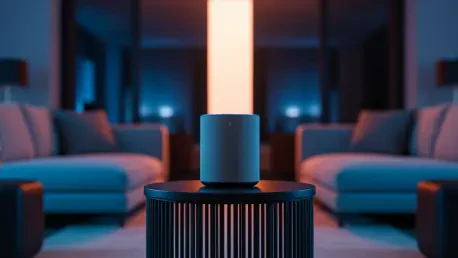

The modern living room has transformed from a collection of isolated gadgets into a cohesive digital environment where ambient intelligence anticipates human needs before a single command is even uttered. This evolution is most evident in the latest generation of smart speakers, which have moved beyond basic voice triggers to become fully realized generative AI home hubs. Leading this competitive landscape are the Google Home Speaker and the Amazon Echo Dot Max, both of which are strategically positioned at the hundred-dollar price point. These devices represent a fundamental shift in how residents interact with their physical spaces, moving away from simple “command-and-response” patterns toward a more fluid, conversational intelligence that can manage complex tasks with minimal friction. As consumers navigate the choices available in the current market, the distinction between these two ecosystems has never been more pronounced, necessitating a deep dive into how each brand utilizes advanced processing to define the modern smart home experience in late 2026.
Intelligence and Audio Performance
Advanced Virtual Assistant Reasoning
Google’s latest integration of the Gemini for Home model provides a level of conversational fluidity that significantly outpaces traditional virtual assistants by utilizing massive large language models. This system is specifically engineered to handle multi-step requests that previously required several distinct interactions, allowing users to stack commands in a single natural sentence. For instance, a user might ask the speaker to dim the lights, start a specific playlist, and remind them to check the oven in twenty minutes, all without pausing for confirmation between tasks. Gemini also excels at processing real-time corrections, which means if a resident changes their mind mid-sentence or provides a clarifying detail after the initial prompt, the AI adjusts its logic immediately. This creates a much more human-like interaction where the technology fades into the background, focusing on intent rather than specific syntax or rigid programmed scripts that often frustrated users in earlier iterations.
Acoustic Engineering and Sound Quality
When evaluating pure audio performance, the hardware configuration of the Amazon Echo Dot Max provides a distinct advantage that caters directly to music enthusiasts and home cinema fans alike. The device features a dedicated high-fidelity tweeter and a disproportionately large woofer for its size, which work in tandem to deliver deep, resonant bass and impressive room-filling volume. This engineering choice allows the Echo Dot Max to maintain clarity even at higher decibel levels, making it a viable primary speaker for smaller rooms or a powerful satellite in a larger multi-room setup. Amazon has clearly prioritized the physical components of sound reproduction, recognizing that for many consumers, a smart speaker must first and foremost be a high-quality audio playback device. By focusing on these acoustic fundamentals, the Echo Dot Max manages to punch well above its weight class, offering a rich soundstage that captures the nuances of complex musical compositions with surprising efficacy and depth.
Connectivity and Ecosystem Features
Networking Protocols and Hub Functions
In terms of local connectivity, both devices are designed to serve as central command centers for the smart home by utilizing the universal Matter standard for device interoperability. However, the Google Home Speaker gains a significant technical edge by incorporating a dedicated Thread border router directly into its internal hardware suite. This inclusion allows the speaker to create a more stable and efficient mesh network for low-power smart devices like motion sensors, door locks, and window shades without needing additional bridges. By supporting Thread, Google ensures that the local network experiences lower latency and higher reliability, as devices can communicate directly with one another through a self-healing mesh. This technical sophistication is particularly valuable in modern homes where the number of connected devices often exceeds the capacity of traditional Wi-Fi networks. The result is a smart home environment that feels more responsive, with lights turning on the instant a sensor is triggered.
Security and Brand Integration
The selection between these two AI speakers often hinges on the existing ecosystem of security cameras and sensors a user has already installed within their living environment. The Google Home Speaker is designed to thrive alongside Nest hardware, utilizing its advanced AI to provide concise and intelligent summaries of home activity captured throughout the day. Instead of forcing a resident to scroll through hours of video footage, the Gemini-powered assistant can analyze events and report that a delivery driver arrived at noon or that the neighbor’s cat was in the backyard. This level of semantic understanding turns a standard security system into a proactive information service that adds genuine value to the user’s daily routine. Furthermore, the integration with Google’s wider suite of services, such as Photos and Calendar, allows the speaker to display relevant visual information on nearby smart displays or cast security feeds directly to a television with a simple voice command.
Scalability and Market Value
Home Theater and Audio Expansion
Expansion capabilities represent another major point of divergence between these two platforms, particularly for those interested in building a wireless home theater system around their AI speaker. Amazon provides a remarkably broad path for growth, allowing the Echo Dot Max to be paired with a variety of dedicated subwoofers and soundbars from the same product line. This modularity enables users to create a full 5.1 or 7.1 surround sound environment that supports Dolby Atmos, transforming a standard living room into an immersive cinematic space without the need for complex wiring. The software allows for easy calibration, ensuring that the various speakers are perfectly synchronized to deliver a cohesive audio experience that enhances movies and gaming. This focus on scalability makes the Echo Dot Max a more attractive option for users who start with a single speaker but eventually want to expand their setup into a comprehensive entertainment system as their needs and budget grow.
Technical Specifications and Pricing
When analyzing the financial aspect of the purchase, both devices enter the market with an identical suggested retail price of ninety-nine dollars, which represents a highly competitive entry point. However, the actual cost of ownership often differs due to Amazon’s aggressive promotional strategy, which frequently involves deep discounts, bundle deals, and seasonal sales that lower the price significantly. These frequent price drops often make the Echo Dot Max the more budget-friendly option for consumers who are willing to wait for a sale or who want to purchase multiple units for a whole-home audio setup. Furthermore, the availability of certified refurbished units and trade-in programs through the Amazon storefront provides additional avenues for savings that are not always as prevalent in the Google ecosystem. This pricing flexibility has allowed Amazon to maintain a dominant market share by making its hardware accessible to a wide demographic of price-sensitive buyers.
Strategic Implementation of Ambient Hubs
The comparative analysis of these two prominent AI speakers demonstrated that the ideal choice depended entirely on whether a user prioritized conversational intelligence or acoustic power. For those who sought a highly advanced digital companion capable of complex reasoning, the Google Home Speaker emerged as the superior option due to its seamless integration of the Gemini model and robust networking standards. This device was best suited for households that required a reliable hub for a diverse array of Matter-enabled sensors and those who preferred a more natural, fluid interaction with their technology. Actionable steps for these users involved mapping out their existing smart home mesh and identifying where a Thread border router could most effectively reduce latency across their entire network. By focusing on these technical strengths, residents were able to create a more responsive and intelligent living space that leveraged the full potential of modern generative processing.
Conversely, the Echo Dot Max proved to be the more effective choice for individuals who viewed their smart speaker as the foundation of a broader entertainment and security ecosystem. Its hardware-first approach to audio quality allowed it to function as a legitimate high-fidelity speaker, while the deep integration with the Ring security suite provided a turnkey solution for home protection. Consumers who chose this path benefited most from waiting for promotional windows to maximize their budget, often acquiring multiple units to establish a wireless Dolby Atmos theater system or a comprehensive multi-room audio network. The key takeaway for potential buyers was to audit their existing hardware ecosystem and prioritize either the conversational depth of the Google assistant or the physical performance and scalability of the Amazon hardware. This strategic approach ensured that the selected device did not just act as an isolated gadget, but rather as a functional and integrated part of a modern connected lifestyle.