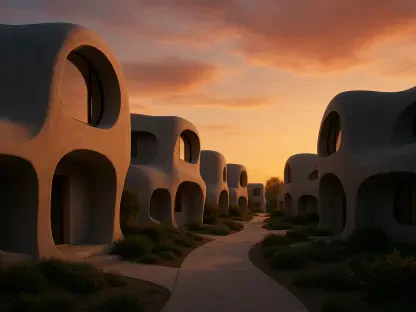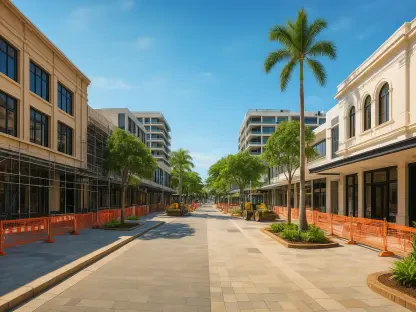

The construction industry currently stands at a crossroads where the environmental impact of physical waste is no longer an acceptable byproduct of progress or architectural ambition. Traditional methods of site management often focus on reactive recycling, but the most significant opportunities for sustainability actually reside in the upstream phases of project development. Digital visualization technology has emerged as a fundamental catalyst for this shift, transforming how architects and clients interact with unbuilt spaces. By utilizing high-fidelity renderings and immersive 3D walkthroughs, design teams can identify inefficiencies long before a single material is ordered or a foundation is poured. This proactive approach ensures that every beam, tile, and pipe is accounted for with surgical precision, effectively neutralizing waste at its source. As global regulations tighten around embodied carbon and material lifecycles from 2026 to 2030, the ability to iterate in a virtual vacuum has become the standard for responsible development.
Addressing the Communication Gap in Modern Planning
One of the most persistent drivers of construction waste is the fundamental disconnect between technical 2D floor plans and a client’s lived experience of a proposed space. While blueprints provide the necessary mathematical framework for builders, they often fail to convey the atmospheric qualities, lighting nuances, and material textures that define a project’s success. This lack of visual clarity frequently leads to a phenomenon known as provisional approval, where stakeholders sign off on designs without fully comprehending the physical outcome. When the construction finally begins to take shape, the gap between the mental image and the physical reality often triggers expensive, material-intensive change orders. These revisions are not merely financial burdens; they represent a massive influx of debris as newly installed walls are moved and specialized components are discarded. Digital visualization bridges this gap by providing a definitive, shared understanding of the final product from day one.
This visual alignment extends beyond aesthetic satisfaction to include the precise coordination of material quantities and structural requirements. When clients can virtually walk through a corridor or examine a facade under various lighting conditions, their feedback becomes specific and actionable during the design phase rather than the construction phase. This shift is critical because adjustments made in a digital environment carry zero carbon weight, whereas adjustments on a job site result in wasted energy and raw materials. Building on this foundation, industry leaders are increasingly using real-time rendering engines like Unreal Engine 5 or Enscape to simulate real-world physics and environmental factors. These tools allow for the testing of various layouts and finishes without the environmental cost of trial and error. Consequently, the industry is moving away from the build and adjust mentality toward a verify and execute model that prioritizes structural integrity and resource conservation.
Optimizing Material Cycles and Stakeholder Feedback
The traditional process of selecting architectural finishes has historically relied on an endless cycle of physical material sampling and global shipping logistics. Each iteration, from stone cladding to specialized glazing, requires manufacturing and transporting samples that are often discarded once a final decision is reached. Digital visualization revolutionizes this workflow by allowing design teams to narrow down selections through high-fidelity digital reviews of textures, colors, and light reflectance values. While physical samples remain necessary for the final touch-and-feel verification, the volume of discarded mockups is drastically reduced when the preliminary selection process is digitized. This digital-first approach significantly lowers the logistical carbon footprint and reduces the sheer volume of material waste generated during the pre-construction phase. Furthermore, these virtual models can be updated instantly to reflect new sustainable material alternatives, allowing for a dynamic comparison of environmental impacts.
Effective sustainability also requires the early consensus of external stakeholders, including planning authorities, community groups, and regulatory bodies. Projects often face significant delays or forced reworks when these groups raise concerns about the visual impact or environmental integration of a building too late in the development process. By presenting realistic digital representations during the initial planning stages, developers can secure genuine buy-in and address community concerns before any physical groundwork is laid. This proactive engagement ensures that any necessary modifications, such as adjusting a building’s height or changing its facade to better suit the local context, are made when they are still carbon-free. This approach naturally leads to a more streamlined approval process and prevents the wasteful tearing down of partially completed structures due to late-stage regulatory interventions. By the time the project reaches the site, it has already been vetted and optimized through a rigorous virtual filter.
Integrating Technical Coordination and Lifecycle Data
Beyond the surface-level aesthetics, the integration of Building Information Modeling (BIM) with advanced visualization tools provides a powerful defense against technical errors. Modern BIM workflows allow for the simultaneous overlay of complex mechanical, electrical, and plumbing (MEP) systems within a unified 3D environment. This allows engineers and architects to conduct clash detection in real-time, identifying points where a ventilation duct might intersect with a structural beam or where electrical conduits conflict with plumbing lines. In the past, these conflicts were often discovered on-site, leading to the immediate disposal of expensive materials and the generation of significant construction debris. Resolving these clashes virtually ensures that every component fits perfectly the first time it is installed. This level of technical coordination not only saves time but also preserves high-value building materials that would otherwise end up in landfills due to avoidable human error or poor spatial planning.
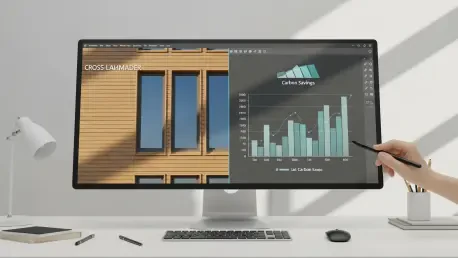
The next evolution in this technological trend is the direct link between visualization software and lifecycle assessment (LCA) databases like the Embodied Carbon in Construction Calculator (EC3). Designers can now see the immediate environmental impact of a material change reflected in their 3D models, allowing for a real-time comparison of carbon footprints alongside visual aesthetics. For example, swapping a traditional concrete facade for a cross-laminated timber alternative can be evaluated instantly for its visual appeal and its total carbon savings. This data-driven visualization empowers design teams to make informed choices that balance beauty with environmental responsibility. This strategy ensures that sustainability is not treated as an afterthought or a greenwashed veneer, but as a core technical requirement that is visible and measurable throughout the entire design process. As software capabilities continue to expand, the boundary between visual design and environmental engineering will continue to vanish.
Overcoming Practical Constraints and Future Considerations
While the benefits of digital visualization are undeniable, it is essential to acknowledge the practical constraints and risks associated with its implementation. One of the primary challenges is the risk of option paralysis, where the ease of creating virtual variations leads to endless design loops without reaching a final commitment. Without disciplined project management, the abundance of digital choices can delay procurement and counteract the efficiency gains the technology is intended to provide. Additionally, visualization alone does not inherently reduce the carbon footprint of a project; it is merely a tool that facilitates better decision-making. A high-resolution render of a carbon-intensive material is still a carbon-intensive material unless the designer uses the tool to explore more sustainable alternatives. Therefore, the effectiveness of these digital catalysts depends entirely on the intention of the user and the integration of rigorous sustainability benchmarks.
The synthesis of these digital methodologies demonstrated that visualization was a fundamental requirement for achieving zero-waste goals in the modern built environment. By shifting the focus of sustainability to the upstream decision-making process, architects and developers significantly reduced the margin for error and the resulting physical waste. The integration of high-fidelity rendering with technical BIM data and carbon-tracking software provided a comprehensive overview that was previously impossible to achieve with traditional methods. These tools empowered stakeholders to move beyond provisional approvals and embrace a more certain, resource-efficient path to completion. Ultimately, the industry moved toward a standard where every digital pixel saved a physical brick, ensuring that architectural beauty and environmental stewardship were no longer mutually exclusive. As these practices became universal, the construction landscape was permanently altered, favoring a philosophy that protected both the environment and project viability.