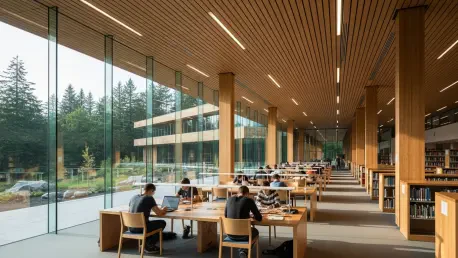

The traditional aesthetic of university campuses, once dominated by the cold rigidity of steel and the gray uniformity of concrete, is rapidly giving way to the warmth and organic texture of mass timber. This paradigm shift represents more than just a stylistic preference; it is a calculated response to the growing mental health crisis and environmental challenges facing higher education today. As institutions strive to create environments that foster both academic excellence and emotional resilience, wood has emerged as the primary material for achieving these dual goals. By integrating structural elements that are inherently tied to the natural world, architects are redefining what it means for a building to be “supportive.” Projects like the Cornell Maplewood development illustrate how timber serves as a bridge between human biology and the modern built environment, turning high-pressure graduate housing into a sanctuary. This movement signals a deeper understanding of how physical surroundings influence cognitive performance and long-term student retention.
Reconnecting Students with Nature: The Power of Biophilia
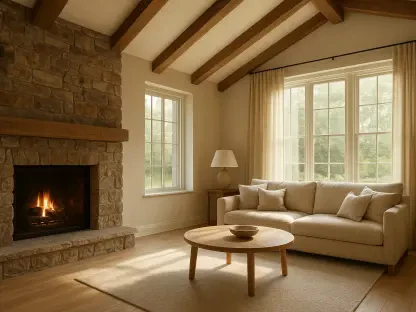
Biophilic design is more than a simple aesthetic choice; it serves as a functional tool aimed at improving cognitive performance, creativity, and overall psychological health. Since university students spend the vast majority of their time indoors, the absence of a meaningful connection to nature can lead to chronic stress, mental fatigue, and a diminished sense of well-being. Integrating exposed wood into residential hubs and social spaces provides a rich sensory experience that naturally lowers cortisol levels and fosters a sense of belonging within the campus community. This approach transforms academic buildings from static structures into dynamic, supportive environments where students can recharge effectively between intensive study sessions. By prioritizing visibility of natural wood grain and organic textures, designers create a calming atmosphere that mitigates the intensity of high-pressure environments. This structural empathy is becoming a standard requirement for modern educational facilities.
In the Cornell Maplewood development, the central pavilion known as the Clubhouse serves as a prime example of maximizing biophilic benefits for a large student population. By utilizing mass timber for this social heart, the architects created a warm and inviting space that stands in stark contrast to the utilitarian finishes often found in traditional housing. Large window walls further enhance this connection to the outdoors, allowing natural light to flood the interior and creating a seamless transition between the structural timber inside and the surrounding landscape. This strategic use of material ensures that the greatest number of residents can benefit from a nature-focused environment regardless of their specific daily routines. The timber structure acts as a grounding force, offering a tactile and visual warmth that encourages social interaction and community building. This project demonstrates that the social success of a development is often tied directly to the quality of its structural materials.
Technical Advantages: The Environmental and Structural Benefits
Mass timber systems, including cross-laminated timber (CLT) and glue-laminated columns, provide a significant advantage in reducing the overall carbon footprint of university projects. Unlike steel and concrete, which require massive amounts of energy to produce and emit substantial greenhouse gases, wood acts as a natural carbon sink that stores carbon for the life of the building. Academic institutions are increasingly adopting these sustainable materials to meet strict environmental mandates and satisfy the demands of a climate-conscious student body. By utilizing timber as both the primary structural element and the final architectural finish, designers can eliminate the redundant layers of drywall, toxic paints, and additional fireproofing required by traditional methods. This reduction in material diversity not only simplifies the supply chain but also ensures that the building’s environmental impact is minimized from the very beginning of the construction process. It is a holistic way to align campus expansion with global sustainability targets.
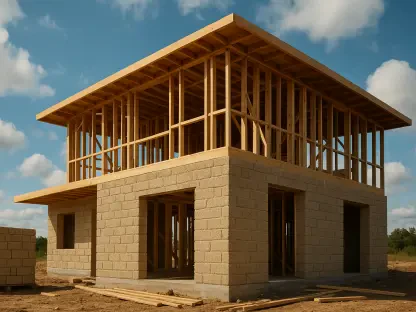
The technical optimization of mass timber allows for a more streamlined and efficient installation process compared to conventional building methods like reinforced concrete. Architects and engineers are finding that by designing with wood as the primary medium from the start, they can utilize thinner panels and specific structural spans to reduce waste. In projects like the Maplewood Clubhouse, the implementation of three-ply CLT panels led to significantly faster assembly times and fewer complications with mechanical and electrical coordination. The precision of pre-manufactured timber components allows for a degree of accuracy that is difficult to achieve with on-site pours or steel welding. This manufacturing efficiency makes mass timber an exceptionally attractive option for universities that need to complete facilities on tight schedules between semesters. Furthermore, the lighter weight of timber reduces foundation requirements, further lowering costs and site disruption. The integration of technology and nature thus results in a faster, cleaner construction site.
Economic Realities: Debunking Financial Myths of Timber
One of the most persistent and damaging misconceptions within the construction industry is that mass timber carries a prohibitive price premium compared to steel. However, recent data and case studies have debunked this myth by demonstrating that timber can achieve cost parity or even outperform traditional materials when calculated holistically. When university stakeholders conduct side-by-side cost comparisons, they often discover that the speed of construction and reduced on-site labor requirements more than offset the initial material costs. For single-story community buildings or mid-rise academic halls, mass timber is frequently more efficient for regional fabricators than dealing with small-scale, custom steel orders. This makes it a fiscally responsible choice for institutions that are looking to maximize the value of their endowment funds while delivering premium facilities. The myth of the “timber premium” is fading as more projects reach completion on or under budget, proving that luxury and economy can coexist.
Beyond the immediate direct construction costs, mass timber offers a level of market stability that is increasingly rare in the global building material market of 2026. While the prices of steel and concrete are frequently subject to volatile trade shifts, high energy costs, and supply chain disruptions, timber pricing has remained relatively predictable and steady. This financial reliability is vital for university boards and donors who must manage long-term capital budgets and ensure that projects do not stall due to sudden price spikes. By investing in wood-based infrastructure, academic institutions are proving that they can align their ambitious environmental goals with their fiduciary responsibilities. This predictability allows for more accurate long-term campus planning and ensures that architectural visions can be fully realized without compromise. The transition to timber is therefore as much a strategic financial decision as it is an environmental or aesthetic one, securing the future of campus development.
Structural Evolution: Building for Future Generations
To successfully transition to this new architectural standard, university administrators prioritized integrated design processes that brought together foresters and architects. They recognized that the adoption of mass timber required a shift in procurement strategies, favoring local suppliers to further minimize the carbon footprint and support regional economies. These institutions implemented comprehensive monitoring systems to track the long-term psychological benefits of wood-exposed spaces, providing data-driven evidence for future capital investments. By establishing clear sustainability benchmarks early in the planning phase, they ensured that every structural choice contributed to a broader mission of ecological stewardship. Furthermore, academic leaders fostered partnerships with engineering departments to turn their own buildings into living laboratories for timber innovation. This proactive approach allowed campuses to become leaders in the bio-economy while providing students with superior living and learning environments.