
The global race toward net-zero emissions has transitioned from a series of high-level policy debates into a massive engineering challenge that demands the immediate construction of expansive carbon management networks. As the planet grapples with the persistent realities of climate change, Carbon Capture and Storage (CCS) has emerged as the essential backbone for decarbonizing heavy industrial sectors that cannot easily switch to renewable electricity. This infrastructure does not merely serve as a temporary fix but represents a permanent shift in how industrial societies manage their environmental footprint and maintain economic viability.
By focusing on recent market growth, the milestone at Liverpool Bay, and expert perspectives, this analysis illustrates the rapid evolution of a green industrial strategy that prioritizes both technical innovation and domestic economic stability. The current progress suggests that the successful deployment of carbon management tools is no longer a matter of technological feasibility but rather one of logistical execution and supply chain integration.
Market Dynamics and Practical Implementation
The Surge in Industrial Decarbonization and Infrastructure Investment
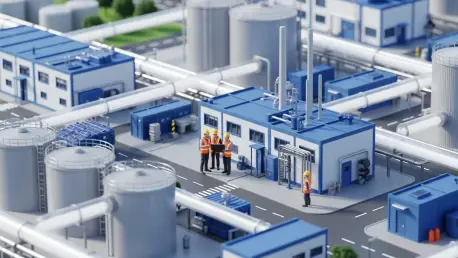
The landscape of industrial decarbonization is currently marked by a significant pivot from theoretical modeling to the large-scale deployment of physical assets. Across the globe, low-carbon industrial clusters are forming the nuclei of a new economic order where environmental compliance is a prerequisite for competitiveness. This shift is fueling a surge in infrastructure investment as companies move to secure their place in a net-zero future by building the necessary pipelines and storage facilities.
Moreover, the strengthening of domestic supply chains has become a strategic priority, as evidenced by the soaring demand for specialized hardware that can withstand the unique pressures of carbon management. The shift from offshore reliance to domestic manufacturing provides a dual advantage: it ensures the availability of critical components while revitalizing regional economies through the production of advanced engineering solutions like intelligent electric actuators.
Case Study: The Liverpool Bay CO₂ Transportation and Storage Project
A primary example of this trend is the collaboration between United Infrastructure and Rotork regarding the Liverpool Bay CO₂ Transportation and Storage (T&S) project. This initiative is a critical component of the HyNet cluster, which provides a comprehensive decarbonization pathway for energy-intensive industries in North West England and North Wales. The production and rollout of the first batch of IQ3 Pro intelligent electric actuators from the Bath manufacturing facility serve as a tangible milestone in this journey.
These advanced components are specifically engineered to automate and manage the flow of captured carbon dioxide, ensuring it moves safely through the transportation network toward permanent offshore storage locations. By integrating such specialized hardware into the core of the carbon network, the project demonstrates how high-end engineering can be leveraged to create a secure and reliable carbon disposal system that functions with the same efficiency as traditional energy grids.
Strategic Insights from Industry and Policy Leaders
Griff Thomas, Executive Director at United Infrastructure, has highlighted that the strategic prioritization of a domestic workforce is a foundational requirement for ensuring long-term project viability and national security. By focusing on local manufacturing and regional talent, projects like Liverpool Bay ensure that the economic dividends of the energy transition are retained by the local communities. This approach builds a sustainable pipeline of expertise that is essential for maintaining complex green infrastructure over the coming decades.
This sentiment is mirrored by Ross Pascoe, who champions the necessity of pivoting traditional engineering expertise toward lower-carbon energy solutions to maintain global relevance. Additionally, legislative viewpoints from figures like Wera Hobhouse emphasize the dual benefit of achieving environmental goals while simultaneously fostering local high-value employment and robust apprenticeship programs. These perspectives align to form a consensus that the transition to a green economy is as much about social and economic renewal as it is about atmospheric chemistry.
The Evolution and Future of Carbon Management
The transition of CCS from a niche technological pursuit to a foundational element of the global green economy is now well underway. Supply chain resilience has moved to the forefront of the conversation, as domestic manufacturing reduces the inherent risks associated with international logistics for critical net-zero projects. However, scaling this infrastructure remains a complex endeavor that requires navigating the technical intricacies of offshore storage and maintaining a steady pipeline of skilled engineering talent to manage the expanding network.
Furthermore, the “Made in UK” excellence seen in recent projects provides a viable blueprint for other nations seeking to synthesize industrial prosperity with aggressive climate action. As these clusters mature, they will likely serve as templates for international carbon management, emphasizing the importance of integrated planning and the use of high-reliability components. The future of carbon management will depend on the ability of nations to maintain this momentum while addressing the logistical challenges of a rapidly growing industrial sector.
Conclusion: Paving the Way for Industrial Renewal
The successful integration of specialized supply chains and collaborative engineering demonstrated that the Liverpool Bay project was more than just a technical feat. It served as a definitive bridge to a sustainable industrial future where carbon capture infrastructure acted as the stabilizing force for regional economies. This milestone successfully transformed the challenges of the climate crisis into a clear opportunity for economic renewal and industrial growth. The efforts of local manufacturers and skilled laborers proved that a commitment to green technology was the most effective catalyst for a stronger, more resilient domestic market.
As the industry moved forward, stakeholders focused on standardizing hardware across all regional clusters to reduce costs and expedited the training of thousands of new carbon engineers through public-private partnerships. The legacy of these early achievements established a framework for future projects to prioritize domestic labor and high-performance engineering. Ultimately, the transition to a carbon-managed economy relied on the seamless coordination of policy, technology, and local workforce development to ensure that environmental targets were met without sacrificing industrial excellence.