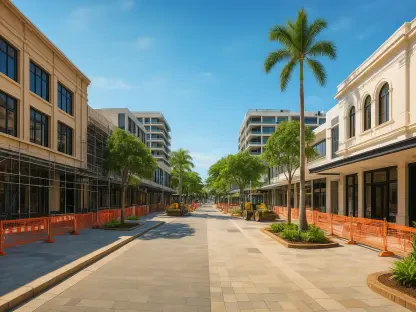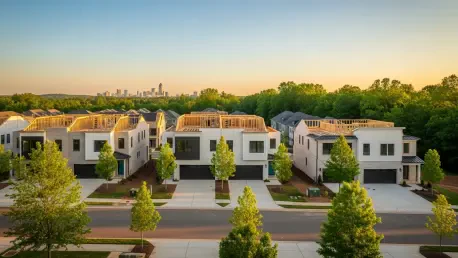

The intersection of institutional investment and local community revitalization has reached a critical turning point as specialized residential models begin to redefine suburban density in the Southeastern United States. Trilogy Investment Company recently solidified this shift by finalizing a construction loan with Genesis Capital for the development of a townhome community in Decatur, Georgia. This specific project, known as REV3 at East Hollywood, represents a sophisticated deployment of capital within a designated Opportunity Zone fund. By focusing on the Sun Belt, a region currently experiencing a surge in both population growth and corporate relocation, the development firm aims to provide high-quality housing that addresses the unique needs of a modern workforce. This move highlights a broader strategic alignment where tax-advantaged investment vehicles are utilized to create stable, long-term residential assets in markets that demonstrate strong economic fundamentals.
Strategic Site Selection and Regional Growth Dynamics
Selecting the right location for a build-to-rent development requires a deep understanding of local infrastructure and the evolving habits of the professional rental class. The site on Redan Road near Avondale Estates was chosen specifically because it sits at the nexus of several major employment hubs and essential retail centers within the Atlanta metropolitan area. Proximity to the MARTA transit system provides residents with a reliable alternative to the region’s notorious traffic, connecting them directly to the downtown core and major suburban office parks. This accessibility is a primary driver for the build-to-rent model, as it attracts individuals who value the mobility of renting but require the space and privacy usually reserved for single-family homeownership. As vertical construction begins in May 2026, the project is expected to tap into a high-demand submarket that has historically seen limited new inventory for larger rental units.
The architectural vision for the Decatur project focuses on three-bedroom townhomes that emphasize modern living standards through open-concept floor plans and high-end interior finishes. Unlike traditional multi-family apartment complexes, these units include attached garages and private entrances, providing a level of autonomy that resonates with families and young professionals alike. The integration of dedicated green spaces and pedestrian pathways into the site plan reflects a commitment to wellness and community cohesion, features that are increasingly becoming non-negotiable for high-end renters. By catering to those who desire the suburban lifestyle without the financial burden of a twenty percent down payment or the rising costs of home maintenance, developers are successfully filling a gap in the housing ladder. This strategic focus ensures that the community remains competitive even as the broader real estate market faces fluctuations in interest rates and inventory levels.
Financial Synergy and Operational Integration
Navigating the complexities of federal Opportunity Zone regulations requires a high degree of financial sophistication and a proven track record of successful capital deployment. The partnership between Trilogy Investment Company and Pinnacle Partners showcases how institutional expertise can be leveraged to maximize tax incentives while driving real economic change in undervalued districts. Pinnacle Partners has already funneled over two hundred and seventy million dollars into various projects, demonstrating a clear appetite for assets that offer both social impact and robust financial returns. By utilizing a construction loan from Genesis Capital, the development team has secured the necessary liquidity to move forward with aggressive timelines. This collaboration ensures that the REV3 at East Hollywood project is not merely a standalone venture but a vital component of a larger diversified portfolio designed to capitalize on the economic expansion of the American South.
Efficiency in the build-to-rent sector is often achieved through vertical integration, where the developer maintains control over the entire construction lifecycle. In this instance, the subsidiary firm REV3 Homes is tasked with the physical execution of the project, bringing a century of combined industry experience to the job site. This internal management structure allows for tighter quality control and a more responsive approach to the logistical challenges that often arise during the building process. By streamlining the transition from land acquisition to final leasing, the firm reduces overhead costs and ensures that the finished product aligns perfectly with the original design specifications. This operational model is particularly effective in high-growth markets like Georgia, where the ability to bring new housing to market quickly is a significant competitive advantage. The focus on quality and efficiency serves to protect the long-term value of the asset for investors.
Future Considerations for Sustainable Development
The successful funding and commencement of the Decatur project established a clear blueprint for how developers might navigate the high-interest-rate environment of the current decade. Market analysts observed that the project’s reliance on the build-to-rent model provided a necessary buffer against the volatility of the traditional for-sale housing market. Stakeholders focused on the long-term viability of these communities by prioritizing durable materials and energy-efficient designs that reduced future operating expenses. This forward-looking approach suggested that the next phase of urban planning would likely involve even greater integration of mixed-use elements within residential clusters. Investors were encouraged to look beyond immediate yields and consider the social stability that high-quality, professional-managed rental housing brought to growing municipalities. This trend pointed toward a more resilient residential sector that could withstand shifting economic cycles.
Moving forward, the primary challenge for the industry involved balancing the need for rapid expansion with the preservation of local community character. The Decatur development served as a reminder that successful projects were those that respected the existing fabric of the neighborhood while introducing modern amenities. Future strategies would likely prioritize the redevelopment of underutilized land within Opportunity Zones to create walkable, transit-oriented neighborhoods that reduced the carbon footprint of the average commuter. Policymakers and private firms found common ground in the realization that diversifying the housing supply was essential for sustained economic health. This collaboration fostered an environment where innovation in construction and finance could coexist with the goals of equitable urban development. As these projects matured, they provided valuable data on how best to serve the evolving preferences of a demographic that increasingly viewed flexibility as a form of luxury.