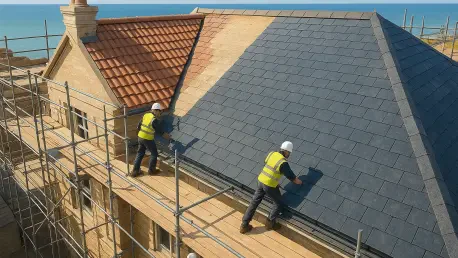

Homeowners at the Old School House in Portland have requested permission to replace manmade roof tiles with natural slate to improve the property’s durability. This request highlights a recurring theme across Dorset, where the local planning authorities are increasingly forced to choose between rigid historical preservation and the practicalities of maintaining aging structures in 2026. As coastal weather patterns become more aggressive, the synthetic materials installed in previous decades are failing at an accelerated rate, leaving residents with significant maintenance burdens. The debate over the Old School House is emblematic of the tension between maintaining a specific aesthetic and ensuring that buildings remain habitable for the next fifty years. It is no longer just an architectural question but one of environmental sustainability and long-term financial viability for the region’s residents. This situation requires a delicate balance, as every decision made by the council creates a ripple effect through the community, influencing how other historic properties are treated during this period of transition.
Navigating the Intersection: Tradition Meets Modernity
Material Authenticity: The Quest for Durable Solutions
Maintaining the unique aesthetic of the Jurassic Coast remains a priority for the regional economy, which relies heavily on tourism and its reputation for unspoiled beauty. When a property owner proposes a change in materials, the primary concern is usually the potential erosion of this collective identity. Traditional materials like Portland stone and natural slate are not merely choices but are deeply embedded in the cultural and geological fabric of the region. However, the cost of sourcing these authentic materials has risen significantly since the beginning of the decade, leading some to seek hybrid solutions that mimic traditional looks with modern performance metrics. This struggle for authenticity often puts financial strain on those maintaining listed buildings, who must navigate a labyrinth of regulations that can feel disconnected from modern economic realities. The challenge remains to foster a landscape that feels historical without becoming a stagnant museum piece that is eventually too expensive for locals to inhabit or maintain properly.
Local Craftsmanship: Preserving Specialized Regional Skills
Beyond the physical structure, the preservation of identity involves ensuring that local craftsmanship survives the transition into a more digitized and automated construction era. Training a new generation of masons and roofers to handle natural materials is essential for the long-term viability of Dorset’s architectural heritage. If these specialized skills vanish, the cost of maintenance will spiral further, making heritage preservation a privilege reserved only for the ultra-wealthy. Current initiatives are looking at how apprenticeships can be integrated with modern architectural technology to bridge this gap effectively. By combining traditional hand-tool techniques with digital modeling, the industry can achieve a higher degree of precision and durability than was previously possible. This synthesis of old-world skill and new-world technology represents a viable path forward for coastal towns. It ensures that the rugged, stone-built character remains intact even as the methods of its creation and upkeep undergo a necessary and timely evolution.
Sustainable Evolution: Designing for Future Resilience
Climate Adaptation: Technical Integration in Historic Sites
The transition to natural materials like slate at the Old School House is fundamentally an act of climate adaptation, recognizing that synthetic materials often fail under extreme UV exposure and heavy salt spray. Natural stone and slate have proven their longevity over centuries, yet the current regulatory environment is only just beginning to prioritize long-term durability over short-term cosmetic matching. By 2026, the focus has shifted toward building fortified heritage, where the goal is to make historical assets more resilient to the shifting environmental baseline. This involves not only changing roof materials but also improving masonry breathability and installing more robust drainage systems that can handle flash flooding. Architects are now using sophisticated climate modeling to predict how a building will perform over the next fifty years, allowing them to make more informed choices about which materials will offer the best protection. This data-driven approach is slowly but surely changing the way conservation is practiced.
Responsive Planning: Data-Driven Stewardship for the Mid-Decade
The resolution of the Old School House case demonstrated that prioritizing high-quality, natural materials provided a viable template for the future of heritage conservation. Local authorities recognized that durability and environmental performance were as essential as visual appearance, leading to a revised set of guidelines that favored sustainable longevity. Property owners were encouraged to invest in materials that reduced the frequency of repairs, thereby lowering the long-term economic burden on the community. Planners successfully integrated advanced digital modeling to ensure that every modification respected the historical context while embracing modern energy standards. This balanced approach fostered a resilient landscape where tradition and innovation coexisted to protect Dorset’s unique character. Stakeholders emphasized the importance of early consultation and the use of data-backed proposals to streamline the approval process. Ultimately, the county established a forward-thinking framework that secured its historical identity against the pressures of a changing world.