
The company’s strategic shift toward ‘new economy’ infrastructure reveals a successful transition away from a total reliance on volatile agricultural commodity cycles. As global markets fluctuate, Deere & Co. has officially increased its financial outlook, signaling a period of robust growth despite cooling in traditional sectors. By raising the revenue floor to $4.75 billion, the corporation has exceeded previous projections, largely driven by a massive uptick in industrial demand that has reshaped its portfolio. This adjustment comes at a time when traditional agricultural markets are experiencing a cyclical downturn, yet the company’s pivot toward heavy infrastructure and deep technological integration has provided a remarkably resilient financial buffer. The result is a series of record-breaking order backlogs that stretch into the coming quarters, providing a level of predictability that was previously elusive during periods of agricultural volatility. This strategic diversification ensures that the business remains a dominant force in the global industrial landscape.
Industrial Momentum: The Rise of Global Mega-Projects
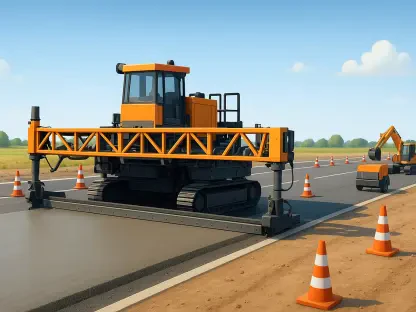
The Construction and Forestry division has emerged as the primary engine of this fiscal success, reporting a staggering 18% increase in sales and a substantial surge in operating profit. This momentum is closely tied to a global explosion in “mega-projects,” which are defining the current industrial era. From the overhaul of aging electrical grids to the construction of advanced manufacturing hubs, the demand for high-capacity machinery has never been higher. Most notably, the rapid expansion of data centers required to support the world’s burgeoning digital infrastructure has created an unprecedented sellers’ market for earth-moving equipment. As technology firms race to build out the physical sites necessary for artificial intelligence and cloud computing, they are turning to specialized machinery that can handle complex grading and excavation tasks with speed and precision. This surge has forced manufacturing facilities to operate at maximum capacity to meet aggressive retail demand.
Beyond data centers, the broader focus on domestic manufacturing and energy independence has catalyzed a wave of large-scale infrastructure investments. Governments and private entities are pouring capital into specialized facilities that require extensive site preparation and long-term construction support. This environment has allowed the company to move beyond its traditional role as a tractor manufacturer and into a position as a critical partner for national-level development projects. The sheer scale of these initiatives means that equipment orders are not merely for single units but for entire fleets of specialized machinery tailored to specific engineering challenges. Consequently, the company has seen its market share in the construction sector solidify, providing a steady stream of high-value contracts that offset the slower turnover in agricultural sales. This shift represents a fundamental realignment of the business model toward sectors with higher growth and more stable long-term investment profiles.
Automation and Precision: Driving Margin Expansion
A significant contributor to the current earnings spike is the rapid adoption of high-tech machinery solutions, which are transforming how work is performed on modern jobsites. The “SmartGrade” system, utilizing advanced 3D grade control to automate the movements of bulldozers and excavators, has seen adoption rates climb by over 50% recently. This trend indicates that contractors are increasingly relying on automation to solve chronic labor shortages and to ensure extreme precision on increasingly complex projects. By integrating sensors and software directly into the hardware, the company provides a level of efficiency that manual operation cannot match, reducing the time required for site preparation and minimizing material waste. Because these software-driven tools carry significantly higher profit margins than basic hardware alone, their widespread adoption has become a critical driver of the company’s financial health. This transition from selling iron to providing technology represents a pivotal moment in the industry.
While the construction and technology segments thrive, the agricultural business currently presents a more divided performance landscape. Small agriculture and turf equipment have remained relatively steady, benefiting from stable dairy markets and the unexpected liquidity boost from significant tariff refunds. These refunds have allowed smaller operators to maintain their equipment cycles despite general economic pressures. In contrast, the production and precision agriculture segment, which manages large-scale tractors and combines, has experienced a notable dip in overall sales. High input costs for fuel and fertilizer, coupled with persistent trade uncertainties, have caused many large-scale farmers to reconsider or delay their investments in new machinery. This divergence highlights the importance of the company’s broad product range, as the stability of the turf and small ag markets helps to mitigate the impact of the larger agricultural downturn, maintaining overall financial integrity.
Strategic Resilience: Navigating Economic Headwinds
External economic factors have played a complex, dual role in shaping the firm’s current financial standing and its ability to weather market storms. Significant tariff refunds issued under the International Emergency Economic Powers Act provided a vital cash cushion during the third quarter, which helped to offset rising production costs and supply chain expenses. This influx of capital allowed for continued investment in research and development at a time when competitors might have been forced to scale back. However, the forestry sector continues to present a significant challenge for the company’s outlook. A slowdown in residential housing construction, driven by higher borrowing costs and softened lumber prices, has led to a projected decline in global forestry demand for the remainder of the year. This specific downturn serves as a reminder that even a diversified portfolio is not entirely immune to broader macroeconomic shifts. Nevertheless, the company’s ability to respond to these headwinds kept its overall guidance on an upward trajectory.
The general outlook for the company remained one of cautious optimism as it successfully pivoted toward “new economy” infrastructure and high-margin technological services. By leveraging automation and capitalizing on the global demand for data centers and industrial facilities, the organization successfully navigated the bottom of the agricultural cycle with its financial health intact. With order books extending well through 2027, the firm was well-positioned to maintain its market leadership while traditional agricultural sectors recovered. Stakeholders should have recognized that the true value of the company moved beyond traditional manufacturing into the realm of software-integrated solutions and infrastructure support. Investors and industry partners were encouraged to focus on the long-term potential of these technological integrations rather than short-term fluctuations in commodity prices. Future growth likely depended on the continued expansion of autonomous capabilities and the ability to maintain supply chain agility in a volatile environment.