
The escalating pressure on global housing markets has reached a critical tipping point where the demand for affordable shelter significantly outpaces the availability of sustainable building materials. Across major metropolitan areas and rural communities alike, the construction industry is struggling to reconcile the need for rapid expansion with the non-negotiable requirement for net-zero carbon emissions. In Scotland, a pioneering firm called VASO Global has stepped forward to address this paradox by transforming discarded glass into high-performance structural composite panels. This shift represents a fundamental departure from conventional labor-intensive building methods that have dominated the industry for centuries. By focusing on industrialized construction, the company is demonstrating that waste products can serve as the foundation for a more resilient and environmentally conscious housing sector. The integration of such materials provides a tangible answer to the twin challenges of environmental degradation and the ongoing housing shortage.
Turning Industrial Waste: The Rise of Structural Assets
The core of this modern construction strategy lies in the principles of a circular economy, which reclassifies industrial waste as a premium resource for manufacturing. By redirecting thousands of tons of glass from landfills and processing it into durable structural panels, the industry effectively closes the loop on material consumption. These composite panels serve as a versatile alternative to traditional timber or concrete frameworks, offering a strength-to-weight ratio that simplifies the assembly process while maintaining high structural standards. This method does not merely replace one material with another; it fundamentally alters the lifecycle of building components by ensuring that materials used in construction have a lower initial carbon footprint. The resulting structures are robust enough to withstand diverse environmental stressors, ensuring that the commitment to sustainability does not come at the expense of long-term reliability for the residents.
Furthermore, the implementation of glass-based composite panels introduces significant advancements in thermal performance that directly influence the quality of life for the occupants. These materials are engineered to create a highly insulated and virtually airtight building envelope, which prevents the uncontrolled escape of heat and dramatically reduces the energy required for climate control. Such thermal efficiency is essential for addressing the rising cost of utilities and mitigating the impact of energy poverty on vulnerable populations. Unlike traditional insulation methods that often degrade over time or leave gaps in the thermal bridge, these factory-produced panels offer uniform protection against the elements. This focus on the building envelope ensures that the interior environment remains stable and comfortable throughout the year. By prioritizing the energy performance of the structure itself, the industry can create homes that are as efficient as they are environmentally friendly.
Scaling Operations: High-Tech Manufacturing for Rapid Delivery
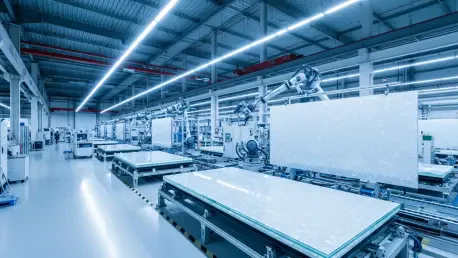
The transition to an industrialized manufacturing model has revolutionized the traditional construction timeline, offering a solution to the persistent delays that plague on-site building. By utilizing modular components fabricated in a controlled factory setting, developers can compress a project duration that typically lasts 33 weeks into a mere 10 weeks. This reduction is achieved through the use of semi-autonomous manufacturing systems that ensure every panel is cut and assembled with a level of precision that is nearly impossible to replicate on a standard construction site. This efficiency allows for a faster response to housing shortages, enabling municipalities to deliver high-quality residential units in a fraction of the usual time. The move away from unpredictable outdoor environments to a streamlined factory floor minimizes the risk of weather-related delays and material wastage, ensuring that the final product meets exact specifications every time it is deployed.
Economic revitalization in rural areas has emerged as a significant byproduct of this shift toward high-tech construction facilities. The establishment of a 60,000-square-foot manufacturing plant in Dumfries represents a major investment in the regional economy, transforming the area into a hub for industrial innovation. This facility is expected to generate approximately 70 specialized jobs from 2026 to 2031, providing residents with opportunities in green manufacturing and advanced engineering. By bringing high-skilled employment to the local community, the initiative proves that the transition to a sustainable economy can be a powerful engine for regional growth. These roles involve managing sophisticated machinery and overseeing quality control processes, ensuring that the local workforce is at the forefront of the technological revolution in building. This local production model also reduces the logistical costs and carbon emissions associated with transporting materials over long distances.
Forging a Path: Strategic Backing and Material Validation
Securing the necessary capital for such an ambitious technological shift required a coordinated effort between private investors and public institutions. A funding round totaling over £5 million, supported by PXN Ventures alongside government-backed organizations like Innovate UK and Scottish Enterprise, provided the financial foundation for scaling these glass-based panels. This influx of capital signaled a growing confidence among stakeholders that industrialized construction was no longer a niche concept but a vital pillar of the modern housing strategy. These funds were allocated toward expanding manufacturing capacity and refining the proprietary processes used to turn waste glass into structural components. This broad support network ensured that the project had the resources to move beyond the experimental phase and into a state of continuous production. The collaboration between diverse financial entities highlighted the recognition that solving the housing crisis required a combination of venture capital and public policy.
Rigorous scientific research and technical validation served as the final step in proving the viability of these innovative building materials. Partnerships with academic institutions, including the University of Edinburgh and the UKRI Centre for Net Zero High Density Buildings, allowed for an exhaustive analysis of the structural integrity and carbon-saving potential of the panels. These experts conducted extensive testing to verify that the composite materials met all safety regulations and environmental performance targets. The data gathered during these evaluations confirmed that using recycled glass significantly lowered the embodied carbon of new homes compared to traditional brick and mortar. This evidence-based approach provided the industry with the confidence needed to adopt these materials on a larger scale. By integrating seasoned corporate leadership with academic excellence, the project established a reliable framework for future developments. This combination of science and industry ensured that the new housing solutions were both sustainable and safe.
Establishing the Blueprint: Future Steps for Sustainable Urbanism
The strategic integration of recycled glass into the housing sector established a definitive model for how discarded materials were successfully converted into high-performance assets. This transition proved that the perceived conflict between rapid urban development and environmental preservation was a hurdle that was overcome through technological ingenuity and industrial discipline. The project demonstrated that the path forward involved a total commitment to off-site manufacturing and the widespread adoption of circular economy principles. It was clear that the reliance on outdated, carbon-intensive materials had to be abandoned in favor of systems that prioritized both energy efficiency and speed of delivery. This approach offered a practical roadmap for developers who sought to meet the housing needs of a growing population without compromising the integrity of the natural world. The success of this initiative provided a template that was replicated in other regions facing similar challenges of affordability and resource scarcity.
Future considerations for the construction industry shifted toward the expansion of these specialized manufacturing hubs across diverse geographic locations to minimize transport emissions. The focus remained on refining the automation processes to further reduce costs and make sustainable housing accessible to an even wider demographic. It was determined that continued investment in research and development was the primary driver for identifying new waste streams that could be repurposed for structural use. Stakeholders identified that the next major milestone involved the creation of a standardized certification process for all recycled building components to ensure universal safety and performance. This move toward standardization facilitated the rapid scaling of green technologies in the global market. Ultimately, the industry moved toward a future where every new home was built with the environment in mind, ensuring that the housing crisis was addressed through a lens of long-term ecological and social responsibility.