
The lush landscapes of Brazil have long been characterized by an untamed botanical chaos, yet it was the vision of a single artist that transformed this wild greenery into a disciplined architectural language recognized across the globe. Roberto Burle Marx remains a towering figure in Brazilian culture, often compared to the likes of Pelé or Oscar Niemeyer for his role in shaping the nation’s identity through his work. Although he lacked formal training as a botanist, his influence on the study and aesthetic appreciation of Brazilian flora is virtually unmatched. In a country that hosts the world’s most diverse plant life, Burle Marx became an essential conservationist and collector, with over 50 species eventually bearing his name. His work transformed the lush, often overlooked native vegetation of the Amazon and Atlantic Forest into a sophisticated visual language that redefined global landscape architecture for decades.
The Evolution of a Landscape Pioneer
From Artistic Roots to Modern Mastery
The spark for the revolutionary style of Burle Marx actually ignited thousands of miles away from the heat of Brazil during his time studying painting in Berlin throughout the late 1920s. While visiting the Dahlem Botanical Garden, he experienced a profound realization that the plants he had grown up seeing as common wild growth in his home country were, in fact, architectural wonders and artistic subjects in their own right. This European perspective allowed him to return home and view the soil as a massive canvas, utilizing plants as living pigments rather than mere decorative additions to a property. He began organizing gardens with bold planes of color and organic, sweeping curves that mimicked the confident brushstrokes of a fine artist. By treating the terrain as a multidimensional painting, he broke away from the rigid constraints of traditional gardening to create something entirely new that celebrated the raw power of the local environment within a structured frame.
The Radical Shift: Championing Native Flora
By rejecting the traditional European garden models that favored strict symmetry and imported species, Burle Marx pioneered a truly avant-garde approach that prioritized the ecological soul of the region. He argued that the rugged and lush native plants of Brazil were the only appropriate components for a modern landscape that celebrated the country’s unique environment and climate. This ideological shift moved away from colonial imitation and toward a style known as Tropical Modernism, where the wild essence of the jungle is meticulously composed into a disciplined, rhythmic, and high-art arrangement. The result was a design philosophy that harmonized the chaotic growth of the tropics with the clean, functional lines of modernist architecture. This method did not seek to suppress the natural world but rather to amplify its inherent beauty through careful curation, ensuring that every leaf and branch contributed to a larger, more cohesive visual narrative.
The Joá Estate: A Masterpiece in Green
Site Selection: Harmony in the Shadow of Gávea
The $22.79 million Joá estate in Rio de Janeiro stands as one of the most significant expressions of the late-career brilliance that defined the later years of the legendary designer. Situated in a coastal neighborhood defined by dramatic mountains and the dense Atlantic forest, the 6,000-square-meter property is particularly rare for its flat topography amidst the steep terrain. This level ground provided a unique opportunity to create grand features, such as an oversized swimming pool and a professional football pitch, all framed by the massive granite backdrop of the Pedra da Gávea mountain. In this specific setting, the landscape is not merely a backdrop but a primary driver of the property’s immense market value and cultural significance. The interaction between the manicured lawns and the looming mountain peak creates a sense of scale that is both humbling and exhilarating, illustrating how geography can be harnessed to enhance a residential living experience.
Modernist Structures: Framing the Natural World
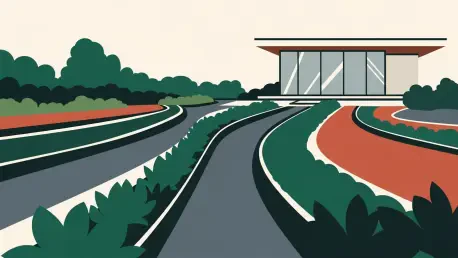
The residence itself, a glass-and-steel structure recently renovated to meet the highest contemporary standards, functions as a sophisticated frame for the outdoors rather than an enclosed sanctuary. With floor-to-ceiling glass walls, every room is transformed into an immersive study in green, ensuring the house feels like a natural extension of the forest floor rather than a separate entity. This seamless integration allows the inhabitants to experience the changing light and textures of the tropical environment from the comfort of a climate-controlled interior, bridging the gap between the untamed wilderness and modern luxury. To provide privacy without the use of harsh walls, the design utilized native palms and trees to create what experts describe as a living barrier of vegetation. These specific plantings serve as painterly gestures that offer a soft, rhythmic contrast to the clean, straight lines of the architecture, maintaining the estate’s open and organic atmosphere.
Preserving the Tropical Modernist Legacy
Sustainable Infrastructure: Modernizing a Living Legend
Reflecting the designer’s lifelong commitment to conservation, the renovated Joá estate pairs its 20th-century aesthetic with 21st-century ecological technology and infrastructure. The home currently features 100% solar energy generation and a sophisticated water recycling system, proving that high-end modernist design can align perfectly with modern environmental responsibility. The use of elemental materials like board-formed concrete, rough stone, and dark bronze further anchors the home to its site, maintaining the integrity of the original 1980 vision while ensuring it remains functional. These technological upgrades do not detract from the historical narrative of the property; instead, they provide the necessary support to preserve the landscape for the coming decades. By integrating renewable energy sources, the estate demonstrates how historical masterpieces can be adapted to modern sustainability goals without losing the core artistic identity that makes them unique.
Cultural Heritage: The Lasting Impact of Botanical Art
Ultimately, the staggering price of this Rio estate reflected the enduring prestige of a landscape language that remained uniquely Brazilian in its execution and spirit. Tropical Modernism stood as a holistic discipline where geology, flora, and architecture existed in a single, unified composition that transcended simple gardening. The work of the designer did not seek to tame the botanical excess of his homeland; instead, he mastered it through meticulous selection and rhythm. The property functioned as a curated experience of cultural heritage, offering a sequence of views that made the surrounding environment feel both grand and intimately connected to the soul of the home. Moving forward, property owners should prioritize the integration of native biodiversity to enhance both asset value and environmental resilience. Investors and preservationists recognized that maintaining such sites required a balance between historical fidelity and the implementation of resilient modern infrastructure.