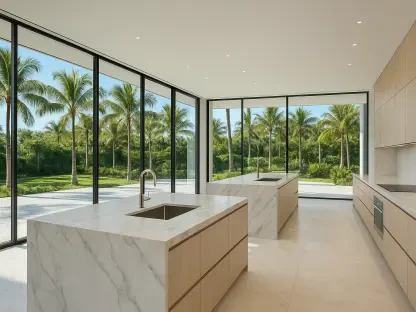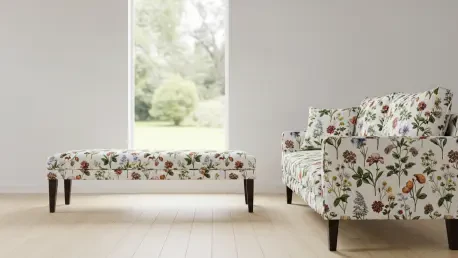

The transition from stark, white-on-white interiors to the lush, verdant landscapes of living room upholstery marks a profound shift in how modern homeowners perceive their personal sanctuary. For a significant period, the prevailing trend favored an aesthetic that prioritized clinical cleanliness over character, but the current market of 2026 has completely inverted this philosophy in favor of vibrant expression. The bold floral sofa has emerged as the definitive centerpiece of the modern home, acting as a visual anchor that demands attention while providing a sense of grounding. This movement toward maximalism is driven by a collective desire for spaces that feel curated and intentional rather than mass-produced. By integrating large-scale prints and vibrant color palettes, individuals are reclaiming their living areas as reflections of personal history and emotional warmth. The result is a shift away from the sterile feel of the early 2020s toward an era where the home is a living gallery, filled with patterns that evoke memory.
The Historical Catalyst: Reviving Bohemian Sophistication
The primary inspiration for this movement stems from a specialized “bohemian-chic” aesthetic that first gained prominence in the late 1960s, notably through iconic cultural figures. A prominent example is the legendary 1967 photograph of musician Neil Young in his Malibu residence, which featured a quilted floral sofa that remains a masterclass in fearless design to this day. This specific look prioritized a lived-in, “ready for company” atmosphere that effectively balanced casual beachside comfort with the sophisticated boldness of high-patterned upholstery. Modern interpretations of this style have moved beyond mere imitation, seeking to capture that specific blend of relaxed confidence and artistic rebellion. By looking back at these historical precedents, designers have identified a formula for creating interiors that feel both high-end and deeply approachable. The focus remains on authenticity, ensuring that the centerpiece feels like a cherished family heirloom rather than a generic purchase.
Industry experts have noted that this resurgence is primarily fueled by a deep-seated need for nostalgia and emotional warmth in an increasingly digital and disconnected world. Unlike minimalist styles that can often feel cold or even unfriendly to guests, floral patterns evoke a sense of sentimentality and comfort that is hard to replicate with solid colors. By embracing these story-filled designs, homeowners are moving away from the “fast furniture” culture that has plagued the industry for years, instead opting for pieces that possess a distinct soul. This shift represents a broader cultural movement toward slow living, where every item in a room has a purpose and a history. The intricate details of a botanical print allow for a level of visual storytelling that simpler fabrics simply cannot achieve. Consequently, the home becomes a sanctuary that fosters a genuine sense of belonging, transforming a standard living space into a personalized environment that reflects the unique journeys of those who live within its walls.
Strategic Composition: Styling and Material Innovation
Successfully integrating a bold floral sofa requires a strategic approach where the piece is treated as the “confident guest” of the entire space. Designers recommend establishing the patterned couch as the undisputed focal point, ensuring that surrounding furniture and decor serve to complement rather than compete with its presence. To maintain a fresh and modern feel, the trend encourages a sophisticated layering of textures and scales, such as pairing large-scale botanical prints with smaller block patterns or metallic accents. Meanwhile, the furniture sector has adapted by offering innovative fabrics like three-dimensional jacquards and durable performance linens. These materials bridge the gap between retro charm and modern functionality, allowing for high-design motifs on practical items like sleeper sofas and modular sectionals. This evolution ensures that the floral trend is not just visually appealing but also highly sustainable and resilient enough for the demands of a modern household.
The widespread adoption of floral centerpieces successfully dismantled the rigid boundaries of modern minimalism, allowing for a more expressive approach to residential design. Designers moved away from safe, monochromatic palettes and instead prioritized the emotional impact of the home environment. To maintain the longevity of this aesthetic, it was recommended that homeowners invest in high-quality slipcovers to allow for seasonal pattern rotations without replacing entire frames. Furthermore, the integration of smart lighting systems proved essential for highlighting the specific color depth found in complex jacquard weaves during different times of day. Moving forward, the focus shifted toward commissioning bespoke textile artists to create one-of-a-kind botanical prints that reflected local flora, further personalizing the living space. By treating upholstery as a canvas for regional artistry, the design community ensured that the floral trend remained deeply connected to its surroundings while providing a clear path for future creative explorations.