
The recent announcement of the UAE Pavilion securing the prestigious Gold distinction at the iF Design Award 2026 marks a transformative milestone in the history of international exhibitions and global architectural standards. This achievement is not merely a regional success but a testament to how meticulous design can bridge the gap between ancient cultural legacies and the rapid technological advancements of the present day. Emerging as a standout from a competitive pool of over 11,000 global entries, the pavilion dominated the Interior Architecture category, specifically for trade fairs and temporary exhibitions. The jury’s decision reflected a deep appreciation for the “Earth to Ether” concept, which served as the intellectual foundation for the entire project. By presenting progress as a continuous human journey, the UAE successfully articulated a narrative that transcended physical space, offering a profound commentary on the evolution of community knowledge into modern scientific discovery. This award solidifies the pavilion’s status as the definitive benchmark for excellence in thematic storytelling.
Architectural Synergy: Blending Tradition with Modern Engineering
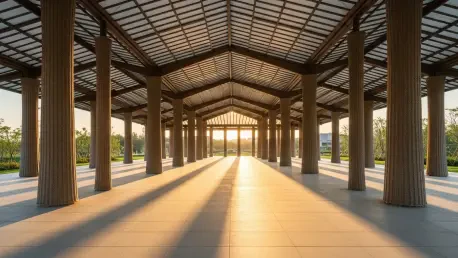
The physical structure of the pavilion acted as a silent ambassador, communicating the depth of Emirati heritage through a sophisticated architectural language that prioritized both form and function. At the heart of the design was a striking shaded canopy, supported by an intricate arrangement of 90 palm rachis columns that soared to a height of 16 meters, creating a sense of both grandeur and intimacy. This specific structural choice was the result of a deliberate and highly successful collaboration between traditional Emirati material culture and the refined precision of Japanese craftsmanship. By utilizing materials that have historically defined desert architecture and reinterpreting them through the lens of contemporary construction techniques, the design team created a space that felt both timeless and futuristic. The columns did not just support the roof; they served as a rhythmic visual representation of the nation’s growth, rooted firmly in the soil of tradition while reaching upward toward the boundless potential of the atmospheric ether.
Beyond the structural integrity of the canopy, the interior environment was meticulously engineered to function as a calm, immersive sanctuary that offered visitors a respite from the energetic pace of the world expo. This atmosphere was achieved through a masterful manipulation of shifting light and shadow, which created a multi-sensory environment that changed throughout the day as the sun moved across the sky. The deliberate use of natural illumination served to emphasize the shifting textures of the materials, guiding the audience through a series of spaces that illustrated the nation’s evolution from its pearl-diving and agricultural roots to its current status as a leader in space exploration. Every element, from the tactile quality of the walls to the acoustic dampening of the open-air sections, was designed to foster a sense of contemplation. This cohesive approach ensured that the architecture remained inseparable from the narrative, proving that a well-designed pavilion must function as a living vessel for the story it aims to tell.
Diplomatic Influence: Sustaining Engagement and Global Accolades
The success of the pavilion was not limited to the critiques of design experts, as it also achieved an unprecedented level of public popularity, recording over five million visitors throughout the duration of the event. This staggering figure made it the most-visited national pavilion of the exhibition, a feat driven by a storytelling strategy that treated tradition and innovation as complementary forces rather than opposing ones. Visitors were drawn to the authentic representation of Emirati life, which avoided common clichés in favor of a sophisticated, intellectual exploration of human progress. This high level of engagement demonstrated that global audiences are increasingly seeking meaningful experiences that go beyond visual spectacle to offer genuine cultural insights. By maintaining a balance between high-tech interactive displays and quiet, reflective spaces, the pavilion managed to appeal to a diverse international demographic, effectively using soft power to strengthen the UAE’s diplomatic and cultural presence on the world stage.
In addition to the iF Design Award, the pavilion garnered high rankings from the Bureau International des Expositions (BIE) for its exceptional integration of architecture and landscape design. These honors were complemented by further recognition at the World Expolympics and the DFA Design for Asia Awards, where the project was lauded for its commitment to sustainability and staff excellence. The strategic focus on environmental responsibility was evident in the selection of materials and the passive cooling properties of the rachis columns, which minimized the carbon footprint of the massive structure. By winning the German Design Award as well, the pavilion proved that its aesthetic and functional principles were universally applicable and respected across different cultural design standards. This broad spectrum of accolades confirms that the UAE has successfully moved beyond temporary exhibition design, instead creating a prototype for how nations can showcase their identities while addressing global challenges such as environmental conservation.
Collaborative Models: Future Directions in Exhibition Design
The success of the UAE’s contribution to the expo landscape highlights the critical importance of cross-disciplinary and international cooperation in the execution of large-scale cultural projects. Ambassador Shihab Alfaheem noted that the pavilion’s achievements were the direct result of a synergy between architects, historians, engineers, and cultural advisors from multiple nations. This model of radical collaboration allowed for the seamless integration of disparate elements, such as historical artifacts and cutting-edge digital installations, into a single, cohesive visitor journey. By streamlining materials, landscape, and storytelling, the project demonstrated that cultural memory is not a static relic of the past but a vital foundation for future ambition. For organizations planning future exhibitions, this approach serves as a blueprint for success, emphasizing that the most impactful projects are those that prioritize a unified vision over individual design components. The ability to harmonize diverse expertise into a singular architectural statement is what truly distinguished this pavilion from its peers.
The UAE’s presence at the expo ultimately redefined the criteria for what constitutes a successful national representation on the global stage. Stakeholders recognized that the integration of localized heritage with international design standards provided a sustainable path for future cultural diplomacy. Moving forward, designers and planners adopted the pavilion’s focus on sensory storytelling and material innovation as a baseline for new developments. The project shifted the industry focus toward creating spaces that encouraged dialogue rather than passive observation. Organizations that integrated these cross-disciplinary methods saw a marked increase in public engagement and critical success. By prioritizing authentic narratives and environmental stewardship, the pavilion established a legacy that influenced exhibition strategies through 2026 and beyond. This approach ensured that future pavilions functioned not just as temporary structures, but as long-lasting contributions to the global architectural discourse. The transition toward this gold standard reflected a broader commitment to excellence that prioritized the human experience within the built environment.