
The traditional American backyard is undergoing a radical metamorphosis as the era of the bland, interchangeable patio set officially comes to a close in favor of highly customized living environments. Homeowners have moved beyond the historical reliance on “safe” neutrals and functional grays, opting instead to treat their exterior decks and gardens as vital, intentional extensions of their interior design narratives. This shift toward intentionality suggests that an outdoor space should be as curated, comfortable, and stylistically distinct as a primary living room or a high-end kitchen. By rejecting the uniformity of mass-produced furniture, residents are now embracing a design language that prioritizes individual character and emotional resonance. The core of this evolution lies in the transformation of the backyard from a simple utility area into a personality-driven sanctuary that facilitates both daily relaxation and sophisticated social engagement.
This macro shift signals the definitive end of the “cookie-cutter” patio that dominated suburban landscapes for decades. In its place, the current design landscape emphasizes playful silhouettes, high-quality artisanal materials, and furniture arrangements that evoke the feeling of a permanent travel destination. Whether a project involves a compact urban balcony or an expansive rural estate, the objective remains the same: to create a joyful environment that offers a genuine sense of escapism within the confines of one’s own property. Designers are increasingly borrowing aesthetic cues from boutique hotels and Mediterranean terraces to craft spaces that feel layered and “collected over time” rather than purchased in a single transaction. This sophisticated approach allows for a more curated atmosphere, where every piece of furniture serves a specific purpose in telling the story of the home’s inhabitants.
Architectural Permanence: The Integration of Built-In Elements and Organic Silhouettes
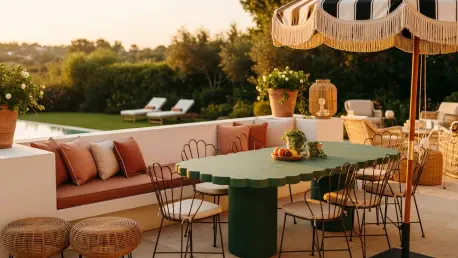
One of the most defining characteristics of the current season is the widespread adoption of built-in banquette seating, which brings a sense of structural permanence to the outdoors. Traditionally reserved for interior breakfast nooks or upscale restaurant booths, these permanent fixtures are now being integrated into deck perimeters and garden walls to maximize square footage while fostering a cozy, communal atmosphere. By treating outdoor seating as an architectural element rather than a portable accessory, homeowners are creating spaces that feel as considered and stable as their indoor counterparts. This trend encourages the use of high-performance upholstery that offers the softness of indoor fabrics with the durability required to resist UV rays and moisture. The result is a seamless transition between the house and the garden, where the comfort of the living room is physically anchored into the landscape.
To balance the structural weight of these permanent installations, designers are introducing organic and fluid forms that soften the visual landscape. The rise of “scallops, wiggles, and waves” serves as a direct counterpoint to the rigid, linear nature of traditional landscaping materials like stone, concrete, and brick. These undulating silhouettes, found on everything from the edges of dining chairs to the profiles of large patio umbrellas, add a sense of movement and a whimsical, feminine touch to the environment. This departure from geometric rigidity makes the outdoor space feel significantly more inviting and less formal, encouraging a relaxed state of mind. By integrating these softer shapes, residents can achieve a balanced aesthetic that feels both contemporary and timeless, as many of these curved forms draw inspiration from classical European garden designs that have stood the test of time for centuries.
Vibrant Chromatics: Reimagining Color and Heritage Materials in Modern Settings
The design world has witnessed a triumphant return to color, moving away from the “safe” blacks and whites that previously dominated the outdoor market. In the current landscape, color is no longer restricted to small accessories like throw pillows or planters; instead, it is being used as a primary design tool for large-scale furniture pieces. Powder-coated finishes in sophisticated shades such as verdant green, terracotta, and sun-washed blue are being utilized to set a vibrant and optimistic tone for the entire outdoor area. These bold choices serve to bridge the gap between the natural colors of the garden and the interior palette of the home, creating a unified visual flow. This confident application of color is often layered through mixed patterns and textures, resulting in a rich, energized environment that feels deeply personal rather than overwhelming or trend-dependent.
Complementing this colorful revolution is the reimagining of heritage materials, specifically through the lens of authentic softness and nostalgia. The current iteration of wicker and woven furniture has moved far beyond the synthetic-looking sets of the past, focusing instead on tactile weaves and warmer, earthier color palettes. Influenced by a desire for “lived-in” luxury, designers are favoring tones like olive, sand, and deep amber over the cool grays of previous years. These materials are being paired with modern, sculptural silhouettes—such as track arms or curvaceous frames—allowing them to fit seamlessly into both traditional and contemporary architectural schemes. The overarching goal is to create an aesthetic that looks as though it was gathered over many years, contributing to the “destination” feel that defines modern outdoor living. This approach avoids the clinical feel of a showroom and replaces it with a space that feels grounded, natural, and historically resonant.
Mediterranean Influences: Crafting the Resort Lifestyle through Curated Details
The “Euro Summer” aesthetic has emerged as a dominant influence, seeking to replicate the relaxed, high-end luxury of a Mediterranean vacation within a residential context. This trend is characterized by a sophisticated mix of wrought iron details, bold cabana stripes, and vintage-inspired forms that reject the idea of a “matched set.” Wrought iron, in particular, is experiencing a massive resurgence due to its slim, durable profile and its ability to evoke the charm of a Parisian cafe or an Italian courtyard. These pieces are often paired with oversized umbrellas and layered linen textiles to create a resort-like atmosphere that prioritizes comfort and visual interest. By mixing different materials—such as a stone-topped table with woven chairs—homeowners can establish a “collected” look that feels high-end and entirely unique to their specific property.
As these diverse design elements converged, the distinction between a beautiful interior room and a beautiful garden effectively blurred into a single, cohesive experience. The move toward personality-driven design represented a holistic change that integrated architecture, geometry, color theory, and historical appreciation. Homeowners successfully transformed their exterior spaces into meaningful reflections of their personal style, ensuring that the patio was no longer just a place to sit, but a vibrant part of the home’s living experience. To maintain this momentum, individuals should continue to prioritize high-quality, durable materials that can support bold aesthetic choices over multiple seasons. The most successful outdoor transformations were those that focused on creating a source of joy and character, moving away from generic solutions and toward a future where every garden serves as a private, personalized sanctuary.