
The massive transformation of an unassuming plot in Saline, Michigan, into a sixteen-billion-dollar epicenter of computational power represents the most significant industrial pivot since the birth of the moving assembly line. This groundbreaking development, widely known as “The Barn,” serves as the physical manifestation of the Stargate initiative—a strategic endeavor by OpenAI and Oracle to scale computing capacity to levels previously thought impossible. As the largest economic investment in the history of the state, the project signifies a departure from traditional manufacturing toward a future defined by the physical infrastructure of the digital mind. This facility is not merely a warehouse for servers; it is a foundational component of a national strategy designed to ensure that the hardware powering artificial intelligence remains a domestic priority.
This analysis explores the multifaceted impact of the Saline campus, examining how it addresses the critical bottlenecks of energy, labor, and space that currently limit technological growth. By observing the collaborative effort between tech giants, financial institutions like Blackstone, and local construction experts, one can see a clear shift in how industrial power is measured. The project serves as a definitive case study in the “Gigawatt Era,” where the ability to manage massive electrical loads and specialized cooling systems is just as vital as the software itself. Understanding the mechanics of this project provides a window into the evolving relationship between the physical world and the digital frontier.
From the Rust Belt to the Silicon Coast: Michigan’s Industrial Evolution
Michigan’s historical identity as the powerhouse of the American automotive industry provided the necessary ingredients for this monumental transition into high-tech infrastructure. The state possesses a rare combination of industrial heritage, an existing electrical grid capable of expansion, and a workforce that has specialized in large-scale mechanical and electrical systems for generations. This background is critical because it highlights that the advancement of artificial intelligence is not solely dependent on code written in coastal tech hubs. Instead, it relies on the same “Rust Belt” expertise that once built the engines of the twentieth century, now repurposed to assemble the GPU clusters of the twenty-first.
This evolution matters because it anchors the most abstract technology of the modern era in tangible, physical assets. The shift from internal combustion to high-performance computing reflects a global trend where data has become the primary commodity. By utilizing 250 acres in Washtenaw County, the Stargate initiative leverages Michigan’s geographic stability and its historical capacity for executing complex engineering feats. This context explains why traditional tech centers were bypassed in favor of a region that offers the space and the industrial muscle required for a project of this magnitude. The legacy of Michigan’s manufacturing past has effectively become the springboard for its digital future.
The Architecture of Innovation and the Mechanics of Scale
The Economic and Technical Scale of the Saline Campus
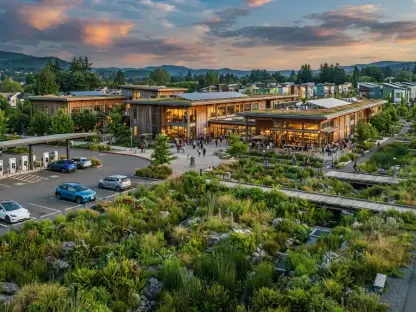
The financial and technical specifications of the Saline campus are unprecedented, featuring a total investment of $16 billion aimed at achieving a power capacity exceeding one gigawatt. This scale is necessary because the training requirements for next-generation large language models have grown exponentially, demanding facilities that can handle massive heat loads and electrical draw. The campus plan involves three primary single-story data centers, with the first structure occupying 550,000 square feet and nearing its final stages of completion. This infrastructure represents a “hard asset” investment that contrasts with the speculative nature of many tech ventures, providing a concrete foundation for the AI economy.
The involvement of Related Digital and Blackstone highlights a significant shift in private equity, where capital is increasingly directed toward the physical backbone of the internet. This massive influx of funding addresses the primary constraint of the current erthe physical limits of hardware availability and the specialized systems required to maintain it. Unlike previous iterations of data centers that focused on storage, these “Stargate” facilities are designed for high-intensity computation. The project demonstrates that the future of technological leadership is inextricably linked to the ability to mobilize billions of dollars into physical real estate and high-voltage electrical engineering.
Rethinking the Workforce through the Project Labor Agreement
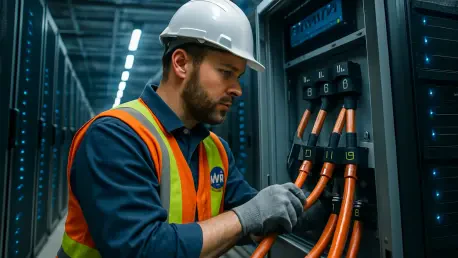
A distinguishing feature of this development is the implementation of a first-of-its-kind Project Labor Agreement (PLA) within the data center sector. By collaborating with 14 different signatory affiliated skilled trade unions, the project ensures a steady supply of approximately 700 highly trained professionals. This strategy, formalized through a memorandum of understanding between OpenAI and North America’s Building Trades Unions, acknowledges that the complexity of a gigawatt-scale facility requires more than just general labor. It requires electricians, pipefitters, and mechanical engineers who can install and maintain the intricate cooling and power distribution systems that modern AI demands.
This integrated workforce model serves as a template for future large-scale infrastructure projects, aiming to prevent the labor shortages and safety lapses that often plague rapid industrial expansions. By prioritizing union partnerships, the project ensures that technical training and safety standards are built into the construction timeline from the outset. This symbiotic relationship between high-tech firms and traditional trade unions suggests that the next phase of the digital revolution will be built by workers who possess specialized certifications in high-voltage systems and industrial maintenance. This approach stabilizes the construction pipeline and ensures long-term operational reliability.
Navigating the Challenges of High-Capacity AI Infrastructure
Despite the project’s momentum, it must navigate a complex landscape of supply chain vulnerabilities and local regulatory hurdles. The global demand for specialized electrical transformers and liquid cooling units has created significant lead times that threaten to stall many similar projects across the country. Furthermore, the sheer energy requirement of a gigawatt-scale campus often leads to friction with local utilities and community groups concerned about the environmental impact and the strain on the regional grid. The Saline project has managed these tensions through early coordination with energy providers and a focus on state-level economic development benefits.
The project also addresses the growing “NIMBY” sentiment by positioning itself as a driver of sustainable, high-paying jobs rather than a passive consumer of resources. By securing its financing and labor agreements early, the Stargate initiative bypassed many of the obstacles that have recently slowed data center growth in other regions. This proactive management of community and logistical challenges provides a case study in how to execute massive infrastructure projects in an environment of scarcity. The success of “The Barn” depends as much on its political and social integration as it does on its technical execution.
Scaling the Stargate: Future Trends in AI Infrastructure
As the demand for computational power continues to accelerate, the industry is moving toward more centralized, massive computing hubs that can support “sovereign AI” initiatives. This trend indicates that national competitiveness will soon be measured by the total gigawatt capacity of a country’s data center fleet. Future facilities will likely integrate more modular construction techniques and advanced liquid-to-chip cooling technologies to maximize efficiency. We can also expect to see a greater emphasis on “behind-the-meter” power solutions, where data centers partner directly with nuclear or renewable energy producers to ensure a dedicated and stable power supply.
Moreover, the relationship between tech companies and regional governments will continue to deepen as these projects become central to local economies. Regulatory frameworks may need to be updated to expedite the permitting of high-voltage transmission lines, which are currently a major bottleneck for the industry. The Saline project signals the beginning of a new industrial era where the distinction between “tech” and “utility” begins to blur. As these massive campuses become the heart of the national economy, their security and stability will become matters of both economic and national significance.
Strategies for Navigating the New Industrial Landscape
For organizations looking to enter this space, the primary strategy must be an “infrastructure-first” approach where hardware and energy security are prioritized over software development. Investors should focus on the companies providing the specialized components of the AI backbone, such as power management systems and thermal regulation technology. Regional developers must work to create “shovel-ready” sites that already have the necessary zoning and high-voltage access to attract large-scale projects. This preparation is the most effective way to compete for the multi-billion-dollar investments that characterize the Stargate initiative.
Professionals in the construction and engineering fields should pursue certifications in specialized data center technologies, as these roles will offer the highest degree of job security in the coming years. For policymakers, the lesson from Michigan is the importance of fostering a collaborative environment between trade unions and tech firms. Creating streamlined pathways for the development of energy infrastructure and the training of a specialized workforce will be the deciding factor in which regions thrive. Ultimately, the successful deployment of AI depends on a robust physical foundation that can support the immense weight of the digital future.
Building the Backbone of Intelligence: A Transformative Legacy
The completion of the primary phases of the Saline campus established a definitive framework for future gigawatt-scale developments. This massive endeavor demonstrated that the physical constraints of power and labor were the ultimate gatekeepers of artificial intelligence. By integrating organized labor into the high-tech pipeline, the project mitigated the volatility often associated with massive infrastructure builds. It became clear that the regions capable of providing immediate energy solutions and a skilled construction workforce secured the most lucrative partnerships. This shift transformed the perception of the Midwest from a historical relic into a vital nexus of the digital economy.
The initiative proved that the path to advanced intelligence required a foundation of concrete, steel, and high-voltage electricity. Developers who followed this blueprint found that pre-negotiated labor agreements and early grid coordination were the most effective ways to avoid project delays. The legacy of the Saline campus resided in its ability to merge the industrial muscle of the past with the computational needs of the future. This approach ensured that the infrastructure remained resilient against supply chain disruptions and energy shortages. Ultimately, the project set a new standard for how national computing power was built and maintained.