
At the seam where Broadmead meets Cabot Circus and St. Paul’s, a long-neglected hinge of land suddenly carried city-scale weight and a chance to rewrite how people move, meet, and live at Bristol’s core. Hammerson’s outline consent for up to 600 student beds at Cabot Gate turned a leftover parcel into a test of what student-led regeneration can deliver beyond doors and desks.
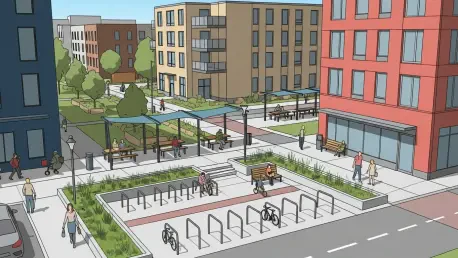
The proposal promised more than buildings: shaded seating, biodiverse planting, a community pavilion, and safer walking and cycling routes threading neighborhoods toward the center. The question was whether one well-placed scheme could unlock a shift in how the city uses and shares its busiest streets.
Nut Graph
This story mattered because Bristol faced persistent pressure on rentals while aiming to cut car trips and raise public realm quality. Outline consent marked a milestone, yet the decisive work sat in the reserved matters, where design, massing, and stewardship would either confirm or dilute the vision.
Moreover, the site’s adjacency to Cabot Circus and Quakers Friars positioned it to diversify footfall and stitch fragmented edges. Success depended on permeability, active ground floors, and management that kept spaces lively and safe beyond retail peaks.
The Story
City planners framed the project as a hinge for compact growth. “Bringing students closer to transit and services reduces commutes and shifts trips toward walking and cycling,” a planning officer said, citing studies showing central PBSA residents make the majority of journeys on foot or bike.
Local voices mixed optimism with caution. “Safer routes past evening trade would help families and older residents,” a St. Paul’s organizer noted, before adding, “but noise and litter need firm management.” University housing leads pointed to unmet demand and welfare priorities: quiet study areas, accessible entrances, and on-site support.
Hammerson’s team spoke of stewardship and synergy. “A pavilion programmed with community groups and students can anchor activity,” a project lead said, outlining shared maintenance across the wider estate and coordination with events nearby to extend dwell time into the evening.
Body
Case studies from regional cores offered clues. In Leeds and Newcastle, central PBSA integrated with mixed-use estates lifted evening economy metrics and raised perceived safety when lighting and sightlines followed CPTED guidance. Mode share data showed walking and cycling gains when routes were direct and junctions calmed.
Design codes now under discussion emphasized step-free access, weather-protected thresholds, and cycle parking ratios that beat minimums. Retail-lite studios and community-facing uses at ground level aimed to welcome rather than wall off, while off-peak servicing protected pedestrian comfort.
Delivery hinged on phasing that kept key paths open, plus a single accountable estate manager with KPIs for cleanliness, activation, and rapid-response maintenance. A small programming fund, governed transparently, could seed local operators and cultural partners.
Conclusion
The road ahead was practical more than poetic: lock in permeability, daylight and acoustic standards, and inclusive wayfinding; commit to bursary-linked rooms within a diverse unit mix; and measure outcomes—footfall, mode share, biodiversity, pavilion use, and perceived safety—on a living dashboard. With routes protected during construction and a clear tenancy strategy favoring local players, the scheme’s benefits were set to compound beyond term time. If reserved matters held the line on landscape-first design and long-term stewardship, Cabot Gate had been poised to turn a once-through space into a civic destination.