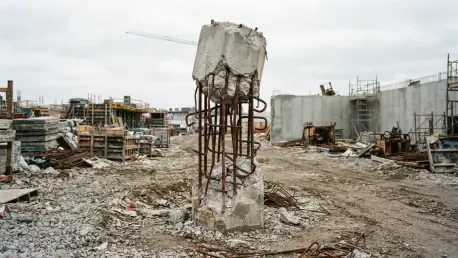

The morning sun had barely crested over the coastal peaks of La Guaira when the earth began to churn with a violence that transformed fifteen massive apartment towers into jagged mountains of pulverized concrete and twisted metal. While neighboring private high-rises remained standing, fifteen government-built towers in Caraballeda vanished during the June 24 tremors. For residents like Ailin Quiroz, the disaster was not just an act of nature but a confusing mystery: why did her sister’s 13-story home disintegrate while other buildings nearby barely cracked? This staggering disparity in survival rates suggests that the magnitude 7.2 and 7.5 earthquakes merely finished a process of destruction that began the day the first shovel hit the ground. The sheer scale of the ruins provides a haunting backdrop to an investigation that exposes the fragile intersection of civil engineering and political ambition.
The 63% Failure Rate: A Tragedy Written in Rubble
The data emerging from the dust of Caraballeda tells a story of selective devastation that is impossible to ignore. In a town where modern engineering should have provided a buffer against the tectonic volatility of the Caribbean plate, the failure of public infrastructure was nearly absolute. Statistics gathered by independent observers indicate a 63% collapse rate among towers specifically commissioned by the state housing authority in this coastal pocket. While the surrounding skyline still holds the silhouettes of older, privately developed skyscrapers, the “Great Mission” sites have been reduced to flat planes of gray debris. This indicates that seismic energy was not the sole culprit; rather, it acted as a diagnostic tool that identified every shortcut taken during the construction of these residences.
For the survivors, the psychological toll is compounded by the visual evidence of inequality. Ailin Quiroz spent days sifting through a landscape where the rebar appeared more like discarded wire than the skeletal support of a skyscraper. She noted that while her sister’s building collapsed in seconds, a hotel less than a quarter-mile away suffered nothing more than broken windows and cosmetic plaster damage. This stark contrast suggests that the residents of public housing were living in structures that were seismically compromised from their inception. The earthquakes served as the final, brutal audit of a housing program that prioritized quantity over the fundamental physics of survival.
From Social Dream to Seismic Nightmare
The collapse of these structures represents more than a technical failure; it is the physical breakdown of a massive social promise. Under the “Great Mission” housing project, these towers were intended to be a refuge for families displaced by previous natural disasters, yet they became the site of a fresh catastrophe that likely claimed thousands of lives. The project was originally framed as a revolutionary triumph, a way to provide dignity and safety to the most vulnerable citizens through rapid, state-led urban development. Instead, the ruins now serve as a grim monument to the dangers of ignoring geological reality in favor of ideological speed.
Understanding this collapse is essential because it highlights a global concern: the dangerous intersection of rapid urban expansion, political pressure, and the relaxation of safety standards in disaster-prone zones. When the state takes on the role of both developer and regulator, the traditional checks and balances of the construction industry often evaporate. In the rush to populate the coastal corridor of La Guaira, the government overlooked the fact that this region sits directly atop active fault lines. By treating housing as a political metric rather than a long-term engineering challenge, the authorities created a vulnerability that was destined to be exploited by the inevitable movement of the earth.
Forensic Analysis of a Structural Failure
Visual evidence reveals that the steel “stirrups”—the ties meant to hold vertical rebar in place—were bent at 90-degree angles instead of the 135-degree hooks required by the 2006 Venezuelan building code. This small deviation meant the steel cages could easily unseat during shaking, causing columns to lose their load-bearing capacity instantly. In seismic engineering, the stirrup is what keeps the concrete core confined; once it pops open, the vertical bars buckle outward like the ribs of an old umbrella. In the Caraballeda ruins, thousands of these 90-degree bends can be seen perfectly intact, still attached to bars that no longer support anything, proving they failed to “grip” the concrete when it was needed most.
Contrary to legal standards, primary reinforcement bars in the collapsed complexes were often improperly spaced or disorganized. Without the correct gaps, concrete cannot bond effectively with the steel, creating a weakened composite material that is unable to withstand lateral seismic forces. In coastal environments, high-quality materials are a necessity. However, deep-seated rust found within the ruins and reports of “stretched” concrete suggest that impurities and low-grade materials were used, leading to internal decay long before the quakes struck. The architectural layout of the towers lacked critical earthquake-resistant features, such as stiff shear panels. Furthermore, the uniform orientation of the columns left the buildings exceptionally weak against tremors coming from specific directions, making them easy targets for the particular pulse of the June 24 waves.
The Price of Political Urgency: Expert Perspectives
Structural engineer Kit Miyamoto likens the stirrup failures to a wine barrel losing its steel hoops; once the exterior support fails, the internal pressure causes the entire structure to burst and collapse under its own weight. He noted that the speed of construction likely prevented the proper inspection of these reinforcement cages before the concrete was poured. When a building is erected in a matter of months, the hidden errors in the steelwork are buried forever—until a quake uncovers them. The forensic reality suggests that these buildings were effectively designed to fail the moment they were subjected to significant lateral movement.
Former project director Francisco Sesto has acknowledged an “intensity never before seen in Venezuela” during the construction period. Experts argue that the mandate to build 200,000 homes in a single year created a culture where quality control was sacrificed to meet political deadlines. This urgency was driven by a desire to fulfill electoral promises and demonstrate state efficiency, but it resulted in a systematic bypassing of the rigorous inspections that define safe urban development. The fact that Vice President Delcy Rodríguez suspended the Presidential Office of Special Plans and Projects months before the disaster suggests that internal alarms regarding construction quality may have already been sounding within the government. The suspension points toward a late-stage realization that the infrastructure built during the “Great Mission” was not meeting even the most basic safety benchmarks.
Identifying Risk and Navigating Unsafe Infrastructure
Engineers emphasize checking for exposed reinforcement in surviving structures. If rebar stirrups show 90-degree bends or signs of advanced corrosion, the building’s ability to survive a secondary tremor is severely compromised. For those still residing in government-built high-rises along the coast, the visual presence of “spalling”—where concrete flakes off to reveal the steel underneath—is a critical warning sign. If the revealed steel is thin, rusted, or incorrectly shaped, it serves as a clear indicator that the building’s internal skeleton is incapable of providing the necessary tension during a seismic event.
Persistent water intrusion, sewage leaks, and falling ceiling chunks are not just maintenance issues; in the context of these complexes, they are indicators of degrading structural concrete that requires immediate professional assessment. Water that seeps into the core of a column carries salts and oxygen that accelerate the oxidation of the rebar. As the metal expands from rust, it cracks the concrete from the inside out, further weakening the structure. For residents in remaining blocks like OPPPE 25, the framework for safety involves immediate relocation. Since these towers share the same construction blueprints and flaws as those that fell, they are currently classified as “death traps” by structural experts who fear that even a minor aftershock could trigger a new round of collapses.
Mandating Accountability and Engineering Resilience
The forensic investigations concluded that the catastrophic loss of life in Caraballeda was the direct result of systemic negligence. Engineers and policy experts established that the 2026-2028 recovery phase required a total overhaul of the national building oversight mechanism to prevent a repeat of this tragedy. The government initiated a mandatory audit of all state-funded structures, prioritizing the replacement of substandard materials with high-ductility steel and sulfate-resistant concrete. This shift was intended to decouple the housing needs of the population from the political cycles that previously compromised safety.
The tragedy also prompted a new legislative framework that decentralized construction authority, allowing independent municipal bodies to veto state projects that did not meet strict seismic codes. International observers suggested that the use of base isolation technology and energy-dissipating dampers should become the new standard for coastal high-rises. By moving toward a model of “transparent engineering,” the region aimed to restore public trust in the built environment. These measures were designed to ensure that the next generation of Venezuelan families would not have to wonder if their homes were built to protect them or merely to satisfy a production quota. The ruins of the Great Mission ultimately taught the world that the true cost of cheap, fast construction is often paid in human lives.