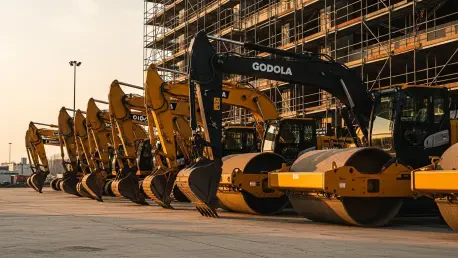

The landscape of the Australian construction industry has transformed so profoundly that the traditional status symbol of a privately owned machinery fleet is rapidly being replaced by the strategic flexibility of heavy equipment hire. Historically, a contractor’s strength was measured by the sheer volume of yellow iron parked in the company yard, but today’s market demands a far more agile approach to capital management. As firms navigate a complex economic environment characterized by fluctuating interest rates and material shortages, the move toward rental models has become a necessity rather than a preference. This shift represents a fundamental reassessment of how value is generated on the job site, prioritizing cash flow and operational adaptability over the pride of asset ownership. By embracing this change, builders are positioning themselves to withstand shocks that would have previously crippled a firm burdened by massive monthly equipment payments and depreciating assets. This new era of construction management focuses on the utility of the machine rather than the title of ownership, ensuring that every piece of equipment on a site is actively contributing to the bottom line without the long-term financial drag.
Economic Pressures: The Burden of High-Capital Assets
The current cost crisis serves as a powerful catalyst for this widespread transition away from traditional purchasing habits within the building sector. In early 2026, inflationary pressures pushed the cost of essential raw materials and specialized machinery to record highs, making the acquisition of new assets an increasingly risky financial gamble. For example, the price of a standard new excavator now frequently exceeds half a million dollars, while the secondary market offers little respite with prices for pre-owned units remaining stubbornly high. When these steep entry costs are paired with the volatile nature of fuel prices and the rising expense of replacement parts, the mathematical justification for ownership begins to crumble. Profit margins, which were already thin, are now being squeezed by a combination of high upfront debt and unpredictable operational outlays. Consequently, many Australian firms have concluded that the slow return on investment associated with owned fleets is no longer compatible with the need for immediate liquidity and financial stability in a high-inflation environment.
Choosing to hire equipment instead of buying it provides a strategic buffer against the inevitable depreciation and technological obsolescence that plagues heavy machinery. In the fast-moving tech environment of 2026, a machine purchased today may lack the advanced automation or fuel-efficiency features introduced only a few years from now, leaving the owner with a subpar tool and a diminishing resale value. Rental providers, by contrast, are incentivized to maintain modern fleets, giving contractors access to the latest innovations in telematics and safety systems without the long-term commitment. This access ensures that projects are completed with the highest possible efficiency, as newer machines tend to have lower downtime and better output rates. Furthermore, the ability to offload the burden of equipment maintenance to a third-party supplier allows construction firms to focus their internal resources on core project management and skilled labor. By eliminating the need for large-scale maintenance facilities and specialized mechanics on the payroll, companies can streamline their operations and reduce their fixed overhead significantly.
Operational Resilience: Logistics and Financial Predictability
The transition toward a rental-centric model also introduces a level of financial predictability that is nearly impossible to achieve with an owned fleet. Ownership involves a host of hidden costs, ranging from storage and specialized insurance to the sudden, catastrophic expenses of emergency mechanical failures. When a company rents, these variables are largely replaced by fixed daily or weekly rates, allowing project managers to bid on contracts with a much higher degree of accuracy. Knowing the exact cost of a machine for the duration of a specific task enables a more granular understanding of profit margins and prevents the kind of budget creep that often occurs when owned equipment breaks down at a critical moment. This shift to a pay-as-you-go system effectively transfers much of the operational risk to the rental company, which is better equipped to handle the logistical challenges of machine upkeep. For builders, this means that the financial health of a project is no longer tied to the mechanical reliability of an aging fleet, but rather to the efficiency of the project schedule itself.
Navigating this new landscape requires a sophisticated understanding of provider logistics and the nuances of contractual liability in the rental market. Builders must weigh the advantages of national suppliers, who offer consistent availability across multiple states, against the personalized service and reduced transport fees often found with local providers. These decisions are not merely logistical but are central to the overall risk management strategy of the firm. It is essential for contractors to meticulously review damage waivers and maintenance agreements to ensure they are not exposed to excessive liability for site-specific incidents. While many hire companies cover standard wear and tear, the responsibility for accidents or improper use typically remains with the builder, requiring a disciplined approach to on-site equipment management. Establishing clear protocols for machine inspections and operator training has become a standard part of the construction process, ensuring that the benefits of the hire model are not erased by preventable damage claims or legal disputes over equipment condition.
Strategic Scheduling: Maximizing Efficiency in a Volatile Market
Precision in scheduling has emerged as the most critical factor in determining the success of an equipment hire strategy, especially given the high rate of project delays. Because rental fees continue to accumulate even when a machine is sitting idle due to weather or labor disruptions, builders must integrate their equipment needs more tightly with their real-time project timelines. Advanced project management software is now being used to track machine utilization rates, ensuring that heavy iron is only on-site when it is actively contributing to the construction process. This data-driven approach allows firms to scale their equipment needs up or down with remarkable speed, a level of agility that ownership simply cannot match. By coordinating the arrival and departure of machinery with the specific phases of the build, companies can drastically reduce wasted expenditure and maintain a leaner, more efficient operation. This focus on just-in-time equipment delivery has become a hallmark of the most successful Australian builders, who recognize that every hour a rented machine sits unused is a direct hit to the project’s bottom line.
The industry successfully navigated the shift toward hire models by prioritizing financial flexibility over the static security of asset ownership. It was clear that the ability to adapt to changing market conditions required a departure from the capital-heavy strategies of the past. Moving forward, builders should prioritize the implementation of robust telematics and tracking software to further refine their rental utilization rates and identify additional cost-saving opportunities. It was wise for firms to foster long-term partnerships with a diverse mix of rental providers to ensure a steady supply of specialized machinery regardless of regional demand spikes. Additionally, investing in advanced operator training programs was proven to be the most effective way to minimize liability and ensure that rented technology was used to its full potential. By treating equipment hire as a core strategic function rather than a secondary procurement task, the Australian construction sector established a more resilient foundation for future growth. The lessons learned during this period of economic volatility suggested that the most successful companies were those that remained unburdened by heavy debt and were ready to pivot at a moment’s notice.