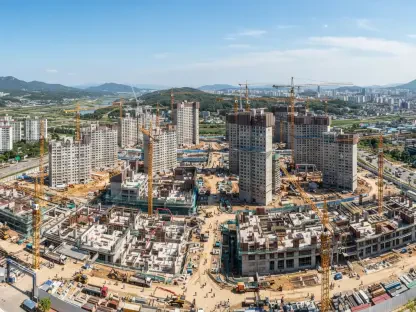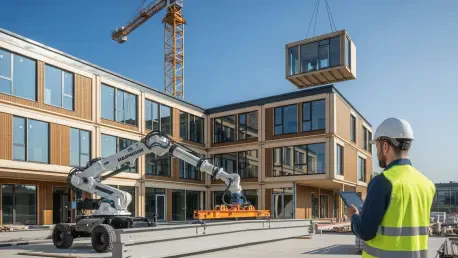

The global construction landscape has finally moved past the era of high-interest volatility and is now entering a phase defined by massive capital deployment and architectural modernization. While the early months of 2026 have seen a gradual thawing of frozen projects, the underlying data suggests that the sector is on the verge of a definitive breakout period spanning the next two years. Developers who previously hesitated due to high borrowing costs are now finding themselves in a market where inflation has cooled sufficiently to make large-scale developments viable once more. This shift is not merely about returning to past levels of activity but represents a structural evolution toward more sustainable and technologically advanced construction methodologies. By the time 2027 arrives, the industry is projected to experience a nearly 11% rebound in project starts, marking the beginning of a sustained growth cycle. The transition from risk-aversion to aggressive site activity is setting the stage for a transformative period across all sectors.
Public Infrastructure Revitalization: Strengthening the Foundations of Society
Education Infrastructure: Rebuilding Schools and Vocational Facilities
Government-backed initiatives are emerging as the backbone of the construction industry’s current expansion, with educational facilities receiving unprecedented levels of funding. National rebuilding programs have shifted their focus from temporary fixes to the comprehensive reconstruction of aging academic structures that no longer meet modern safety or efficiency standards. This renewed commitment to human capital is particularly visible in the rise of vocational training centers, which are being built to address the persistent skills gap in specialized trades. By 2027, the educational construction market is estimated to reach a valuation of approximately $9 billion, driven by both public sector grants and local authority mandates. These projects are characterized by a move toward modular building techniques and high-performance envelopes that reduce long-term operational costs. As these institutions begin to break ground, they provide a reliable pipeline of work for medium-sized contractors.
Building on this educational foundation, the integration of specialized STEM (Science, Technology, Engineering, and Mathematics) labs into primary and secondary schools has become a significant sub-sector of the market. Modern campuses now require sophisticated laboratory ventilation systems and modular furniture that can be reconfigured for different instructional modes, increasing the technical complexity for contractors. Moreover, the emphasis on inclusive design has led to the widespread implementation of sensory-friendly spaces and universal access features in all new academic buildings. This shift necessitates a higher degree of coordination between architects and MEP engineers to ensure that the infrastructure supports diverse learning needs while maintaining a low carbon footprint. As we progress through the 2026 to 2028 window, the use of prefabricated volumetric components is expected to rise, allowing schools to be built faster and with less disruption to the academic calendar. This industrialized approach to building is not just a trend but a necessary response to the urgent demand for safe learning environments.
Healthcare Modernization: Advancing Clinical Estates and Diagnostic Hubs
Parallel to the developments in education, the healthcare sector is undergoing a massive revitalization aimed at clearing the staggering maintenance backlogs that accumulated over the last decade. Investment is being funneled into a diverse portfolio of projects, ranging from sprawling new hospital complexes to decentralized community diagnostic centers that bring specialized care closer to the patient. These smaller, more localized hubs represent a strategic pivot in healthcare delivery, requiring specialized mechanical and electrical infrastructure to house advanced imaging and laboratory equipment. Consequently, project starts in the medical sector are anticipated to jump by 14% as the forecast period approaches 2028. This surge is supported by streamlined procurement processes and a shift toward standardized design models that allow for faster construction timelines without sacrificing clinical quality. The integration of digital health technologies during the construction phase ensures that these new facilities are future-proofed for the next generation.
Beyond the construction of new healthcare facilities, there is a significant movement toward the adaptive reuse of existing clinical spaces to accommodate the latest surgical robotic systems and AI-driven diagnostic tools. This transformation involves more than just interior remodeling; it requires the reinforcement of structural floors to handle heavy medical equipment and the installation of high-capacity data cabling for real-time surgical consultations. Contractors specializing in healthcare are increasingly adopting Building Information Modeling (BIM) to manage these intricate retrofits, which often occur within hospitals that must remain fully operational twenty-four hours a day. The focus on sustainability is also evident here, as new health centers are being built with regenerative air systems and renewable energy microgrids to ensure operational resilience during power outages. As the industry moves deeper into 2027, the synergy between medical technology and specialized construction will become the defining characteristic of this sector, offering robust opportunities for skilled trade professionals.
Market Dynamics and Growth: Reshaping Housing, Energy, and Commerce
Residential and Energy Growth: Social Housing and the Green Transition
The residential sector is preparing for a multi-stage recovery that reflects a stabilizing economic environment and significant legislative reforms aimed at increasing housing density. Social housing providers are finding a renewed sense of purpose as updated rental regulations and increased government subsidies provide the financial clarity needed to launch long-stalled developments. At the same time, the private housing market is benefiting from a gradual decrease in mortgage rates, which has reignited consumer demand for new builds. Planning reforms have been instrumental in this process, as they have simplified the path for developers to secure permits on complex brownfield sites. By 2027, the volume of private housing starts is expected to rise by approximately 13%, driven by a combination of pent-up demand and the release of strategically located land parcels. This growth is increasingly focused on high-density urban infill projects that prioritize energy efficiency and proximity to public transportation, aligning with broader sustainability goals.
Simultaneously, the civil engineering workload is being dominated by the massive infrastructure requirements of the global energy transition, specifically the expansion of the national power grid and the construction of massive battery storage facilities. As offshore wind capacity continues to scale up, there is an urgent need for specialized coastal substations and subsea cable landing sites, which are becoming multi-billion dollar ventures. These projects require specialized maritime engineering expertise and the use of carbon-neutral materials to meet increasingly strict environmental compliance standards. Furthermore, the push for hydrogen production facilities is beginning to move from the pilot phase into large-scale implementation, creating a new niche for industrial contractors. From 2026 to 2028, the civil engineering sector will serve as a primary driver of technical innovation, utilizing autonomous heavy machinery and advanced topographical drone surveys to increase site productivity. This surge in energy-related construction provides a stable counterweight to the more cyclical nature of the housing market.
Commercial and Retail Evolution: Modern Workspaces and Consumer Hubs
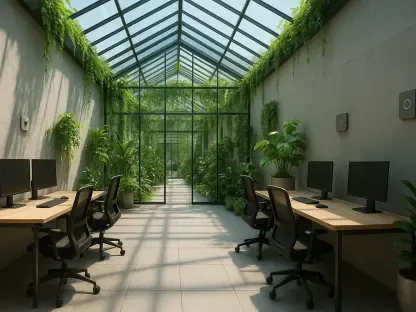
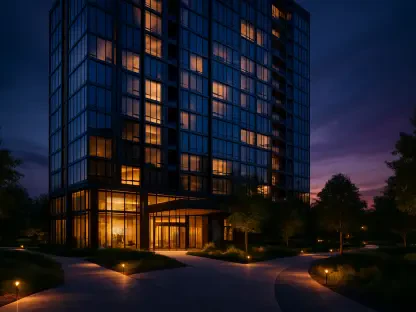
The commercial construction sector is navigating a profound transformation as businesses prioritize high-quality, sustainable office environments that cater to the evolving needs of a hybrid workforce. Demand for Grade A office space remains robust, particularly for buildings that offer advanced air filtration, flexible layouts, and top-tier environmental certifications. Meanwhile, the rapid growth of the digital economy has triggered an explosion in the construction of specialized data centers and large-scale logistics hubs. These industrial facilities are becoming increasingly sophisticated, incorporating automated sorting systems and extensive electric vehicle charging infrastructure to support green delivery fleets. Although the manufacturing sector has faced headwinds due to energy price volatility, the logistics and warehousing market continues to expand as supply chains are reorganized for greater resilience. Industrial project starts are expected to see a sharp rebound in the coming years as the broader economic recovery takes hold and international trade flows stabilize across key corridors.
In the end, the industry’s pivot toward high-efficiency retail and commercial spaces was largely facilitated by the stabilization of material supply chains and a renewed focus on local sourcing. Planning authorities adopted a more collaborative stance with developers, leading to a surge in mixed-use approvals that revitalized secondary urban centers. Construction firms that thrived during this period were those that transitioned away from traditional onsite management toward digital twin technology and real-time site monitoring. This evolution proved that the sector could maintain high output levels while simultaneously reducing its total carbon footprint. As project managers looked toward the close of 2028, the integration of robotics for repetitive structural tasks became a standard operational procedure rather than an experimental luxury. These strategic shifts ensured that the building boom of the mid-2020s resulted in a more resilient, technology-driven infrastructure capable of meeting the demands of a changing economic and environmental climate.