
Luca Calarailli brings a wealth of knowledge in architecture and innovative construction technology to the table, having spent years analyzing how urban environments adapt to economic shifts. We are discussing the transformation of Cardiff’s skyline, specifically the recent progress on the Custom House Street development near the central station. This conversation explores how developers are moving away from traditional student housing models toward flexible co-living spaces, the architectural choices that bridge the gap between high-rise density and street-level comfort, and the strategic importance of revitalizing vacant city-center plots to support long-term urban growth.
The original 42-story student housing proposal for this site stalled years ago, so how do shifting market conditions and evolving demand patterns influence the transition to this new 33-story co-living project?
The decision to move away from a 42-story student housing proposal toward a 33-story co-living tower reflects a sophisticated understanding of how Cardiff’s demographic needs have matured since the original consent in 2016. While that earlier vision failed to progress due to fluctuating market demands, this new pivot prioritizes long-term residency for 400 young professionals and graduates who are often priced out of traditional high-quality rentals. By reducing the height and refocusing on high-specification studios, the project feels more grounded and responsive to a current economic climate where residential flexibility is the primary currency for modern urban dwellers. It is a tactical adjustment in terms of sheer scale that results in a much more sustainable and marketable asset for the city’s core.
Can you explain the architectural significance of the three-story arched brick plinth and how it affects the experience of those interacting with the building at street level?
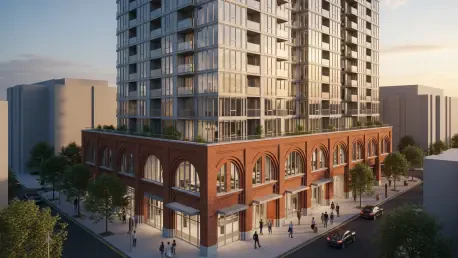
Architecturally, the inclusion of a three-story arched brick plinth is a masterstroke in preventing the tower from feeling like an imposing, alien glass monolith at the street level. This design element creates a crucial human-scale link to the public realm, making the entrance feel welcoming rather than intimidating to pedestrians walking near the St David’s Shopping Centre. When you incorporate 400 studios into a single structure, the risk is a lack of character, but these brick arches provide a sensory warmth and a nod to traditional craftsmanship that grounds the entire vertical community. It ensures that while the tower reaches for the sky, its foundations are firmly planted in the historical and tactile fabric of the city’s pedestrian corridors.
How does the co-living model, with its blend of 400 studios and shared amenities, address the specific lifestyle preferences of young professionals and graduates in Cardiff?
Modern residents are no longer satisfied with just four walls; they crave a curated lifestyle that balances private retreat with social vibrancy through extensive shared amenities. This development delivers on that by integrating communal kitchens, dining spaces, fitness facilities, and landscaped social areas that transform a residential building into a true vertical neighborhood. You can feel the intention behind these spaces, which are specifically designed to foster organic interactions between residents who might otherwise feel isolated in a bustling city center. Having professionally managed spaces where graduates and professionals can share a meal or a workout is what truly differentiates co-living from the more transient, basic feel of the student housing plans of the past.
With the recent completion of Tai Afon at the Central Quay site, how does this new tower contribute to the broader regeneration and investment story currently unfolding in the city?
The Custom House Street tower does not exist in a vacuum; it is a vital piece of the puzzle that includes the massive Central Quay regeneration project and the transforming former Brains Brewery site. By bringing a prominent vacant site back into productive use, the developer is creating a gravity well for investment that makes the surrounding mixed-use neighborhoods even more viable. There is a palpable sense of momentum in Cardiff right now, as sites that stood empty for several years are finally being stitched back into the urban fabric with high-density, high-quality residential options. This project supports the city’s ongoing growth by ensuring that new residents and businesses have a modern, highly connected place to anchor themselves.
What is your forecast for the co-living sector in urban centers?
I anticipate that the co-living model will become the primary solution for the “missing middle” of housing, where 400-unit developments like this one become the standard in major hubs across the country. As affordability remains a challenge, the trade-off between smaller private studios and massive, high-end shared amenities will become increasingly attractive to young professionals who value community over sheer square footage. We will likely see more developers adopting this blend of arched, tactile street-level design and vertical efficiency to satisfy both local planning boards and the lifestyle demands of a mobile, tech-savvy workforce. This Cardiff project is just the beginning of a much larger trend where residential architecture becomes a service-oriented product rather than just a physical structure.