
A Growing Divergence in the American Housing Market
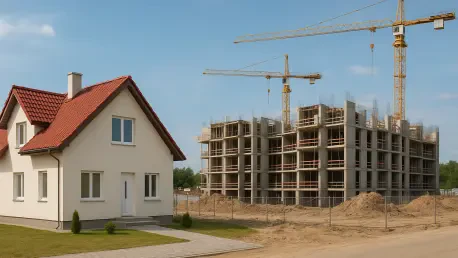
The recent divergence within the American residential construction landscape reveals a startling reality where large-scale apartment projects are stalled by high costs while individual homebuilding maintains its momentum. According to the latest residential construction report from the U.S. Census Bureau and HUD, August marked a period of significant volatility, characterized by a dramatic 15.5% year-over-year collapse in multifamily housing starts. In sharp contrast, the single-family sector demonstrated unexpected resilience, posting a 5.2% annual increase. This market analysis explores the underlying economic drivers of this shift, regional disparities, and what this divergence means for the future of residential development in an era of high interest rates.
Historical Context: The Shift From the Pandemic Boom
To understand the current downturn in multifamily construction, one must look back at the surge in development that followed the 2020 pandemic. For several years, record-low interest rates and a renter-by-necessity culture fueled a massive pipeline of apartment complexes and high-density projects. However, the foundational concepts of the market shifted as aggressive rate hikes began to weigh on property valuations and financing structures. This historical pivot from cheap capital to a high-cost environment forced a correction, turning what was once a red-hot sector into one characterized by caution and project cancellations.
The Economic Forces Reshaping Residential Construction
The Impact: Soaring Financing and Material Costs
The primary catalyst for the 22.5% monthly drop in multifamily starts is an uncertain economic environment that has made large-scale projects difficult to pencil out. Developers are currently navigating a perfect storm where high interest rates have simultaneously driven up the cost of debt and dampened property valuations. Beyond financing, the physical cost of building surged; prices for essential inputs such as steel, iron, and lumber spiked by more than 10% year-over-year. These financial pressures rendered many ambitious apartment projects economically unfeasible for the time being.
Resilience: The Single-Family Sector
While multifamily developers pull back, the single-family market found a surprising foothold, gaining 7.6% in a single month. This resilience suggests that despite high mortgage rates, the fundamental desire for individual homeownership remains a powerful market driver. Unlike large-scale apartment blocks, which require massive upfront capital and long-term financing commitments, single-family builders are often more agile. This sector’s growth indicates a shifting landscape where individual homebuilding gains momentum as consumers look for permanent housing solutions even as the broader economy faces headwinds.
Regional Disparities: Geographic Diversity and Regulatory Hurdles
National data masks significant geographic diversity, with different regions responding to the crisis in unique ways. The Midwest, for instance, saw a 10.8% annual decline, attributed largely to moderating rent growth and a rising anti-development sentiment that has led to residential building moratoriums. Meanwhile, the Northeast presents a different puzzle: while overall activity remained flat, single-family starts plummeted by 27%. This suggests that the region’s limited construction activity is still heavily skewed toward multifamily projects, highlighting that there is no one-size-fits-all explanation for the market’s trajectory.
Emerging Trends: The Future Outlook for Housing Supply
Looking ahead, the multifamily sector is expected to undergo a period of necessary correction that could last through the end of the current year. One emerging trend is the sharp drop in multifamily completions, which fell 35.7% year-over-year. While this sounds negative for supply, it may actually provide breathing room for existing operators, easing the pressure of lease-ups during a time when rent growth is cooling. However, with building permits also on the decline, the long-term pipeline for new housing remains constrained. Analysts predict that technological innovations and potential regulatory shifts may be required to jumpstart production through 2027.
Strategic Takeaways: Insights for Developers and Investors
For stakeholders in the residential market, the current data offers several actionable insights. First, the resilience of single-family starts suggests that there is still significant demand for entry-level and mid-tier housing, provided builders can manage costs. Second, multifamily operators should focus on optimizing existing portfolios rather than aggressive expansion, as the supply of new units will remain tight for the foreseeable future. Finally, professionals should keep a close eye on regional anti-development legislation, as local policy is becoming just as influential as national interest rates in determining where the next shovel hits the ground.
Navigating the Landscape: Strategic Reflections and Future Action
The August housing report served as a stark reminder that the era of easy expansion in the multifamily sector came to a temporary halt. While single-family housing continued to defy expectations, the broader industry grappled with a high-cost reality that demanded disciplined capital allocation and strategic patience. The significance of this trend lay in its potential to reshape urban density and housing affordability for years to come. As the market aligned with prevailing economic realities, the ability to adapt to regional nuances and financing challenges was what distinguished the winners in this evolving residential landscape. Moving forward, developers sought out strategic partnerships to mitigate risk.