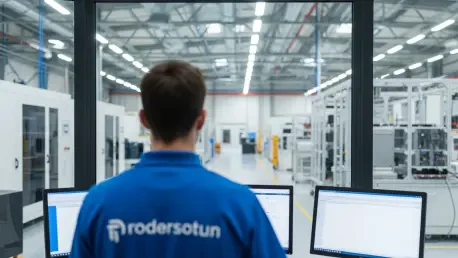

The modern commercial landscape is currently grappling with a staggering paradox where roughly thirty percent of all energy purchased by facility operators is completely lost to inefficiency. This massive drain on resources has forced a fundamental reconsideration of how large-scale properties interact with the electrical grid, moving away from a model of passive consumption toward one of active, intelligent participation. Recent performance metrics highlight this urgency, as evidenced by a surge in commercial HVAC bookings that reached a staggering 160% increase in the Americas during the first quarter of 2026. This financial momentum, supported by a $5 billion revenue stream and a 40% growth in backlog, underscores a market-wide pivot toward resilient infrastructure. The goal is no longer just to maintain comfortable temperatures but to transform every building into a self-sustaining node capable of managing its own power requirements. By integrating advanced energy-saving cooling systems and localized power management, the industry is setting a new standard for operational excellence that prioritizes uptime and sustainability over traditional, centralized utility dependencies.
Decentralizing Power Through Localized Management
The Rise of Behind-the-Meter Energy Systems
The concept of behind-the-meter power, once a niche application reserved for high-security facilities, has rapidly emerged as the primary blueprint for the next generation of commercial architecture. This architectural shift allows buildings to generate, store, and manage their own electricity on-site, effectively decoupling their most critical operations from the vulnerabilities of the public utility grid. While data centers have served as the initial proving ground for these configurations due to their non-negotiable demand for continuous uptime, the technology is now diffusing into more traditional sectors. By utilizing intelligent energy management systems, facility managers can optimize their consumption patterns in real-time, drastically reducing the waste that has historically plagued the built environment. This evolution represents a departure from the traditional relationship where buildings were merely end-points on a map; they are now becoming sophisticated power plants in their own right, capable of balancing loads and mitigating the impact of grid instability.
Universal Reliability Standards Across Diverse Sectors
Building on this technological foundation, the transition toward autonomous energy management is creating a universal standard for reliability that is beginning to reshape expectations across diverse industries. The lessons learned from the high-stakes environment of data center cooling and power density are now being applied to healthcare facilities, government buildings, and higher education campuses. These institutions require the same level of fail-safe performance to ensure that life-saving equipment, research laboratories, and critical administrative functions remain operational regardless of external conditions. The focus has shifted toward creating a unified energy ecosystem where heating, ventilation, and power generation work in a synchronized loop. As these systems become more integrated, the ability to predict and respond to energy fluctuations becomes a competitive advantage, allowing organizations to lower their operational costs while simultaneously improving their environmental footprint through smarter, proactive asset management.
Operational Efficiency and the Modular Revolution
Addressing Labor Scarcity With Modular Integration
One of the most significant challenges facing the construction and facility management sectors is the persistent shortage of specialized labor required to install and maintain complex mechanical systems. To counteract this bottleneck, the strategic integration of modular chiller systems has become a cornerstone of modern building projects, as seen in the recent acquisition and implementation of Stellar Energy Americas’ specialized technologies. These modular units are pre-configured in controlled factory environments, which significantly reduces the amount of on-site labor and technical expertise needed for a successful installation. By shifting the complexity of the assembly process from the job site to the manufacturing floor, projects can be completed faster and with a much lower risk of installation errors. This approach not only addresses the immediate labor crisis but also provides a level of scalability that traditional, custom-built systems simply cannot match for modern developers.
Domestic Manufacturing and Market Stability
This move toward modularity naturally aligns with a broader strategy of localized production and domestic manufacturing to ensure long-term stability in a volatile global market. By maintaining a network of twenty manufacturing facilities within the United States, a buffer is created against the unpredictable nature of international supply chains and fluctuating tariff policies. Localizing the production of high-efficiency cooling systems and power components allows for more stable pricing structures, even when the costs of raw materials like steel and copper experience inflationary pressure. Furthermore, proximity to the end-user facilitates a faster feedback loop between the engineers and the operators, leading to rapid iterations of design that specifically address the unique climate challenges of the North American market. This domestic focus ensures that the hardware required for the smart building transition is readily available, reducing the lead times that have historically delayed major infrastructure upgrades.
Strategic Implementation: Building a Resilient Future
The transformation of the commercial building sector was ultimately defined by a shift from simple component replacement to the adoption of holistic, intelligent energy ecosystems. It became clear that the path to true efficiency required a departure from outdated, centralized dependencies in favor of localized, autonomous power management. Moving forward, stakeholders should prioritize the integration of modular systems that can adapt to changing energy demands without requiring a total overhaul of existing physical assets. This strategy allows for a phased approach to modernization, ensuring that capital investments are directed toward technologies that provide both immediate energy savings and long-term operational resilience. Organizations must also look toward securing their supply chains by partnering with providers who maintain a strong domestic manufacturing footprint to avoid the risks associated with global logistics. The convergence of cooling and power management into a single interface will be the hallmark of successful facilities.