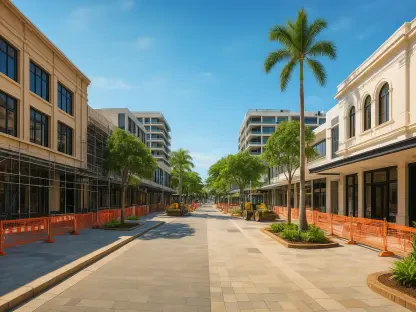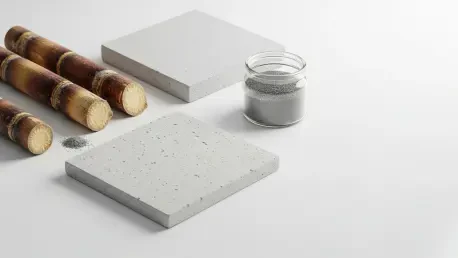

The massive scale of modern urban development presents a daunting paradox where the very materials used to build our homes and cities are simultaneously destabilizing the global climate. As of 2026, the construction industry continues to grapple with the reality that traditional Portland cement production remains one of the largest industrial sources of greenhouse gases, contributing approximately 7% of all human-made carbon dioxide emissions. This environmental burden is primarily driven by the chemical process of calcination, which releases carbon trapped in limestone during the heating of kilns. To solve this existential challenge, researchers have spent years developing alternatives that do not just reduce the carbon footprint but also improve the mechanical longevity of structural materials. A breakthrough led by specialists at Hasanuddin University has introduced a sophisticated geopolymer concrete that utilizes sugarcane bagasse ash and polypropylene fibers, creating a sustainable material that outperforms standard mixes while repurposing agricultural waste that would otherwise sit in landfills.
Addressing the Global Carbon Crisis
The Shift Toward Sustainable Binders
The urgent need for carbon-neutral building materials is punctuated by the rapid expansion of global urban centers, with recent projections suggesting the world population will near 10 billion by the mid-2080s. This growth translates into an unprecedented demand for high-density housing, vast transport networks, and commercial infrastructure, all of which traditionally rely on carbon-intensive Portland cement. The industrial manufacturing of conventional binders is inherently tied to the high-temperature processing of limestone, a method that is increasingly viewed as incompatible with international climate targets. Consequently, the engineering community has accelerated the transition toward geopolymer technology, which seeks to decouple construction from carbon emissions. By replacing traditional clinker with alternative chemical binders, engineers can effectively reduce the environmental cost of new infrastructure while meeting the logistical demands of a growing global society that requires reliable and durable structures for everyday life.
Geopolymer concrete (GPC) has emerged as the leading candidate in this transition because it bypasses the need for traditional limestone calcination entirely. Instead of relying on the hydration of calcium silicates, geopolymers utilize a chemical reaction between aluminosilicate-rich industrial by-products and an alkaline activator solution. Most current implementations leverage fly ash, a residual product of coal-fired power plants, to create a binder that mimics the structural properties of cement but with a fraction of the associated carbon emissions. When these materials are combined, they form a robust inorganic polymer through a process known as geopolymerization, resulting in a matrix that offers excellent fire resistance and durability. The adoption of this technology represents a fundamental pivot in materials science, moving away from extractive resource consumption toward a circular model that utilizes existing waste streams to build the future of our urban environments without further depleting the planet’s natural resources.
Overcoming Material Brittleness
Despite the environmental advantages of geopolymer concrete, its widespread adoption has been historically limited by certain mechanical vulnerabilities that distinguish it from traditional concrete. One of the most significant challenges is the material’s inherent brittleness, which refers to its tendency to fracture suddenly when subjected to tensile or flexural loads rather than deforming gradually. This lack of ductility means that unreinforced geopolymer structures are more susceptible to catastrophic failure during seismic events or under heavy dynamic loads. Engineering teams have spent the period from 2026 to the present day investigating various additives that can modify the internal chemistry of the mix to improve its “give.” Without solving this issue, the use of geopolymer concrete would remain confined to non-structural applications, preventing it from becoming a true replacement for the high-strength materials required in modern bridge decks and high-rise construction.
To address these shortcomings, the research conducted at Hasanuddin University focused on the creation of a composite material that pairs agricultural waste with synthetic reinforcements to bolster structural integrity. By introducing a hybrid approach, the researchers sought to fill the gaps in the geopolymer matrix that typically lead to crack propagation. The integration of agro-industrial residues like sugarcane bagasse ash acts on a chemical level to refine the binder, while synthetic fibers provide a physical network that holds the material together under stress. This combination ensures that the resulting concrete possesses the necessary resilience to withstand the complex stresses of modern engineering. The development of such high-performance composites is essential for moving sustainable concrete into the mainstream, as it proves that eco-friendly alternatives do not require a sacrifice in safety or structural performance, thereby bridging the gap between theoretical research and practical application.
Engineering a High-Performance Composite
The Synergy of Waste and Technology
The core of this engineering breakthrough lies in the strategic substitution of Class C fly ash with sugarcane bagasse ash (SCBA), an abundant byproduct of the sugar refining process. In agricultural regions such as Indonesia, bagasse ash is often treated as a burden, accumulating in landfills where it contributes to local pollution issues. However, the chemical composition of this ash is rich in silica, making it an ideal candidate for enhancing the geopolymerization process when blended with fly ash. The research team rigorously tested several formulations to determine the optimal balance, eventually discovering that a 5% substitution rate, known as the SCBA-5 mixture, provided the most significant gains in structural performance. This specific ratio represents a “goldilocks zone” where the chemical reactivity of the sugarcane ash perfectly complements the base binder, leading to a much denser and more stable internal matrix that can support significant weight without compromising the material’s longevity.
This approach effectively valorizes what was once considered useless waste, turning a logistical problem for the agricultural sector into a high-value raw material for the construction industry. By integrating SCBA into the concrete production cycle, developers can reduce the total volume of industrial waste while simultaneously lowering the energy required to produce building materials. The synergy between agricultural residues and geopolymer technology creates a closed-loop system that aligns with modern environmental standards. Beyond the immediate mechanical benefits, this method reduces the reliance on imported or carbon-heavy mineral components, allowing regional economies to utilize local resources for infrastructure projects. This localized approach to material science not only cuts down on transportation emissions but also ensures that the construction industry can remain resilient in the face of global supply chain fluctuations, providing a sustainable and cost-effective pathway for developing nations.
Micro-Reinforcement with Synthetic Fibers
In order to solve the problem of fragility within the geopolymer matrix, the engineering team integrated polypropylene (PP) fibers at a concentration of 0.6 kilograms per cubic meter. These synthetic fibers serve as a micro-reinforcement system, distributed throughout the concrete to provide three-dimensional stability that traditional steel rebar cannot achieve alone at the molecular level. When the concrete is subjected to external pressure, these fibers act as thousands of tiny anchors that distribute stress more evenly throughout the material, preventing the concentration of force in single areas. This added ductility is what allows the concrete to bend slightly rather than snapping, a critical property for structures that must endure heavy traffic or environmental vibrations. The presence of the fibers ensures that even if the matrix begins to fail under extreme stress, the composite maintains its overall shape and load-bearing capacity, providing an essential safety margin.
The mechanical behavior of this fiber-reinforced composite under stress is vastly superior to traditional unreinforced geopolymers, as it excels in energy absorption. As cracks attempt to form and spread through the concrete, they encounter the polypropylene fibers, which force the energy to dissipate across a wider area. This mechanism, known as fracture toughening, significantly increases the amount of work required to break the material, making it much more resilient during unpredictable events. This design choice highlights a sophisticated understanding of how material structure influences performance; by combining a chemically dense binder with a physically flexible reinforcement network, the researchers created a material that is both hard and tough. This dual-action approach is representative of the next generation of building materials, where the goal is no longer just to create a solid block of stone, but to engineer a complex system capable of managing forces in a dynamic and predictable manner.
Results and Microstructural Analysis
Measuring Strength and Resilience
The experimental results of the study provided quantifiable evidence that the inclusion of sugarcane bagasse ash and polypropylene fibers dramatically improves the material properties of concrete. The SCBA-5 mixture demonstrated a remarkable 41% increase in compressive strength compared to the standard fly ash control group, indicating that the material can support significantly heavier vertical loads. Even more impressive was the 56% improvement in fracture energy, which measures the material’s ability to resist the expansion of cracks once they have initiated. These metrics are not merely marginal improvements; they represent a fundamental leap in the reliability of sustainable concrete, making it a competitive alternative to high-performance traditional mixes. Such data points are vital for civil engineers who need precise performance indicators to design safe and efficient buildings that can last for decades without requiring extensive repairs or maintenance.
However, the research also established critical safety parameters by identifying a performance ceiling when the ash content was increased. While a 10% substitution of sugarcane ash did show a modest 9.3% increase in flexural strength, it also resulted in a noticeable return to brittleness, suggesting that the chemical balance of the mix is sensitive to over-saturation. This finding is just as important as the strength gains, as it provides a clear roadmap for industrial applications and prevents the accidental creation of unstable structures. By defining these upper limits, the study ensures that the material can be used with confidence in real-world environments where consistency is paramount. The ability to predict how the material will behave under various conditions allows for the development of standardized building codes for geopolymer composites, facilitating their integration into the mainstream construction market and ensuring that sustainable buildings are as safe as their cement-based predecessors.
Molecular Cohesion and Crack Bridging
To understand the underlying causes of these performance gains, the research team utilized scanning electron microscopy to examine the concrete at a microscopic level. The analysis revealed that the fine particles of sugarcane bagasse ash serve as an effective micro-filler, filling the tiny voids that naturally occur within a fly ash matrix. This reaction creates a much more cohesive and dense internal structure, which prevents water and chemical agents from penetrating the concrete and causing internal damage over time. The increased density at the molecular level is directly responsible for the spike in compressive strength, as there are fewer weak points where the material can collapse under pressure. This microscopic refinement is a testament to how small changes in chemical composition can lead to large-scale improvements in structural performance, proving that the interaction between different waste materials can be finely tuned.
Furthermore, the microscopy images clearly depicted the mechanical phenomenon of “crack bridging” provided by the polypropylene fibers. When micro-cracks began to form under tension, the fibers were observed spanning the gaps, effectively stitching the material back together and preventing the cracks from widening into structural failures. This physical intervention allows the concrete to maintain its integrity even after the initial matrix has been compromised, a property that is essential for long-term durability. The combination of molecular density provided by the ash and the physical bridging provided by the fibers creates a multi-layered defense system within the material. This sophisticated structural hierarchy ensures that the concrete can handle both the slow, steady pressure of a building’s weight and the sudden, sharp forces of impacts or environmental shifts. This level of detail in the research provides the scientific foundation necessary for the material to be adopted by risk-averse engineering firms and government agencies.
Economic and Practical Feasibility
Building a Circular Economy for Construction
The implementation of this new concrete mixture represents a significant step toward the realization of a circular economy within the global construction sector. By repurposing agricultural and industrial waste, the industry can move away from a “take-make-waste” model and toward a sustainable system where every byproduct serves a valuable purpose. The study introduced a strength-to-cost ratio that showed a 53% improvement over traditional methods, demonstrating that green materials do not necessarily have to be more expensive than their carbon-heavy counterparts. In many agricultural regions, the cost of acquiring sugarcane ash is negligible compared to the expense of purchasing and transporting Portland cement, making this a highly attractive option for local developers. This economic efficiency is crucial for the widespread adoption of sustainable technology, as it appeals to the financial interests of private companies and government bodies alike.
For governments and developers, the shift toward these sustainable composites is a pragmatic choice that supports both fiscal budgets and international climate commitments. The research highlighted a 52% improvement in the strength-to-carbon ratio, meaning that every unit of structural integrity is achieved with significantly fewer emissions. As carbon taxes and environmental regulations become more stringent in 2026 and beyond, the ability to build high-performance infrastructure with a low environmental impact will become a major competitive advantage. This approach also fosters regional self-reliance, as countries can produce their own high-tech building materials using local waste streams rather than relying on global markets for cement and additives. By aligning environmental stewardship with economic gain, this research provides a blueprint for how the construction industry can evolve to meet the challenges of the modern era without sacrificing the ability to build necessary infrastructure.
Implementation and Future Directions
The findings from this research have successfully validated the use of sugarcane bagasse ash and polypropylene fibers as essential components for the next generation of sustainable concrete. The SCBA-5 blend was deemed suitable for immediate application in low-rise residential buildings, pedestrian walkways, and various non-prestressed structural elements. This provided a clear entry point for the material to enter the commercial market, where it can begin to displace traditional cement in high-volume, lower-risk applications. As the industry gained confidence in the material’s performance, the focus shifted toward expanding its use into more complex engineering projects. The success of this study proved that it was possible to create a material that met the high standards of modern civil engineering while simultaneously addressing the urgent need for environmental conservation and waste reduction in rapidly developing regions.
In the period following the initial discovery, researchers transitioned toward evaluating the long-term durability of the composite in harsh environments. Future testing was initiated to observe how the material resisted chemical corrosion from saltwater and how it performed during extreme temperature fluctuations over many years. Engineers also began investigating the use of other natural fibers to further reduce the reliance on synthetic materials, aiming for a 100% bio-based reinforcement system. The actionable data provided by this study allowed for the creation of new building standards that incorporated geopolymer composites into official construction codes. This transition from laboratory success to field implementation marked a turning point for the industry, ensuring that the built environment of the future was grounded in the principles of resilience, efficiency, and ecological responsibility, ultimately leading to a more sustainable global infrastructure.