
Amid shifting transaction timelines, tighter regulatory notices, and legacy fuel infrastructure that hides its risks underground, business owners across Oklahoma faced a simple but high‑stakes question: how to move a leaking UST site toward closure without stalling operations or losing deal momentum. That question gained urgency for fuel retailers, developers, and lenders the moment a confirmed release letter arrived, triggering deadlines and documentation demands that do not pause for weather, staffing, or supply chains. Phoenix Group stepped into that gap by scaling integrated UST remediation across the state, aligning investigation, cleanup, and reporting so sites progressed from initial evaluation to defensible closure decisions with a steady record of compliance.
Compliance, Continuity, and Technical Execution
From Notice to Action: Building a Defensible Case File
The expansion centered on translating regulatory language into field‑ready steps that hold up under review by the Oklahoma Corporation Commission’s Petroleum Storage Tank Division. Teams prioritized the case file itself, knitting together Phase II ESA protocols, direct‑push borings, and groundwater data into narratives that show how contamination migrated and how corrective actions matched exposure pathways. Instead of treating sampling as a box‑checking exercise, the program tied each boring location to historical dispenser islands, product lines, and known utility corridors where preferential flow can undermine plume assumptions. That approach reduced surprises during agency review, cut the need for rework, and kept owners within compliance timelines even when site histories were patchy.
Integrating Remediation With Operations Across Varied Sites
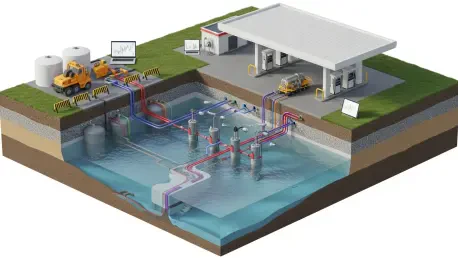
Building on this foundation, Phoenix Group applied a statewide playbook to keep businesses open while remediation advanced, a balancing act that can falter when traffic control, tank pulls, or canopy footings collide with drilling schedules. Coordination with store managers and construction teams set predictable windows for intrusive work, while temporary vapor controls and interim product recovery avoided protracted shutdowns. In rural corridors where access is limited, mobilizations were bundled to serve multiple locations in a single run, lowering per‑site costs and accelerating data packages for lenders. National retailers repeatedly tapped the same crews because procedures were consistent: confirm source zones, stage monitoring wells to capture gradient and lithology shifts, propose a corrective action plan grounded in measured drawdown or mass removal, and document progress with reproducible metrics.
Data, Documentation, and Timely Closure
Turning Field Data Into Decisions That Withstand Audit
This approach naturally led to emphasis on data discipline, where soil logs, groundwater elevations, and laboratory deliverables feed a single chain of custody and a clean reporting spine. Phase II ESA findings were mapped to corrective actions, linking exceedances to specific remedy choices such as vacuum‑enhanced recovery or targeted excavation with backfill restoration. Where low‑permeability silts limited hydraulic capture, the team advanced to in‑situ amendments only after pilot tests showed contact and persistence, avoiding speculative injections that can inflate costs without measurable gain. The result was not flashier technology but tighter logic: every step had a why, a datum, and a documented outcome that pointed toward No Further Action eligibility under state criteria.
What Owners, Developers, and Lenders Should Do Next
For commercial property owners deciding how to sequence a transaction, the practical next step was straightforward: align the Phase II scope with likely remedial endpoints, then stage monitoring so trends are apparent within the current quarter rather than after year‑end. Developers confronting confirmed releases benefitted from early file reviews to spot gaps—missing historical tightness tests, undocumented line replacements, or unverified tank closures—that can derail agency concurrence. Lenders gained confidence when submittals referenced OCC guidance and tied sampling density to risk, not habit. Looking ahead, sites that set clear data‑to‑decision pathways, budget for one optimization loop, and maintain uninterrupted documentation have moved faster toward closure, protected timelines, and contained uncertainty in a market that rewarded predictable outcomes.