
Across Ontario, the deceleration in homebuilding has started to look less like a pause and more like a structural drag that is bleeding into sawmills, panel plants, logging camps, and the small firms that keep them running. Residential construction sits at the center of the wood economy; when starts fade, orders for framing lumber, OSB, and engineered wood retreat, production lines slow, and payrolls shrink in towns that depend on the trades. The shock is not contained to job sites. It travels through procurement schedules, rail and trucking routes, and dealer inventories, depressing cash flow up and down the chain. What began as a slowdown in new housing is now showing up as idled shifts, thinner margins, and deferred capital projects—signals that the province’s growth engine is sputtering at a time when population inflows and affordability pressures demand the opposite.
Housing Is the Engine of Wood Demand
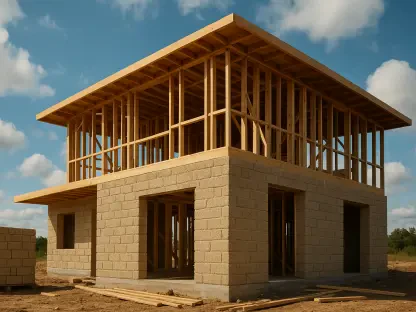
Residential building is the dominant outlet for lumber and structural panels, and the math behind the connection is stark enough to set the tone for the rest of the economy. A typical single-family home consumes roughly 15,000 to 16,000 board feet of lumber before counting sheathing, subfloors, and engineered components like LVL, I-joists, and trusses. Scale that up and the stakes become obvious: a drop of 100,000 starts removes on the order of 1.5 billion board feet from North American demand. Mills selling SPF, panel plants pressing OSB and plywood, and fabricators delivering rafters and wall systems all feel the void almost immediately. Dealer yards see turns slow, pricing leverage evaporates, and working capital gets trapped in inventory that is no longer moving.
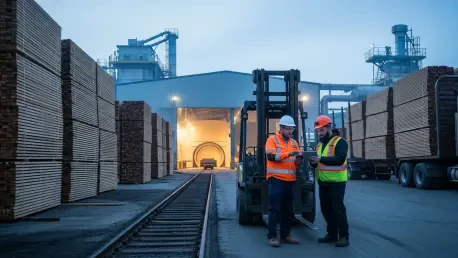
The ripple does not stop at the plant gate. Logging contractors that feed chip-and-saw operations face reduced quotas, while truckers running specialized bunks or curtain-side trailers settle for fewer loads and less favorable backhauls. Repair shops, mobile mechanics, forklift dealers, and blade and bit suppliers lose routine service calls as utilization drops. Even construction-adjacent businesses—drywallers waiting for framed shells, HVAC installers scheduled after rough-ins, and finish carpenters counting on a steady pipeline—run thinner books when framing packages stall. In Ontario’s mill towns and fast-growing suburbs alike, the downturn reshapes local cash cycles, delaying purchases from uniforms to diesel, and eroding the informal networks that keep crews intact between jobs.
Exposure and Volatility in Wood Supply Chain
The industry’s structure magnifies the pain from even modest slowdowns because mills and engineered wood facilities are designed for throughput, not idling. Fixed costs tied to debarkers, kilns, presses, and continuous lines do not scale down gracefully; when orders slip, inventories climb and per-unit costs rise. Plants respond by shortening shifts, then mothballing lines, and in difficult cases, taking curtailments that ripple back to the stump. Logging contractors are similarly capital-heavy, carrying financing on harvesters, forwarders, and loaders that only pencil out at high utilization. When a mill trims deliveries, a contractor’s cash flow thins quickly, and seasonal downtime turns from planned to precarious.
History and price action underline the speed of these reversals. Lumber’s swing from pandemic-era highs near $1,600 per thousand board feet to below $400 through 2022–2023 forced a wave of temporary shutdowns, reduced runs, and deferred maintenance, particularly at higher-cost facilities. Those whiplash conditions came on top of lessons seared into memory after the 2008 downturn, when more than 30,000 forestry jobs disappeared across Canada, several Ontario and British Columbia mills closed, and panel producers idled capacity that took years to restart. Communities built around a single line or logging hub saw secondary businesses fade, illustrating how cyclical slumps can harden into structural losses that handicap supply when recovery finally arrives.
Multipliers and GDP at Risk
Zooming out, the stakes climb from sector squeeze to macro concern because housing carries one of the strongest economic multipliers in the country. When indirect and induced effects are considered, residential construction is estimated to account for up to 10% of Canada’s GDP. Forestry and wood products compound that exposure: each direct job sustains two to three more in trucking, equipment manufacturing, maintenance, and local services. When starts slide, these multipliers run in reverse, pulling down hours, earnings, and consumption in communities that depend on the paychecks circulating from mill yards to grocery aisles. The contraction shows up in provincial accounts as lower output and dampened tax receipts.
The damage is already visible in canceled shifts and thinner order books, but the modeled path is more worrisome. Plunging starts and sales have erased tens of thousands of industry jobs, and without stabilization the losses could deepen. Ontario faces a potential 1.5% to 2.5% GDP hit through 2027 if residential construction continues to falter from today’s base. A separate analysis indicates that, absent targeted policy changes, the province could shed roughly 35,000 residential construction jobs on average over the next decade and leave about 390,000 residents without the housing they would otherwise secure. Those figures translate into fewer apprentices trained, less capacity to respond when demand rebounds, and slower progress on affordability benchmarks that hinge on sustained building.
Policy Moves to Turn the Tide
A practical recovery path starts where the multiplier is strongest: approving and starting more homes, faster, at lower frictional cost. Research from business schools and industry councils points to time-in-queue as the decisive variable; every month shaved from municipal approvals tightens bid spreads, revives maker orders for joists and panels, and puts trades back on predictable schedules. Streamlined site plan control, expanded use of standardized designs for low-rise and mid-rise infill, and firm service-level targets for permit reviews can move the needle this year. On costs, dialing back layered development charges and aligning utility hookups and inspections with build timelines reduce uncertainty that has sidelined projects in the pro forma stage.
Building on this foundation, targeted procurement and market-making can stabilize demand for wood products while new supply comes to market. Municipalities and provincial agencies can bundle orders for modular or panelized components, offering mills and fabricators forward visibility to justify shift restarts. Expedited approvals for mass timber in mid-rise residential and mixed-use projects would open a scale outlet for CLT and glulam, anchoring engineered wood demand inside the province. Financing tools matter as well: construction loan insurance that lowers borrowing spreads, and bridge guarantees that keep logging contractors current on equipment notes during short curtailments, preserve capacity. Together, these steps foster a corridor from stump to site that had offered resilient growth, and they set the stage for a rebound that was achievable with focused execution.