
A trench cave-in can crush a life in seconds, yet the red flags of weak safeguards, repeat citations, and ignored warnings often stack up for months before the ground quite literally gives way and families are left asking why a predictable hazard was not treated like the lethal threat it has always been in construction. That stark calculus framed a worker-safety flashpoint this week as the National Council for Occupational Safety and Health released its annual “Dirty Dozen,” spotlighting employers accused of putting workers at risk. The return of construction to the list after a one-year absence signaled intensifying scrutiny on jobsite controls, especially in excavation and residential building where layered subcontracting and churn in the labor supply complicate accountability. The group’s core message was uncompromising: recent deaths and injuries were preventable, and the patterns behind them—repeat OSHA violations, slow fixes, and fear of speaking up—reflected choices, not inevitabilities.
How the List Took Shape
National COSH, founded in 2004 and based in Somerville, Massachusetts, assembled this year’s list through nominations from local COSH groups, worker centers, unions, and advocates, and cross-checked submissions against public complaints and OSHA records. The timing during Workers’ Memorial Week underscored a prevention-first goal: honor those lost by cataloging where enforcement data and lived experience converge on the same employers. Construction’s reappearance, after no residential or commercial firms were named last year, rested on a familiar throughline. When the same hazards are cited repeatedly and corrective action lags, the odds of a “low-probability, high-consequence” event rise. The organization framed inclusion not as a naming-and-shaming exercise, but as a call for verifiable change: protective systems installed, work stopped when conditions shift, and worker voice anchored by anti-retaliation guarantees that actually function under pressure.
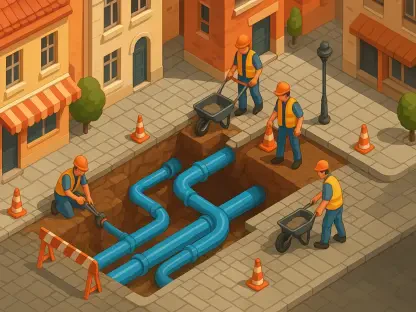
Revoli Construction illustrated how quickly excavation work can turn fatal when controls fail and how extensively the paper trail can document that risk. In November 2025, a collapse in sandy backfill trapped two workers, killing one. OSHA’s post-incident findings were sweeping: seven willful, 33 repeat, and 17 serious violations tied to trench protection and related hazards, with $4.7 million in proposed penalties announced on April 1. The agency highlighted failures to shore or shield the trench and manage soil conditions known to slump, particularly in saturated or disturbed backfill. National COSH cited a “long history” of trenching violations to argue the death was foreseeable, not freakish. Both the company and D.R. Horton declined comment, but the advocacy group’s executive director, Jessica Martinez, pressed a clear remedy—empower workers to halt unsafe tasks without fear and hold employers to account when warnings are ignored and hazards persist.
Construction Under Scrutiny
D.R. Horton, the country’s largest homebuilder by volume, drew criticism on two fronts: repeated safety violations and its posture as Immigration and Customs Enforcement detained unauthorized workers on jobsites in Alabama and Minnesota. National COSH argued that inaction amid enforcement pressure compounded risk for vulnerable laborers who already face outsized dangers on fast-moving residential schedules. When crews fear identification or retaliation, hazard reporting dries up, and the cascading effect is predictable: unsecured edges stay open, lockout-tagout is skipped to make a pour, and a near miss becomes the incident of record. The complexities of multilevel subcontracting, short timelines, and dispersed sites make oversight difficult, yet not impossible. The report contended that builders set the tone through procurement language, site controls, and credible follow-through—decisions that determine whether field conditions match the glossy manual handed out at orientation.
The broader signal from this year’s Dirty Dozen stretched beyond two firms. Other named employers—ranging from Alliance Ground International and LSG Sky Chefs in aviation services to Cambria Company in manufacturing, Subway IP in franchising, and Hyundai-Kia’s U.S. supply chain—showed how repeat violations clustered where management systems failed to capture and correct known risks. For construction leaders, the takeaway had been direct: codify trench safety plans with competent-person authority, grant stop-work power to every worker, require multilingual training and tailgate refreshers keyed to actual site hazards, and backstop all of it with anonymous reporting channels that bypass foreman bottlenecks. Tighten subcontractor onboarding with record checks of OSHA histories, run unannounced audits, and publish lagging and leading indicators to crews. The timing during Workers’ Memorial Week reminded employers that the most durable memorial had always been prevention built into daily work, verified rather than promised.