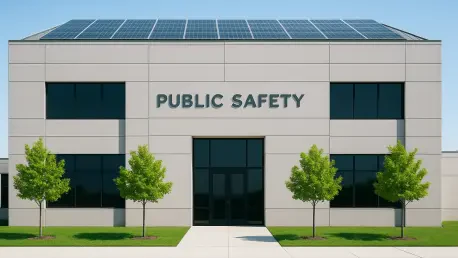

Milo is leveraging a $6.375 million federal grant from the USDA to modernize its public safety infrastructure while replacing a facility that is over a century old. This monumental upgrade represents a strategic pivot for the community, which has long relied on aging structures that no longer meet the complex demands of modern emergency response. The transition to a unified public safety hub at the Eastern Piscataquis Business Park signifies a commitment to operational efficiency and inter-departmental synergy. By housing police, fire, and public works within a centralized, state-of-the-art environment, the town is effectively reducing response times and improving the overall safety net for its residents. This development is not merely a construction project but a comprehensive modernization effort that aligns Milo’s essential services with contemporary standards of municipal management. As the town navigates this transition, it is also setting a precedent for fiscal responsibility, proving that critical infrastructure can be overhauled without burdening the local tax base with significant new liabilities.
Strategic Financing: Navigating Grant and Bond Integration
The financial architecture of the $7.2 million public safety building is built upon a foundation of aggressive grant acquisition and prudent debt restructuring. Residents recently finalized the transition of an initial construction credit line into a long-term municipal bond, successfully securing a 4.1% interest rate through the Maine Bond Bank. This move was essential to stabilize the project’s long-term costs, especially as the facility nears its scheduled completion this September. The massive USDA grant of $6.375 million serves as the primary funding source, dramatically reducing the amount of principal that needs to be financed through local revenue. By managing the project through a combination of federal support and localized bonding, town officials have demonstrated a high degree of fiscal agility. This strategy allows the municipality to replace its century-old town hall facility with a structure that provides modern amenities, such as integrated communication systems and expanded apparatus bays, while maintaining a predictable debt service schedule.
To ensure that the remaining debt obligations do not result in property tax increases, the town has strategically utilized revenue generated by the BD Solar Tax Increment Financing (TIF) District. This innovative approach leverages Milo’s renewable energy assets to directly fund its public safety requirements, projecting an annual revenue of approximately $100,000 from solar generation. Since the annual loan payment for the new building is estimated at $50,000, the TIF revenue provides double the necessary coverage, creating a self-sustaining financial loop. This “pay-as-you-go” methodology effectively shields the general fund from the costs of the new facility, allowing property taxes to remain stable while the town enjoys the benefits of modern infrastructure. Furthermore, the surplus generated by the solar TIF provides a financial buffer that can be reinvested into other municipal priorities or held in reserve for future maintenance needs. By decoupling essential service upgrades from traditional tax levies, Milo has created a sustainable growth template.
Infrastructure Upgrades: Enhancing Community Safety and Heritage
In addition to the public safety facility, Milo is investing in the safety and mobility of its residents through a targeted expansion of its pedestrian network. A significant project along Penquis Drive, supported by a $100,000 Community Enterprise Grant, is currently improving the walkability of the route leading to Penquis Valley School. By utilizing the town’s own public works department for the demolition and preparation phases, Milo has maximized the value of every grant dollar received. This investment in sidewalks is part of a larger, multi-year master plan that aims to revitalize pedestrian corridors throughout the town by 2027. Enhancing walkability is not only a matter of convenience but a critical safety measure for students and elderly residents who navigate these areas daily. Moreover, well-maintained sidewalks contribute to the overall aesthetic and economic vitality of the town center, encouraging foot traffic and supporting local businesses. This commitment to infrastructure maintenance ensures that the town’s environment evolves with its services.
The town successfully integrated historical preservation with modern growth by completing projects that celebrated its unique railroad heritage and scenic riverfront. A new downtown information kiosk, built to resemble a historic train depot, became a central hub for visitors, while beautification efforts at Ferry Road Landing enhanced the area’s visual appeal. These initiatives, utilizing partnerships with local students and vocational programs, demonstrated that impactful development did not require massive tax hikes. The strategic use of grant funds and TIF revenues allowed Milo to finalize a state-of-the-art public safety building while simultaneously improving its pedestrian network. Municipal leaders established a clear precedent for balancing essential service upgrades with fiscal sustainability, providing a roadmap for other rural communities to follow. By prioritizing collaborative funding and historical identity, the town ensured that its modernization efforts respected the past while building a safer and more prosperous future for all residents.