
The rhythmic pulse of a major international airport relies on an intricate, hidden network of infrastructure that must evolve without ever stopping for a single second. At Minneapolis-Saint Paul International Airport (MSP), this evolution has taken a massive leap forward with the Metropolitan Airports Commission (MAC) officially awarding JE Dunn Construction a $480 million contract. This modernization project is designed to propel the airport into a new era of efficiency, focusing on both the mechanical heart of the facility and the physical footprint of its busiest terminal. As the construction manager at risk, JE Dunn is positioned to navigate a multi-year transformation that balances high-tech sustainability with the demands of a high-traffic regional hub.
A Multimillion-Dollar Transformation for the Twin Cities’ Gateway
The selection of JE Dunn marks the beginning of one of the most significant capital investments in the history of the Minneapolis-Saint Paul International Airport. This $480 million endeavor focuses on Terminal 1, where the constraints of mid-century design are increasingly at odds with the surge in modern travel demand. By choosing a construction manager at risk, the MAC has established a framework that prioritizes fiscal transparency and operational continuity, ensuring that the airport remains fully functional throughout the expansion.
This modernization is about more than just adding square footage; it is a strategic repositioning of the airport as a leader in passenger experience and logistical resilience. The transformation will replace aging corridors with expansive, light-filled spaces that cater to the needs of the 21st-century traveler. This project serves as a cornerstone for the region’s economic growth, securing MSP’s status as a top-tier destination for domestic and international carriers alike.
Addressing the Legacy of Aging Aviation Infrastructure
A major driver for this overhaul is the critical need to address systems that have quietly served the public for over six decades. Much of the airport’s Energy Management Center was commissioned in 1962, and while it has performed admirably, the mechanical infrastructure has reached the end of its reliable service life. In an environment where every minute of downtime can disrupt thousands of travelers, replacing these legacy systems has become an operational necessity rather than a luxury.
Maintaining obsolete utility equipment is not only expensive but also creates a significant hurdle for meeting modern environmental standards. As aviation infrastructure across the nation faces similar pressure to modernize, MSP is taking a proactive stance by investing in the core systems that power its daily operations. This focus on the unseen parts of the airport ensures that the facility can support future growth without the risk of systemic utility failures.
The Technical Core: Sustainable Energy and Terminal Expansion
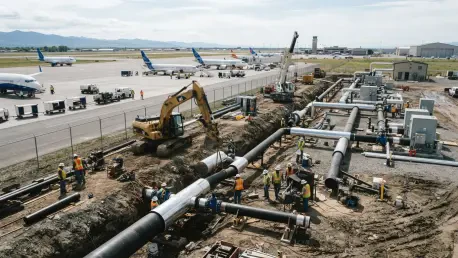
The heart of the project involves the complete demolition of the outdated energy facility to clear the path for a state-of-the-art utility plant. JE Dunn will lead the installation of modernized chilled water systems and substantial steam boiler upgrades, providing the airport with a more efficient and reliable power source. To further enhance the project’s sustainability profile, the plan explores the use of industrial heat-recovery chillers and a massive 28-well geothermal field, which would significantly reduce the airport’s carbon footprint.
Complementing these mechanical upgrades is a dramatic expansion of the terminal’s physical capacity. Construction teams will deconstruct approximately 183,400 square feet of existing concourse space, replacing it with a staggering 309,990 square feet of modern facilities. This net gain in space allows for wider walkways, improved passenger flow, and enhanced amenities, directly addressing the congestion that often plagues older airport layouts during peak travel seasons.
Leveraging Proven Expertise in High-Stakes Aviation Construction
JE Dunn’s appointment follows a rigorous selection process that weighed technical capability against a proven track record in complex environments. The Kansas City-based firm recently completed a 378,000-square-foot renovation at MSP, successfully upgrading 75 Delta Air Lines gates while the terminal remained in active use. This experience in surgical construction—where heavy work happens just feet away from active flight operations—is indispensable for a project of this scale and sensitivity.
Beyond its local success, JE Dunn’s growing portfolio of massive aviation contracts has established it as a national leader in the sector. With a recent $1 billion project win at Norfolk International Airport, the firm brings a wealth of specialized knowledge to the Twin Cities. This expertise ensures that the expansion will be managed with a deep understanding of the unique safety and security requirements inherent in modern airport construction.
Navigating the Roadmap to 2032: Phases and Implementation
The journey toward the 2032 completion date is defined by a meticulous schedule designed to mitigate the impact on the traveling public. Currently, the project is in the intensive planning and design phase, where engineers and architects are finalizing the technical integration of sustainable technologies. This early work is crucial for setting the foundation for the heavy construction that will follow in the coming years.
Starting in 2027, the site will transition into the enabling phase, where infrastructure shifts and site preparation will pave the way for major demolition. Between 2028 and 2032, the airport will see the most visible changes as the new Energy Management Center rises and the Terminal 1 footprint expands. This phased approach allows the airport to maintain its role as a vital transportation link while the multi-hundred-million-dollar modernization progresses toward its final reveal.
The leadership at the Metropolitan Airports Commission determined that the long-term viability of the regional gateway depended on a bold, multi-phased investment strategy. They prioritized the integration of sustainable geothermal systems and expanded terminal capacity to solve the looming crisis of aging infrastructure. This project successfully transitioned from the conceptual phase to a concrete execution plan that safeguarded both the budget and the passenger experience. Ultimately, the modernization of MSP provided a sustainable model for other international hubs looking to modernize their technical cores while increasing their operational footprint.