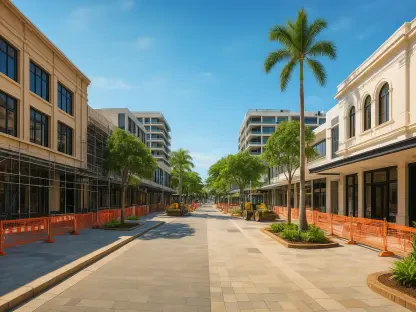

Corruption within the construction sector’s regulatory bodies is identified by many observers as the primary reason why uninhabitable buildings are granted final occupancy permits. This systemic rot has come to the forefront as the skyline of Tajikistan undergoes a radical transformation, but the rapid rise of concrete towers has recently hit a significant roadblock. In the Roudaki district, local authorities took the unprecedented step of freezing all new permits for multi-story residential buildings through 2026. This move was sparked by a public scandal involving a newly completed 16-story complex that lacked a basic sewerage system, highlighting a growing disconnect between ambitious real estate development and the fundamental needs of the people. What began as a localized administrative pause has blossomed into a national conversation about the sustainability of the country’s urban growth. For many residents, the Roudaki incident is not an isolated error but a symptom of a systemic failure in urban planning that prioritizes profit over habitability.
Structural Failures and Climatic Adaptation
The Breakdown of Engineering Infrastructure
The most immediate threat to urban stability is the catastrophic deficit in engineering infrastructure that plagues many of these new developments. High-density residential towers are currently being erected on top of aging, Soviet-era utility grids that were never designed to support such a massive influx of residents. This technological mismatch results in chronic water shortages where pressure simply cannot reach the upper floors, leaving thousands of families without basic access to running water during peak hours. Engineers have noted that the underground pipe network, much of which dates back several decades, is reaching its physical breaking point under the weight and demand of the modern skyline. Instead of upgrading these foundational systems before breaking ground on new projects, developers have often chosen to connect high-rises to existing lines, leading to frequent bursts and systemic failures that affect entire neighborhoods, regardless of whether the buildings are old or new.
Beyond the lack of water pressure, the failure of waste management systems has created an environmental and public health crisis. In some districts, raw sewage from recently completed high-rises is reportedly being discharged directly into the Kofarnihon River, destroying local ecosystems and threatening the health of downstream communities. This reliance on “fast money” through real estate has led to a situation where the pervasive stench of sewage defines the experience of living in supposed luxury towers. Residents report that waste systems are either nonexistent or fundamentally broken from the day of occupancy, turning modern skyscrapers into sources of ecological contamination. This mismanagement is not just a localized nuisance but a direct assault on the nation’s natural resources, as the pollutants entering the waterways are nearly impossible to remediate without massive state intervention. The long-term environmental sustainability of these urban centers remains in jeopardy as long as basic engineering remains an afterthought.
Deteriorating Quality of Residential Design
Modern apartment designs often ignore the specific geographical and climatic needs of Tajikistan, leading to what many critics now describe as the birth of vertical slums. In a bid to maximize sellable square footage, developers have increasingly moved toward windowless kitchens and the total omission of balconies. This architectural trend represents a significant downgrade in the quality of life compared to older housing stocks that prioritized natural light and air circulation. For families living in these units, the lack of a window in the primary cooking area creates a buildup of heat, steam, and odors that cannot be easily dissipated, leading to persistent moisture problems and poor indoor air quality. These cramped environments are fundamentally at odds with the cultural and practical needs of Tajik households, where the preparation of traditional meals requires space and ventilation. By sacrificing these essential elements for profit, developers are creating a housing stock that is structurally unsuitable for long-term residency.
In the harsh southern climate of Central Asia, where natural ventilation and outdoor laundry drying are essential for household management, these poorly ventilated units create an unbearable living environment. The omission of the traditional balcony, which once served as a vital buffer between the interior and the intense summer heat, has forced residents to rely entirely on energy-intensive air conditioning. This increased demand for electricity places an unbearable strain on an already fragile power grid, leading to localized blackouts and high utility costs for low-income families. Furthermore, without the ability to dry laundry outdoors, moisture levels inside these airtight concrete boxes rise, fostering the growth of toxic mold that compromises the respiratory health of children and the elderly. Architects argue that the abandonment of climate-sensitive design principles is a short-sighted strategy that ignores the reality of rising global temperatures. Without a return to designs that respect the local environment, these towers will function as heat traps.
Governance and Public Safety Risks
Regulatory Oversight and Social Infrastructure
As high-rise clusters proliferate across the urban landscape, the social infrastructure that makes a neighborhood livable is being systematically erased to accommodate more building plots. Open spaces once intended for playgrounds, parks, and communal gatherings are being sacrificed, forcing children to play in dangerous parking lots or narrow stairwells. This lack of public space creates a sense of social isolation and contributes to the physical decay of the surrounding environment. Furthermore, the surge in population driven by these dense residential blocks is placing an unbearable strain on existing public services. New schools and medical clinics are rarely part of the development plan, leaving the already overstretched institutions in older neighborhoods to handle thousands of additional residents. The resulting overcrowding in classrooms and months-long wait times for basic medical care suggest that the current model of urbanization is socially unsustainable. A city requires a network of services that the current boom has failed to provide.
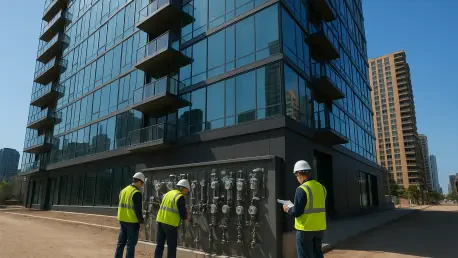
The public remains deeply skeptical of the state bodies responsible for oversight, questioning the methods by which substandard buildings are officially commissioned and approved. There is a widespread perception that the regulatory process has become a mere formality where safety codes and engineering standards are ignored for a price. Residents are increasingly demanding greater transparency regarding the specific officials who sign off on permits for buildings that lack basic utilities. This demand for accountability stems from the realization that once a developer has sold the units and moved on, the residents are left to face the consequences of poor oversight alone. Public outcry on social media has highlighted numerous cases where buildings were finished on paper but lacked electricity or sewage connections in reality. Without a complete overhaul of the licensing and inspection process, the shadow of corruption will continue to undermine the legitimacy of the construction industry. Accountability must begin at the blueprint stage rather than after a structure is occupied.
Seismic Resilience and Future Development
Tajikistan sits in a highly active seismic zone, making the integrity of high-rise construction a matter of life and death for its citizens. Public anxiety has been fueled by recent international disasters where modern buildings collapsed instantly during tremors, leading many to fear that the new Tajik towers might be houses of cards. This existential dread is compounded by reports of questionable material quality and rushed engineering practices that prioritize speed over safety. Experts warn that the combination of high-density living and substandard structural reinforcement could lead to a catastrophic loss of life in the event of a major earthquake. The lack of rigorous, transparent seismic testing on completed buildings has only deepened this mistrust. Residents often wonder if the concrete used in their homes meets the necessary strength requirements or if the rebar has been improperly spaced to save on costs. Ensuring seismic safety is not just a technical challenge but a social necessity that requires the highest level of ethical responsibility.
Legislators and urban planners recognized that the path forward necessitated a radical departure from the laissez-faire approach of previous years. They implemented a comprehensive digital tracking system for all building materials, ensuring that every ton of concrete and rebar met stringent seismic standards before a single floor was poured. Furthermore, the introduction of mandatory green-to-built ratios forced developers to integrate parks and social hubs into their blueprints, transforming the urban landscape from a collection of isolated towers into interconnected communities. Civil engineering boards also established a third-party audit system that stripped corrupt officials of their licensing power, effectively closing the loopholes that allowed substandard structures to bypass safety checks. These strategic pivots, combined with an increased focus on energy-efficient natural ventilation, eventually restored public confidence and set a new benchmark for Central Asian urbanization.