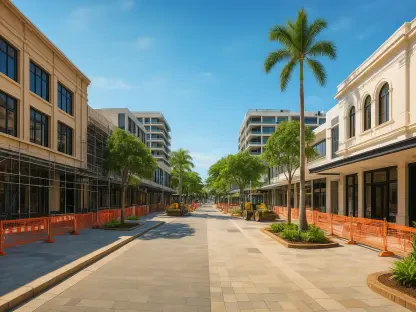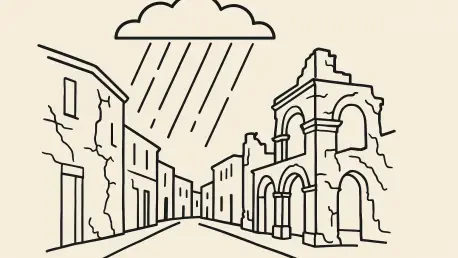

A significant portion of a balcony recently detached from an unfinished building in Agia Triada, highlighting the risks posed by long-abandoned construction projects. This incident is not an isolated occurrence but rather a symptom of a much broader structural safety crisis currently facing Heraklion, the largest urban center on the island of Crete. As of 2026, municipal authorities have identified approximately 300 buildings categorized as “dangerous,” a classification that spans from ancient Venetian-era relics to more contemporary apartment blocks that have fallen into severe disrepair. These structures pose a persistent threat to both the local population and the thousands of visitors who navigate the city’s historic streets. The physical decay of the architectural landscape has reached a critical tipping point, with aging facades shedding concrete and debris into public thoroughfares. This volatility creates an environment where a simple walk through the city involves a quantifiable risk that cannot be ignored by stakeholders or the state.
Identifying the Roots of Urban Decay
The Environmental Impact: Neglect and Climate
The deterioration of Heraklion’s building stock is deeply rooted in the synergy between systemic neglect and the specific environmental conditions of the Mediterranean. Many properties across the city have been left in a state of perpetual incompletion or total abandonment for several decades, allowing the elements to penetrate their structural cores. The onset of the wet season in Crete serves as a dangerous catalyst for failure, as heavy rainfall and high-velocity winds exploit existing cracks in masonry and compromised concrete. Water ingress leads to the oxidation of internal steel reinforcements, causing the material to expand and forcefully eject the outer layers of the facade. This process, often invisible from the street level until it is too late, significantly weakens balconies and decorative architectural elements. Consequently, the transition from a minor aesthetic flaw to a lethal structural failure often occurred rapidly during periods of inclement weather throughout 2026.
Legal Obstacles: The Complexity of Property Law
The path toward resolving the hazard of dangerous buildings is frequently obstructed by the complexities of Greek property law and the fragmented nature of ownership. A significant number of the most dilapidated structures are tied up in probate disputes or involve multiple heirs who cannot reach a consensus on necessary repairs or demolition. In some instances, the ownership titles are so obscured by decades of bureaucratic oversight that the municipality struggles to even identify a legal party to serve with safety notices. This legal gridlock ensures that even when a building is flagged as an immediate risk, it may remain in a dangerous state for years while the courts process ownership claims. Furthermore, the existing regulatory framework places the entire financial and legal burden of maintenance on private owners, offering little in the way of state-supported incentives or streamlined processes for structural rehabilitation in historic zones that require it.
Strategies for Mitigating Public Risk
Technical Solutions: Modern Assessment Methods
To move beyond the current impasse, municipal officials and local advocacy groups have proposed a proactive partnership with the Technical Chamber of Greece (TEE). This collaboration aims to establish a permanent, digital mechanism for the systematic recording and technical assessment of every suspect building within the city limits. By leveraging the expertise of professional engineers, the city can create a comprehensive database that prioritizes interventions based on the severity of structural risk rather than relying on sporadic public complaints. This technical baseline would provide the necessary evidence for the municipality to take emergency action when an owner refuses or is unable to do so. Furthermore, such a system would integrate modern monitoring technologies, such as structural sensors on the most critical landmarks, to provide early warnings of movement or stress. This shift toward a data-driven approach is essential for modernizing the city’s urban safety management.
Financial Recovery: The Revolving Fund Model
A primary pillar of the proposed safety strategy involves the creation of a “revolving fund” designed to bypass the financial paralysis of private property owners who cannot afford major repairs. This financial model allows the municipality to secure the necessary capital to fund the demolition or stabilization of critically dangerous structures upfront. The costs associated with these emergency works, along with administrative fines, are then recovered from the owners through the municipal tax system, ensuring that public funds are eventually replenished for future safety interventions. This proactive methodology shifts the focus from waiting for a disaster to occur toward a model of preventative urban maintenance that benefits the entire community. By providing an immediate solution to high-risk properties, the fund serves as a crucial bridge between identifying a hazard and neutralizing it before structural integrity is completely compromised by various external factors.
Balancing Heritage and Modern Safety
Economic Stability: Tourism and Local Identity
The deterioration of Heraklion’s building stock is a multifaceted threat that directly impacts the city’s identity and its vital tourism industry. As a premier destination in the Mediterranean, the city relies on its historic streets and architectural charm to provide a unique cultural experience for international visitors. However, the distinction between a charming ruin and a lethal hazard is often invisible until a serious accident occurs. Maintaining structural safety is therefore not just an urban planning issue, but a critical component of the city’s broader economic strategy. If tourists perceive the historic center as unsafe, the economic repercussions would be felt across the local hospitality and retail sectors. Protecting the aesthetic value of Venetian and neoclassical structures must be balanced with the functional requirement of keeping sidewalks clear of falling debris. This economic necessity provides a powerful incentive for the city to accelerate its safety programs.
Final Considerations: Future Urban Resilience
In summary, the integration of proactive municipal strategies with historic preservation proved essential for Heraklion to remain a safe and functional urban center. The city successfully recognized that the transition from identifying a structural hazard to neutralizing it was too slow under previous administrative models. By implementing the revolving fund and the technical assessment database, authorities created a sustainable framework that addressed both the legal and financial barriers to building safety. This forward-looking approach allowed for the stabilization of dozens of high-risk properties before the winter storms of late 2026 could cause further damage. The result was a more resilient urban landscape that protected its citizens while honoring its architectural heritage. The city effectively demonstrated that systematic municipal intervention was the only viable solution to a crisis of this magnitude, providing a clear roadmap for other historic cities facing similar challenges of decay and neglect.