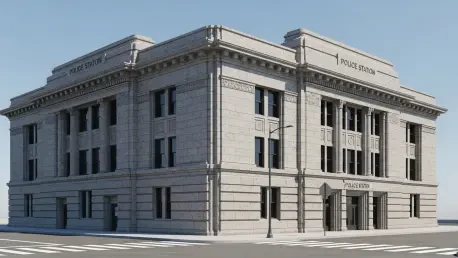

Standing as a silent sentinel at 158 Bedford Street, the old Fall River police station has become the epicenter of a fierce jurisdictional battle that pits the preservation of architectural heritage against the immediate requirements of public safety and fiscal responsibility. This imposing granite structure, which once symbolized order and civic pride, now serves as a cautionary tale for aging American cities struggling to manage their historic inventories amidst declining municipal budgets. City officials currently describe the building as a “deplorable” hazard that necessitates immediate removal, yet local advocates maintain that the structure is a salvageable artifact of the city’s golden age. This conflict is not merely about bricks and mortar; it is a fundamental debate over how a community values its past while navigating the harsh realities of urban decay. As the city moves toward a definitive resolution, the standoff reveals deep-seated tensions between administrative power and the public’s right to oversight, creating a complex legal and ethical puzzle that demands careful scrutiny and balanced judgment.
A Legacy Confronting Advanced Decay
Architectural Heritage and Historical Roots: The Legacy of Edward Corbett
The building at 158 Bedford Street represents more than just a former municipal office; it is a masterwork by the notable self-taught architect Edward M. Corbett, whose vision shaped much of the city’s early twentieth-century aesthetic. Completed in 1915, the station served as the primary headquarters for the Fall River Police Department for over eight decades, witnessing the evolution of local law enforcement through the eras of Prohibition, industrial expansion, and eventual urban renewal. Its inclusion on the city’s Register of Significant Structures highlights its importance to the local cultural fabric, serving as a physical anchor for the Bedford Street corridor. However, this prestigious background has not shielded the property from the ravages of time and institutional indifference. For years, the building has sat dormant, suffering from a systematic lack of maintenance that has allowed the elements to take a heavy toll on its core. The roofing system has failed significantly, leading to chronic water infiltration that has compromised the internal framework and slowly erased the grandeur of its original design.
Internal Contamination and Structural Instability: A Hidden Danger
Beyond the obvious structural degradation caused by moisture, the interior of the station has transformed into a hazardous environment that complicates any potential for traditional restoration. Decades of abandonment have permitted the accumulation of toxic materials, most notably asbestos and lead, which now saturate the inner walls and insulation systems. These contaminants render the space uninhabitable and prohibitively expensive to remediate, creating a situation where any entry requires specialized equipment and strict safety protocols. While the exterior stone walls appear remarkably straight and sturdy to the casual observer, building inspectors insist that the internal structural integrity has effectively vanished. This creates a deceptive appearance of stability; beneath the rugged granite facade lies a hollow shell where floors have begun to sag and joists have rotted. Consequently, the city faces a difficult paradox where the very features that make the building worth saving are being undermined by internal decay that remains hidden from public view, fueling the argument for its total removal.
The Administrative Case for Immediate Demolition
Prioritizing Public Safety and First Responder Welfare: The Inspector’s Mandate
Leading the charge for the building’s removal is Glenn Hathaway, the Director of Inspectional Services, who views the structure not as a landmark, but as an imminent threat to the surrounding community. His assessment focuses on the severe risk posed by collapsing internal floors and the potential for exterior cornice stones to detach and fall onto the public sidewalk. Hathaway’s primary concern revolves around the liability the city carries if a trespasser or a first responder were to be injured or killed inside the “collapsing” interior during an emergency situation. For emergency personnel, navigating a smoke-filled building with compromised flooring is a lethal prospect that outweighs the historical value of the architecture. The administration argues that waiting for a traditional preservation process to unfold is a luxury the city cannot afford when public safety is on the line. By framing the issue as an emergency, the building inspector seeks to exercise his authority to mitigate what he describes as a “deplorable” hazard before an accident occurs.
Procedural Friction and the Demolition Delay Bylaw: Legal Overrides
The dispute is significantly complicated by Fall River’s “demolition delay” bylaw, a regulation designed to provide a twelve-month cooling-off period for significant city-owned buildings to allow for the exploration of alternative uses or preservation funding. However, the building inspector possesses the legal authority to bypass this mandatory delay if a structure is deemed to pose an immediate and unmanageable danger to the public. This specific exercise of power has come under intense fire from the community because the city administration awarded a $1.4 million demolition contract before providing any formal notification to the Historical Commission regarding its intent to raze the site. Critics argue that this sequence of events suggests a predetermined outcome rather than a response to a sudden structural crisis. The bypassing of the commission is seen by some as an erosion of democratic oversight, as it removes the opportunity for independent experts to verify the inspector’s claims or to propose alternative stabilization methods that could mitigate the immediate risks to the public.
Navigating the Legal and Ethical Stalemate
Preservationist Advocacy and Resource Allocation: The Cost of Neglect
Preservationists, led by Alex Silva of the Preservation Society of Fall River, contend that the city has failed to provide sufficient empirical evidence to justify skipping the legally required delay period. They argue that the $1.4 million currently earmarked for the building’s destruction could have been utilized years ago to stabilize the roof and prevent the very damage that officials now cite as the reason for its demolition. From this perspective, the current “emergency” is the result of intentional neglect—a phenomenon often referred to as “demolition by neglect”—where a lack of maintenance is used to force an eventual teardown. Silva and his colleagues suggest that the rush to demolish is driven more by project schedules and internal budget management than by a genuine, sudden change in the building’s physical stability. They maintain that a more transparent investigation could reveal that the structure is still salvageable if given the right investment, protecting the city’s architectural legacy from being discarded in a moment of convenience.
Seeking Legal Clarity and Strategic Next Steps: Defining Future Protocols
The conflict reached a significant standstill during a recent Historical Commission meeting where members found themselves deeply divided over the competing mandates of safety and preservation. While some members expressed profound skepticism regarding the severity of the internal ruin when compared to the sturdy exterior, others felt compelled to defer to the building inspector’s professional expertise on public hazards. In a narrow 4-3 vote, the Commission decided to halt the proceedings to seek a formal legal opinion from the city’s Corporation Counsel. The primary objective was to determine if the inspector’s authority to override the demolition delay was absolute or if it required further evidentiary support. Moving forward, the city needed to establish a more rigorous protocol for evaluating endangered landmarks to prevent similar stalemates. Stakeholders recommended that future assessments include independent structural engineering reports to provide a neutral basis for decision-making. By prioritizing early stabilization and transparent communication, the city could have avoided this zero-sum scenario.