
The groundbreaking of a nearly ten-million-dollar inclusive playscape in the heart of San Antonio marks a pivotal shift in how urban environments are engineered to serve diverse populations regardless of physical or cognitive abilities. On May 12, 2026, Skanska USA initiated construction on this ambitious two-acre project within the historic four-hundred-acre Brackenridge Park, a site that carries deep cultural resonance for the region. This development is not merely a playground but a complex architectural endeavor aimed at revitalizing a space that has been central to the city since its early industrial and Spanish colonial eras. By integrating state-of-the-art accessibility features with the natural ruggedness of the local terrain, the project seeks to bridge the gap between historic preservation and modern community needs. The initiative reflects a growing recognition that public spaces must be inherently flexible and welcoming to all residents to remain relevant. For construction professionals, this effort serves as a case study in balancing the preservation of indigenous heritage with the installation of contemporary play infrastructure. By prioritizing inclusive design at every phase, the firm ensures that the environment fosters social cohesion and physical activity in a way that respects the legacy of the park’s traditional landscapes and natural history.
Integration of Nature and Cultural Heritage
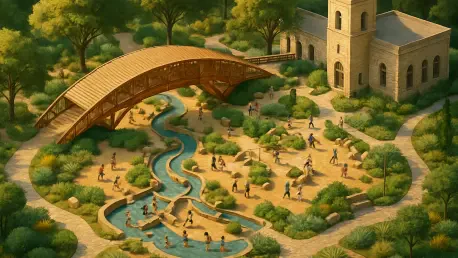
The architectural philosophy underpinning this nature-based playscape prioritizes organic materials that harmonize with the iconic San Antonio River ecosystem while providing rigorous sensory stimulation. Designers have incorporated interactive elements such as specialized water channels, climbing structures made from sustainable timber, and a canopy walkway that allows children to explore the park from a tree-level perspective. These features are meticulously placed to avoid disrupting the site’s status on the National Register of Historic Places, ensuring that modern recreation does not come at the expense of cultural integrity. Furthermore, educational zones like the archaeology-inspired dig site and an indigenous-themed camp area serve to connect young visitors with the park’s deep roots in local history. This specific focus on education through play transforms a standard recreational site into an outdoor classroom where historical narratives are experienced physically rather than just read on a plaque. The project effectively demonstrates that modern engineering can coexist with archaeological sensitivity, provided that the planning phase includes deep collaboration with historical experts and environmental consultants.
Beyond the physical structures, the project emphasizes a tactile connection to the environment through the use of native stone and drought-resistant vegetation. This environmental consciousness ensures that the playscape remains resilient against the regional climate while reducing the long-term maintenance burden on the municipal park system. The use of natural textures and varying elevations helps children develop motor skills and spatial awareness in a setting that mimics the natural world rather than a sanitized, synthetic environment. By focusing on these elements, the development provides a sensory-rich experience that is often missing from traditional urban parks. This approach also aligns with broader sustainability goals by minimizing the carbon footprint of the materials used and preserving the existing tree canopy. The resulting space is a harmonious blend of the built environment and the natural world, offering a sanctuary for exploration that honors both the land and its people. As the construction progresses, the focus remains on ensuring that every rope swing and walkway contributes to a narrative of inclusivity and ecological respect.
Strategic Shifts in Modern Urban Construction
This project highlights a significant evolution in the construction industry, where major global firms are pivoting from traditional industrial contracts toward high-impact public realm developments. By collaborating closely with the Brackenridge Park Conservancy and the City of San Antonio, Skanska demonstrates how large-scale contractors are now prioritizing long-term social value and environmental stewardship as core project deliverables. This transition is evident in the firm’s broader regional strategy, which includes the successful execution of Civic Park at Hemisfair, reinforcing a commitment to enhancing urban walkability and livability. Such projects require a nuanced understanding of how infrastructure affects the psychological and social health of a community, moving beyond simple steel and concrete towards “soft” infrastructure that fosters human connection. As urban centers become more densely populated, the demand for these multifaceted public spaces increases, forcing a rethink of traditional development models in favor of community-centric designs. This shift is not just about aesthetics; it is about creating resilient urban fabrics that can support diverse populations for decades.
The management of such complex projects requires a level of transparency and stakeholder engagement that goes beyond typical commercial building. Contractors must now act as bridge-builders between municipal agencies, nonprofit organizations, and the general public to ensure that the final product meets the diverse needs of all users. This collaborative model reduces the risk of project delays by identifying potential conflicts early in the process, particularly regarding land use and historical preservation. For the Brackenridge Park initiative, this meant navigating the requirements of preservation groups while still meeting the technical demands of a modern, accessible playscape. The success of this approach is measured not just in the durability of the structures, but in the level of community ownership and pride that the project inspires. This movement toward social-value-driven construction represents a new frontier for the industry, where success is defined by how well a project serves the collective good. By focusing on these outcomes, firms can build a reputation for reliability and social responsibility that is essential in the current competitive market.
Engineering Inclusivity through Collaborative Models
The successful navigation of the Brackenridge Park project provided a compelling blueprint for how multi-stakeholder coordination resolved the tension between technical engineering and historical preservation. Stakeholders realized that the success of modern civic infrastructure was no longer tied solely to the adherence to strict schedules or budgetary limits but was instead measured by its ability to create equitable access for all citizens. To replicate these results, future developers were encouraged to involve preservation groups and municipal agencies during the earliest conceptual phases to prevent friction during the build cycle. This proactive engagement allowed for the identification of potential hurdles before they impacted the project timeline, ensuring that the final output remained true to its inclusive mission. By focusing on the intersection of cultural sensitivity and accessibility, the project established a new standard for urban revitalization. It proved that integrating nature-based solutions into the heart of a metropolis required a blend of technical precision and a deep commitment to the social fabric of the city.
Practical steps for future urban developments included the adoption of universal design principles from the outset rather than treating accessibility as a secondary compliance task. The project showcased that when inclusivity was woven into the architectural DNA of a site, the resulting environment felt more natural and welcoming to everyone. Furthermore, the integration of educational components alongside physical play structures demonstrated a way to maximize the utility of public land. Stakeholders recommended that future projects prioritize the use of local materials and historical motifs to ensure that new developments felt like an extension of the community’s story. This approach not only garnered greater public support but also ensured that the infrastructure remained a relevant and beloved part of the city for years to come. Ultimately, the work at Brackenridge Park served as a reminder that the most successful projects were those that listened to the history of the site while looking forward to the needs of the next generation. By embracing these collaborative and holistic strategies, the construction industry moved closer to a model that valued people and heritage as much as performance.