
Decarbonizing the Logistics Sector Through Measurable Environmental Stewardship
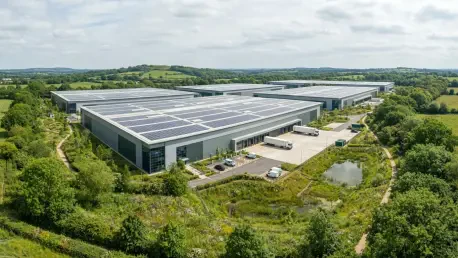
Achieving a triple-digit milestone in environmental certification requires more than just a peripheral commitment to green initiatives; it demands a fundamental restructuring of how industrial assets are conceived and constructed. This achievement centers on the DC107 logistics unit located at the Daventry International Rail Freight Terminal, marking a significant shift toward a model where large-scale development prioritizes measurable environmental stewardship. The focus of this research highlights how integrated carbon mitigation strategies move beyond simple energy efficiency to encompass a broader spectrum of global conservation and community education.
This milestone serves as an exhaustive case study for the property market, addressing the challenge of balancing infrastructure expansion with the urgent need for decarbonization. By embedding certification into the development process, the research demonstrates that environmental accountability can be woven into the fabric of industrial operations. This approach effectively bridges the gap between corporate profitability and planetary health, suggesting that the future of logistics depends on the ability to verify and validate every aspect of a building’s carbon footprint.
The Evolution of Sustainability Standards in UK Industrial Real Estate
The journey toward this record began nearly two decades ago when Prologis Park Pineham became the first property in the United Kingdom to systematically measure and reduce embodied carbon emissions. This early adoption set a precedent, transforming what was once a niche environmental effort into a standardized corporate requirement. Since 2008, a mandate has existed requiring every new development to undergo a rigorous certification process, illustrating a long-term commitment that predates many modern climate regulations.
Today, in the landscape of 2026, approximately 25 million square feet of the portfolio has achieved top-tier BREEAM ratings, reflecting a consensus that high-level sustainability is now a non-negotiable feature for Grade A space. This evolution matters because it influences how investors perceive value and risk in industrial real estate. As supply chains become more transparent, the demand for certified, low-carbon facilities has surged, making this research highly relevant to stakeholders across the global economy who prioritize responsible building practices.
Research Methodology, Findings, and Implications
The analysis of these developments involves a comprehensive evaluation of both physical construction and external ecological impacts. By examining 100 different projects, the research provides a longitudinal view of how sustainability practices mature within a single corporate framework over several decades.
Methodology
The research utilized a whole-life carbon assessment model to capture the environmental impact of development across all phases. This methodology moved beyond the standard focus on operational energy use, which often ignores the significant emissions generated during the creation of a building. Instead, the analysis tracked the lifecycle of a structure from the initial extraction of raw materials to the construction phase and eventual decommissioning.
By analyzing data through this cradle-to-grave lens, the study provided a comprehensive view of the total carbon cost associated with industrial expansion. This rigorous data collection ensured that every metric ton of carbon was accounted for, allowing for precise mitigation strategies. This process involved close collaboration with certification bodies to maintain high standards of transparency and accuracy throughout the building’s life.
Findings
The findings revealed that the 100-building legacy represents approximately 23.6 million square feet of certified space, a scale previously unseen in the regional market. A central discovery was the success of the tripartite relationship between developers, certification bodies, and environmental charities, which funneled roughly $2.5 million into rainforest protection. This funding protected over 20,000 acres of rainforest, particularly in the Peruvian Amazon and Papua New Guinea.
Furthermore, the research identified a significant socio-economic impact through educational outreach. The program reached 13,875 students across 94 schools, empowering a new generation with the knowledge required to protect the planet. These findings suggest that the benefits of sustainable real estate extend far beyond the physical boundaries of the warehouse, creating a ripple effect of environmental and social value.
Implications
The results suggest that sustainable development is no longer just an ethical choice but a strategic business advantage. For customers including major brands like Sainsbury’s and Royal Mail, these buildings deliver direct cost savings through optimized energy use and easier transitions to renewable energy sources. This creates a powerful incentive for tenants to choose certified facilities, as it directly supports their own corporate carbon reduction targets.
Moreover, the findings imply that the logistics industry can successfully reconcile physical expansion with rigorous carbon accountability. This sets a high bar for competitors and provides a roadmap for how other sectors can implement similar whole-life carbon assessments. By proving the commercial viability of these projects, the research encourages a broader market shift toward decarbonized infrastructure.
Reflection and Future Directions
Reflecting on the scale of these achievements reveals both the progress made and the complexities inherent in large-scale environmental management. The path forward involves refining these strategies to meet even more ambitious targets.
Reflection
The study’s process highlighted the difficulty of addressing unavoidable embodied carbon, which remains a significant hurdle in the construction industry. While mitigation through rainforest protection has proven effective, the reliance on external projects necessitates a high degree of verification to ensure genuine impact. Challenges were encountered in standardizing these metrics across diverse regions, yet the consistent use of the Planet Mark framework provided the necessary continuity to overcome these obstacles.
The research could have been expanded by diving deeper into the specific materials used to further reduce initial emissions. However, the existing data successfully demonstrated that a unified business model can integrate diverse goals like rainforest conservation and social education. This reflection underscores the importance of a holistic approach that treats the building as one part of a much larger global ecosystem.
Future Directions
Future research should explore the scalability of this model in different international markets where regulatory environments may vary. There are remaining questions about how to further engage the secondary supply chain in adopting similar whole-life carbon standards. Investigating the long-term durability of indigenous-led conservation efforts will also be crucial as climate pressures intensify.
Looking ahead from 2026 to 2030, there are opportunities to integrate more advanced renewable energy technologies and circular economy principles into the construction process. Further exploration into how industrial sites can serve as hubs for local biodiversity could provide the next breakthrough in sustainable real estate. This trajectory ensures that the lessons learned from the first 100 buildings serve as a foundation for even more innovative developments.
Establishing a New Global Blueprint for Responsible Real Estate
The achievement of the 100th Planet Mark certification established a new benchmark for the intersection of environmental science and commercial real estate. By protecting millions of trees and educating thousands of students, the initiative moved beyond the standard definitions of corporate social responsibility. The data indicated that the project successfully reconciled the needs of high-volume logistics with the urgent requirements of planetary conservation.
This legacy proved that transparency and measurable results were the most effective tools against greenwashing. The buildings delivered tangible value to tenants and investors while contributing to a global carbon sink. This comprehensive model of responsible development functioned as a verified blueprint for the industry, ensuring that future growth contributed positively to the environment and the communities it served.